Well, you've made a pretty large false equivalency to create that parity of expectation. WhatsApp and Instagram, by their nature, were cohesive to Facebook's functionality, purpose and design: sharing. WhatsApp's and Instagram's functionality worked within their limits to create a self-sustained sharing ecosystem all of their own. Bringing them into Facebook aided both sides of the equation: more people to share with, and new things to share. That's why they weren't required to change.
Occulus isn't about sharing, however. It doesn't neatly align to Facebook's design, purpose or functionality. Hell, I'd argue VR is actually the opposite: VR is about removing yourself from this world, to immerse yourself in another. That's what VR is, ultimately, going to provide: man made new worlds. Facebook's purchase is, clearly, to grab VR before it takes off, and possibly even take a shot at the VR meta-verse that science fiction has long talked about. The reason isn't altruistic in nature, evidenced by the nature of Facebook itself. The reason is, obviously, profit and gains.
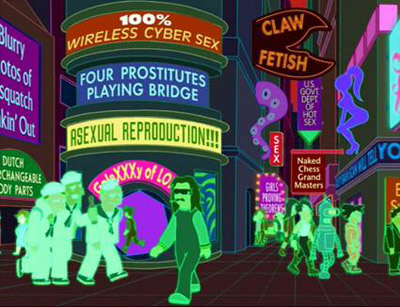
Unfortunately, this means VR will be entirely advertiser controlled the moment it lands. Imagine worlds where
everything you see and hear is controlled by advertisers. Similar to this one, strangely enough, except it will be one where you can't turn off the TV, look away from the billboard, or ignore the advertisements. It will be more Douglas Adams, minus the humour, and less ... whatever people actually wanted.
Frankly, I think this acquisition is horrible news for anyone hoping that VR was going to achieve its full potential.