Development of the Pandora began when Craig Rothwell, Fatih Kilic, Michael Mrozek and (later) Michael Weston teamed up and planned a portable system that would excel in the areas where they thought the GP32 and GP2X systems (from Gamepark and Gamepark Holdings respectively) were flawed.[2] The Pandora was designed based on ideas and suggestions contributed by GP32X forum members, with the goal of creating the ultimate open source handheld device.[3] The final case and keymat design was made by DaveC, who was known on the forums for custom hardware modifications.[4]
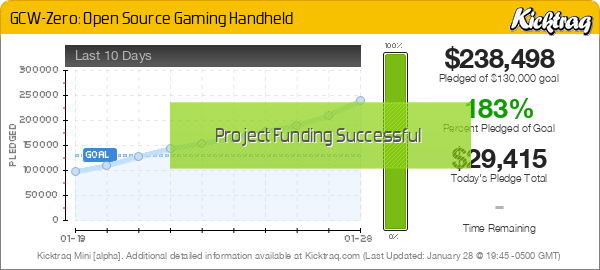
The initial development and setup costs were funded through a Crowd funding approach where early supporters made a speculative payment[5] , and if the console made it into production, each supporter would hopefully (eventually) receive a device as later sales recouped the initial investment costs. OpenPandora began taking payments on September 30, 2008[2][6] OpenPandora began shipping to customers on May 21, 2010,[7][8] In late 2011, after production problems, OpenPandora shifted its production from Texas to Germany, delaying production[9] and the device was upgraded from 256MB to 512MB RAM.[10]
As of September 3, 2012, 4600 units have been shipped and 400 early supporters are still waiting to receive a console,[11] as these pre-orders are only fulfilled when sales to new customers are made.[12] Since June 2012, a new 1 GHz model has been made available in limited amounts during the summer 2012. Due to the shortage of previous 600 MHz chips, it is expected this new model could become de facto standard in the near future.