• Hey Guest. Check out your NeoGAF Wrapped 2025 results here!

In praise of Physical Based Rendering [PBR]

Yes Witcher3 is a very impressive looking game but for some reason it still doesn't look real in quite the same way that Star Wars Battlefront does.

I'm trying to put my finger on it.

I feel like in Battlefront each tree was made individually, and in TW3 they made 20 or so trees of each type and then had to spread them around, both probably use speedtree though, but I don't know.

Besides trees in TW3 are just flat once you get to small branches. Not made for close ups I guess.
 
Not bad, but not good if TW3's is ass however (though I have a bias for organically placed vegetation).

I was referring to the fidelity at which the foliage is rendered. You have a valid point regarding the scene composition.

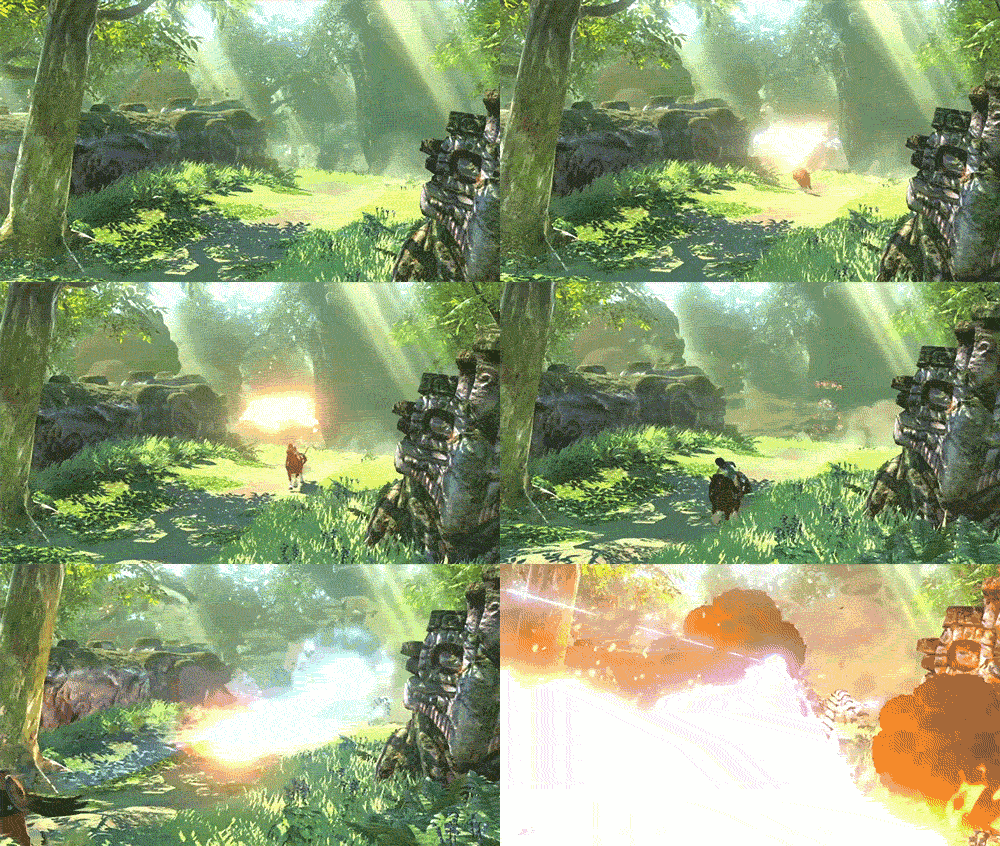
I would gladly eat my hat if the game has that image quality and grass render distance at launch.

It won't have that image quality but all video footage so far has been captured directly from the game running on Wii U. Of course, it's still subject to change by launch.
 
Yes Witcher3 is a very impressive looking game but for some reason it still doesn't look real in quite the same way that Star Wars Battlefront does.

I'm trying to put my finger on it.

Oh of course not. It also isn't going at all for the same look. I should point out that the lighting model in BF is a lot more subtle as they are using pre baked GI, which isn't something the Witcher 3 can use with its weather effects and TOD, (this isn't even considering that one is an open world and the other is an arena shooter).
 
But isn't it perfectly doable in 7th gen hardware?

As far as i can tell the reason it didnt get much use was because the trend started at the last breath of that cycle.

you need hdr lighting to make pbr work, and for the indirect lighting you are going to need hdr cubemaps. that means you need a lot of memory. cubemaps can be compressed/encoded to mrgb or something similar, but it affects quality. I'd also argue that ambient occlusion is a lot more important with pbr since painting the shadows onto the albedo isn't a good solution.
Another thing to consider is that when using pbr it can be jarring if skin and fx doesn't hold up to the quality of normal materials and since those shaders can be quite expensive it's probably quite difficult to make it all come together.

It was certainly doable though and some games did it(like remember me).
 
It won't have that image quality but all video footage so far has been captured directly from the game running on Wii U. Of course, it's still subject to change by launch.

I'd bet it will look like an aliased mess. Nintendo doesn't seem to know what IQ is.
 
I'm not sure what I'm supposed to be seeing in The Witcher 3 screenshots but that game looks so bloody flat and lifeless. The colour palette is so unnatural it most definitely doesn't help. Even in bright sunlight areas I see flat bland textures on grass and bushes, stonework looks flat and dull, barely no hint of any kind of stoney glossiness. Tiles on a floor which I presume should be at least a bit reflective but nothing there, flat and dull again. Some armour looks a bit metallic, even then it doesn't look realistically so to my eyes. Not up against stuff like The Order or Battlefront, which both have massively realistic surface looks to a whole bunch of things and looks a generation ahead of what I can see in TW3. As nice as it looks and impressive of course because of the scale, but flat and lifeless by comparison to those other games.
 
I see some others have noticed the clumpy flat lit leaf and foliage of W3. PBR on armor is great, but that quality hardly permeates in the open environments at all.
 
I've noticed that rocks and cliff faces in particular look a lot more natural (rock-like?)this gen than last. Some of the materials in Halo 5 look strange, but the rocks look good lol.
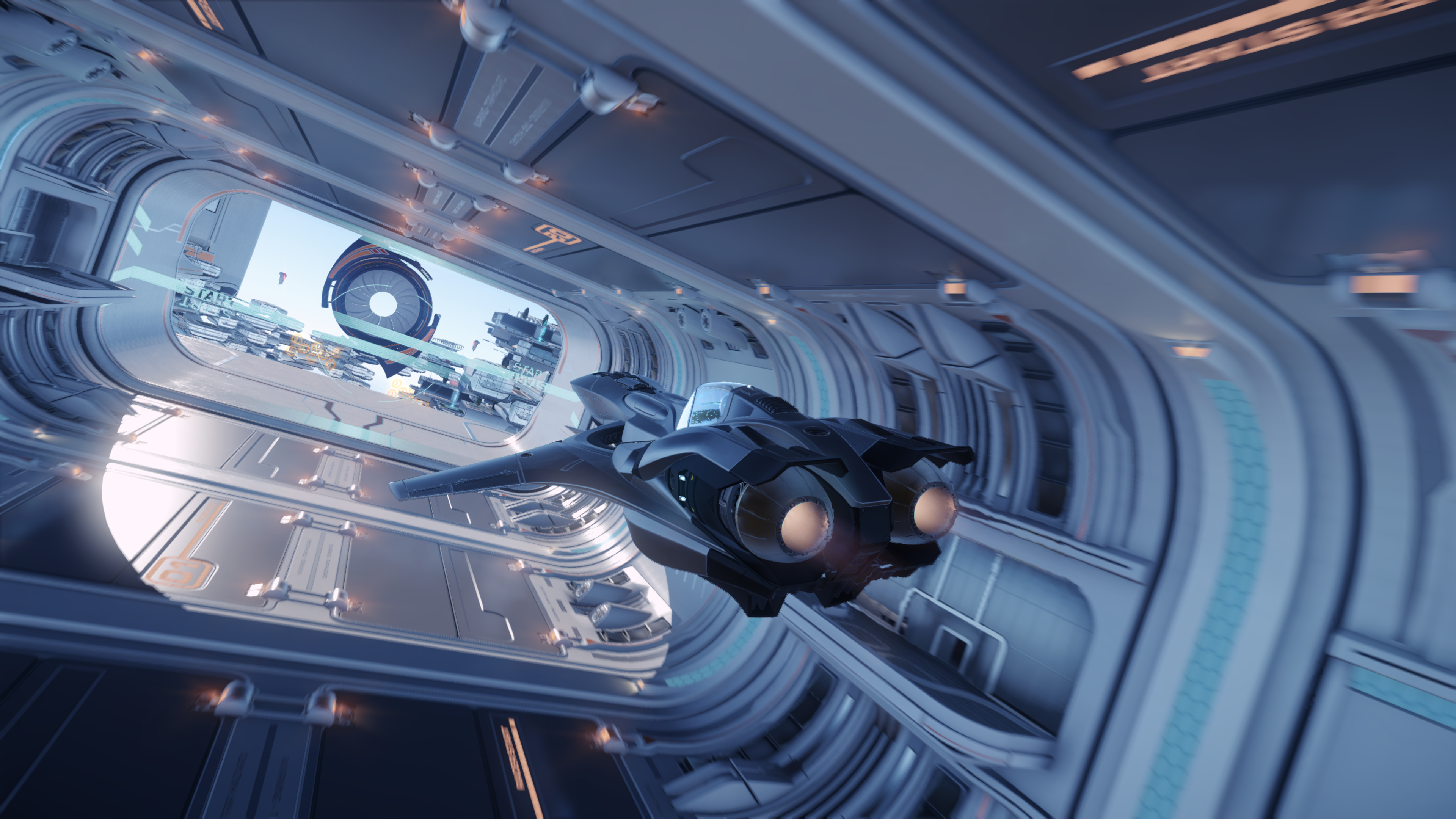
Screenshot-Original.png


Screenshot-Original.png


Screenshot-Original.png


Screenshot-Original.png
 
I think you have to give a lot of credit to the use of photogrammetry as well. It's what makes the textures and things look so life like....because it's actually REAL.

It's the same technique that was used in The Vanishing of Ethan Carter.
A good read up on it here:
http://www.theastronauts.com/2014/03/visual-revolution-vanishing-ethan-carter/

They actually got the real Star Wars props from the movies as well as real trees and things and then took pictures of them at all angles which are then put into the software and made into a 3d model. This allows them to have muuuuuuch more minute detail and look realistic vs just having an artist make the object (There simply isn't enough time for an artist to go into such tiny details on every-single object).
 
I've noticed that rocks and cliff faces in particular look a lot more natural (rock-like?)this gen than last. Some of the materials in Halo 5 look strange, but the rocks look good lol.

IMO, a majority of the "natural rock" look there is from the baked indirect lighting and not necessarily the materials themselves.
 
IMO, a majority of the "natural rock" look there is from the baked indirect lighting and not necessarily the materials themselves.

Now correct me if I'm wrong, but that lighting bake would've still been using the PBR materials' properties as part of its calculations, no? So the shaders would have at least contributed to the lighting looking that natural.
 
I'd bet it will look like an aliased mess. Nintendo doesn't seem to know what IQ is.

Depends on the game


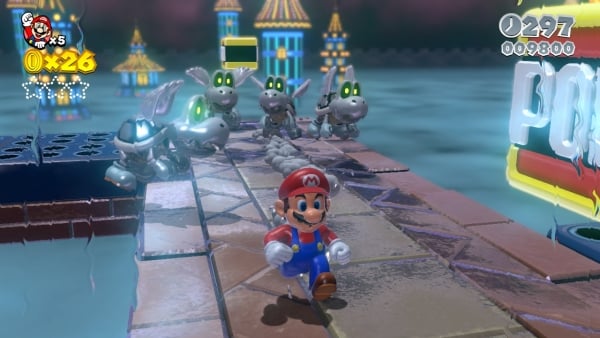
SM3DW_10-15.jpg


super_mario_3d_world-8.jpg


k2-_f02533b0-a837-4c35-a6de-1c19cc744a4d.v1.jpg


Ded7bCA.jpg


And there was a direct feed screenshot of the latest Zelda footage, but I can't seem to find it. However, the aliasing was pretty tame from what we could glean from the footage.

Also, draw distance still seems to be good

ZeldaWiiU-810x300.png


I just wish the footage wasn't so compressed.

The tree foliage in the actual gameplay gifs don't seem to have any motion at all.


It's hard to see, but they move. It's more obvious in the video than the gif, due to the speed of the gifs and loss of frames.
 
Why not proper image sizes w/o tons of compression? One would pretty easily see the IQ problems then methinks.

I cannot think of one Nintendo game with good IQ to be honest. A number do not have an AA at all (smash, toad thing, splatoon)


I just quickly grabbed the screens from a Google image search. I can pick better screens later.
 
Why not proper image sizes w/o tons of compression? One would pretty easily see the IQ problems then methinks.

I cannot think of one Nintendo game with good IQ to be honest. A number do not have an AA at all (smash, toad thing, splatoon)
Some have good iq insofar as the scene composition doesn't create as many problems at low sample rates versus grittier/realistic/whatever stuff.

They tend to be nothing special as far as AA, texture filtering, etc go.
 
Alright, I pulled these from the next-gen screenshot thread, so they should be native screenshots. I'm posting from my Nexus 6, so I don't know for sure.


sQf3CO.jpg


wiiu_screenshot_tv_01xxkai.jpg


Wii_U_screenshot_TV_0184_E.jpg


Good image quality != liberal use of AA. Nintendo does a pretty good job at designing games that don't need to rely on it, though that approach doesn't really work with more realistic games. Nevertheless, this isn't the Wii era of image quality for Nintendo.
 
I just quickly grabbed the screens from a Google image search. I can pick better screens later.

You can't talk about image quality with tiny compressed images. Here's some better ones from the console screenshot thread:

I believe Smash Bros and Wind Waker HD are 1080p, but pretty much all of Nintendo's other Wii U games are 720p, which means the image quality isn't great.

EDIT: Oh, now you post some real screenshots.
 
Alright, I pulled these from the next-gen screenshot thread, so they should be native screenshots. I'm posting from my Nexus 6, so I don't know for sure.
Good image quality != liberal use of AA. Nintendo does a pretty good job at designing games that don't need to rely on it, though that approach doesn't really work with more realistic games. Nevertheless, this isn't the Wii era of image quality for Nintendo.

That first shot...

I'd disagree on the use of AA. Nintendo more than any other game developer would totally benefit from MSAA or TAA. They don't have a lot of detail and their environments are composed of simple colours and geometric shapes. Basically, they nail the balance between the power available and art design that works within those constraints. Then they ignore AA, leaving those geometric shapes with messy edges and high frequency noise everywhere. The effect becomes even more noticeable on large televisions due to lack of multiple of 2 scaling and the low resolution.

They could have been close to pixar perfection, but they not only drop the ball they stomp all over it and rip it to shreds.
 
Some have good iq insofar as the scene composition doesn't create as many problems at low sample rates versus grittier/realistic/whatever stuff.
Of course. But....
They tend to be nothing special as far as AA, texture filtering, etc go.
No level of low contrast, diffuse artwork can save you from the versimiltude of aliasing and IQ problems saved by real AA and texture filtering.
Alright, I pulled these from the next-gen screenshot thread, so they should be native screenshots. I'm posting from my Nexus 6, so I don't know for sure.

img snip
Even these are like, super compressed images. 300-400kb jpegs are just not great to use as examples. Even this png image of bioshock 2 i took at 720p (that is primarily black)
bioshock2_2015_11_23_75lf5.png

is 1.1 mb.

You are also not seeing these games in real life 1:1 pixel mapped on a 20+" monitor. These are blown up, and rather large pixels. Linear scaling them to a native screen res makes more sense as a comparison.

Good image quality != liberal use of AA.
Yeah but a liberal use of AA pretty much always means good IQ. While one frame of an entire game may have enough low contrast edges, no motion, and few oblique angles to hide deficiences.. .but these change as soon as a game allows the camera to move. AA & texture filtering eliminate the need to play the art and low-motion game.

Nintendo does a pretty good job at designing games that don't need to rely on it, though that approach doesn't really work with more realistic games. Nevertheless, this isn't the Wii era of image quality for Nintendo.
TBH, beyond being higher resolution in a number of cases. I actually consider the situation rather similar to the Wii. Most games are upscaled, many images are raw and aliased, just the shaders are much better.
 
You can't talk about image quality with tiny compressed images. Here's some better ones from the console screenshot thread:


I believe Smash Bros and Wind Waker HD are 1080p, but pretty much all of Nintendo's other Wii U games are 720p, which means the image quality isn't great.

EDIT: Oh, now you post some real screenshots.

LOL

I'm posting from my phone, so I couldn't real tell that they were that resized/compressed! Sorry about that.

That first shot...

I'd disagree on the use of AA. Nintendo more than any other game developer would totally benefit from MSAA or TAA. They don't have a lot of detail and their environments are composed of simple colours and geometric shapes. Basically they nail the balance between the power available and art design that works within those constraints. Then they ignore AA leaving those geometric shapes with messy edges and high frequency noise everywhere.

They could have been close to pixar perfection, but they not only drop the ball they stomp all over it and rip it to shreds.

I'm not saying that they wouldn't benefit from it. I'm just saying that many of their games look good even if they don't have AA. They're certainly a far cry from being 'an aliased mess'.
 
That first shot...

I'd disagree on the use of AA. Nintendo more than any other game developer would totally benefit from MSAA or TAA. They don't have a lot of detail and their environments are composed of simple colours and geometric shapes. Basically they nail the balance between the power available and art design that works within those constraints. Then they ignore AA leaving those geometric shapes with messy edges and high frequency noise everywhere. The effect becomes even more noticeable on large televisions due to lack of multiple of 2 scaling and the low resolution.

They could have been close to pixar perfection, but they not only drop the ball they stomp all over it and rip it to shreds.

On the plus side, the majority of their games are 60 FPS, which is something I wouldn't trade for anti-aliasing or higher internal resolutions.
 
Even these are like, super compressed images. 300-400kb jpegs are just not great to use as examples. Even this png image of bioshock 2 i took at 720p (that is primarily black)
bioshock2_2015_11_23_75lf5.png

is 1.1 mb.

Compressed sure, but not nearly as lossy as the ones from the previous post.

Just for fun, here's your image as a 744 KB jpg:
OHAb.jpg
 
I'm not saying that they wouldn't benefit from it. I'm just saying that many of their games look good even if they don't have AA. They're certainly a far cry from being 'an aliased mess'.

As far as I'm concerned, the art design is phenomenal, I do consider them an aliased mess, because the aliasing really detracts from the art style. It hits that pixar uncanny valley for me.
 
As far as I'm concerned, the art design is phenomenal, I do consider them an aliased mess, because the aliasing really detracts from the art style. It hits that pixar uncanny valley for me.
Completely agree.
Compressed sure, but not nearly as lossy as the ones from the previous post.

Just for fun, here's your image as a 744 KB jpg:
OHAb.jpg

Make it 350-400 like the other images above. IMO, the difference shows.
 
Yeah but a liberal use of AA pretty much always means good IQ. While one frame of an entire game may have enough low contrast edges, no motion, and few oblique angles to hide deficiences.. .but these change as soon as a game allows the camera to move. AA & texture filtering eliminate the need to play the art and low-motion game.

Not all AA solutions are created equal. Apply liberal amounts of FXAA and your game will look like it's smeared with Vaseline. Apply liberal amounts of SSAA and your game will turn into a sideshow. Temporal AA is nice in motion, but screenshots reveal a different picture.

MSAA is typically the most balanced AA solution, but it doesn't play nice with deferred rendering.

AA does help image quality, but not in all cases, and you really have to be careful about how you use it, as there's always a cost.

As far as I'm concerned, the art design is phenomenal, I do consider them an aliased mess, because the aliasing really detracts from the art style. It hits that pixar uncanny valley for me.


To me, an aliased mess is an picture where nearly every line of geometry is aliased. That is not the case with most of Nintendo's HD games.

Anyway, it's fine it you think otherwise. Well just have to agree to disagree.
 
Not all AA solutions are created equal. Apply liberal amounts of FXAA and your game will look like it's smeared with Vaseline. Apply liberal amounts of SSAA and your game will turn into a sideshow. Temporal AA is nice in motion, but screenshots reveal a different picture.

MSAA is typically the most balanced AA solution, but it doesn't play nice with deferred rendering.

AA does help image quality, but not in all cases, and you really have to be careful about how you use it, as there's always a cost.

The thing here that people dislike about TAA or even FXAA is that it kills details. Nintendo games have no details to kill, softer edges might make them look even nicer.
 
The thing here that people dislike about TAA or even FXAA is that it kills details. Nintendo games have no details to kill, softer edges might make them look even nicer.

You're taking hyperbole too far now. Nintendo games aren't just made out of primary colors. Their art would be ruined it it were heavily blurred.

Let's be honest with each other. Do you really think I meant FXAA with "liberal amounts of AA"?

.

I don't read minds. FXAA isn't the only post-AA solution, and many post-AA solutions simply make the overall image blurrier.
 
I know Splatoon seems to use some sort of PBR lighting, since the skin tones in the character models that have been ripped from the game data appear different when viewed in something like Garry's Mod. It can be just the Source Engine's lighting model, which is no slouch btw, but it does not use PBR (it does have HDR post-Lost Coast).
 
I know Splatoon seems to use some sort of PBR lighting, since the skin tones in the character models that have been ripped from the game data appear different when viewed in something like Garry's Mod. It can be just the Source Engine's lighting model, which is no slouch btw, but it does not use PBR (it does have HDR post-Lost Coast).

I'm pretty sure all of EAD's Wii U games are using PBR. Could be wrong but that's how it looks to me.
 
Not ones from myself. Anything from DF usually has OK jpg compression, and some even can be brought back to png or bmp:

That full resolution Smash image is nice. Hopefully one day we can do to Wii U games what Dolphin does for Gamecube and Wii games.

I know Splatoon seems to use some sort of PBR lighting, since the skin tones in the character models that have been ripped from the game data appear different when viewed in something like Garry's Mod. It can be just the Source Engine's lighting model, which is no slouch btw, but it does not use PBR (it does have HDR post-Lost Coast).

That's not too surprising. You can transfer models and textures fairly easily between engines, but you usually lose the shader information in the process, and the lighting properties are probably very different as well. It might be possible to get a closer approximation in source by adjusting the material properties, like the light warp texture and the phong shader values.
 
From the screenshot thread.

I'm loving it so far. PS4/PC owners are in for a treat when this game hits those platforms.

screenshot-original-4gvuov.png


screenshot-original-4r3uws.png


Apologies to everyone on my friends list for the barrage of ROTR screenshots every time I sign in lol.

Man they really nailed the look of her jacket material.

11R01CKHA_large.jpg
 
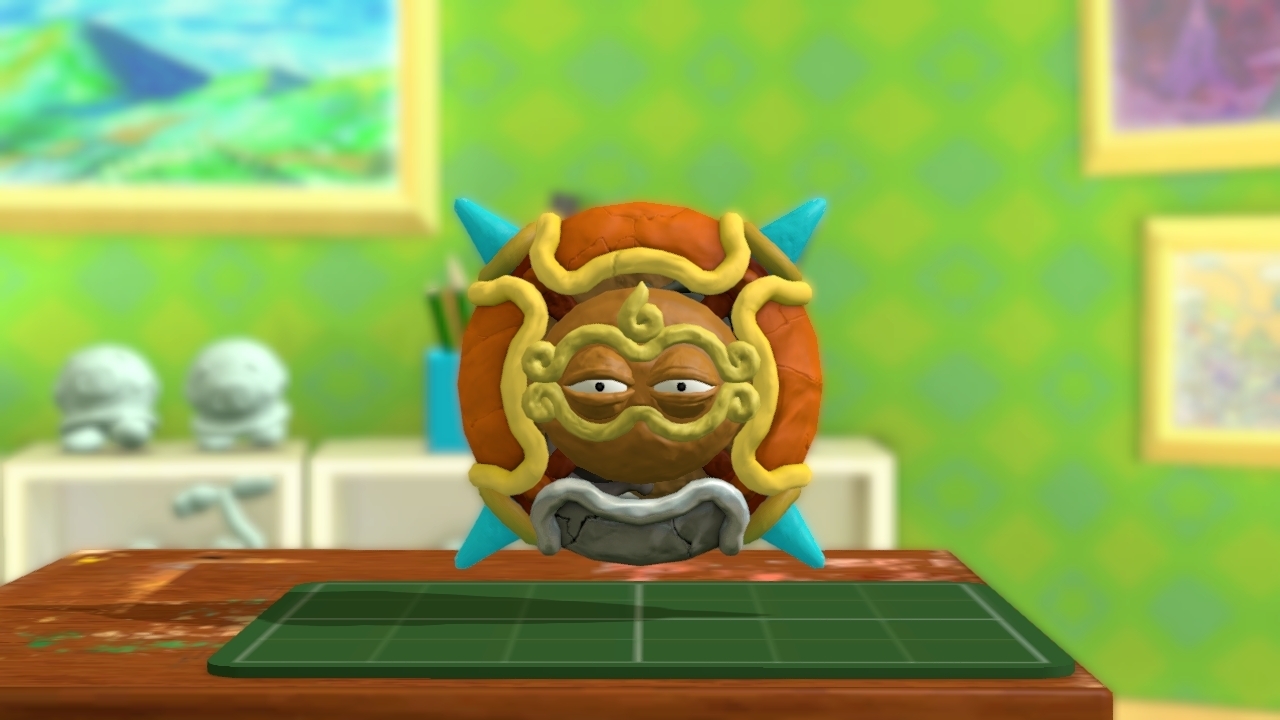
I don't think any Nintendo games use the standard PBR pipeline. HOWEVER, Nintendo's EAD Tokyo team(Galaxy games, 3D World, Captain Toad) has proven to be creative with their use of multi-pass rendering of texture maps and BDRF lighting models (for rim lighting) even when they were working on the Wii.

I remember a guy on Miiverse analyzed the graphics for 3D World, and discovered some interesting things about the game's graphics. I don't necessarily agree with his analysis completely, and some of his terminology is inaccurate, but from the screenshots he provided, it was clear to me that 3D World's (and by extension, Captain Toad's) engine's multi-pass approach effectively achieved the same kind of materials made possible by PBR.

He did this by mostly comparing incident angles with grazing angles, and also comparing the reflectance in scenes with sunlight vs scenes in shadow or ambient light. Now typically, the explanation for this kind of light behavior would be that there was a simple change in the Fresnel coefficient. However, unlike in the Galaxy games were the Fresnel effect was simply tacked onto surfaces, the surfaces in 3D World behave much more like actual materials that dynamically change their appearance in response to a change in the angle that makes incidence with the surface. And similar to PBR materials, Fresnel is applied at all angles, not just the grazing angles. Also, specular highlights are not just a texture map effect, but actually reflect light from the surface.

Examples

Incident angle

zlCfzRNoaWcFzv40Oi


Grazing angle

zlCfzRNocPMbFJpnez


Emissive material at varying angles

zlCfzRNou0MN24PHpd

zlCfzRNowZQSucrYfL

zlCfzRNoydUqSygEfV


[on Toad] Global Light

zlCfzRNpJv4USZwxGb


[on Toad] Rim Lighting

zlCfzRNpKcIy-lef7Z


Metallic materials

zlCfzRNoIpIX0241fB


Lambertian materials (also volumetric lighting in these shots)

zlCfzRN0Udgfktt9Pe

zlCfzRN0ojkCnJGqxN


Screen space refraction

zlCfzRQf1KQD67n-W6

zlCfzRQgYT4YUY2oSW


3D particles

zlCfzRSNLuYlPheFdi

zlCfzRSN7VM-At1D5l

zlCfzRSO1KAF6pE0DW

zlCfzRSPm1wOpeuUX0

zlCfzRSQAhwQY1-jtq

zlCfzRSP8VUG7G_509


The game employs a ridiculous amount of materials and effects, and it may not be using PBR, but it doesn't really matter when you can get your materials to look so suitable to the respective art style it's going for.

 
Well, mind you, I'm no expert but there looks to be more to the lighting model than just fresnel. Shots like these just have such a natural, consistent look to them that is certainly reminiscent of PBR.


Mario Kart 8 uses radiosity, so the GI effect is what you may be perceiving as PBR.
 
Top Bottom