• Hey Guest. Check out your NeoGAF Wrapped 2025 results here!

Movies you have seen recently?

Status
Not open for further replies.
Millers Crossing: Really liked it. Dialogue was awesome as to be expected. The performances were all on point. Didn't really
get why he did all he did throughout the movie. As by the end he seems to not care for anybody. Plus like most coens, they kind of expect you to figure it out. Anyone care to explain?
 
overcast said:
Millers Crossing: Really liked it. Dialogue was awesome as to be expected. The performances were all on point. Didn't really
get why he did all he did throughout the movie. As by the end he seems to not care for anybody. Plus like most coens, they kind of expect you to figure it out. Anyone care to explain?
It kind of depends on which part, but Byrne's character was loyal to his boss and als nervous about
getting caught fro sleeping with his girl
. On top of that he had to try and
protect an unrepentant brother of his girl
.

Sorry I can't remember names & I'm probably missing some points.
 
i don't know where else to put this, but what the fuck did cosmic bus get banned for? please don't tell me its perma....
 
swoon said:
i don't know where else to put this, but what the fuck did cosmic bus get banned for? please don't tell me its perma....
Really? Are you serious? Maybe it was a case of account suicide, you know he was talking about leaving a while ago.
 
swoon said:
i also find emotional reactions useful because that's what film is about and what the new wave beyond their politics is really arguing for - this emotional attach of life and film and that the reality of both merges in some way. they way they treat bogart for example - is an emotional response to his aesthetic. doing frame by frames of days of heaven won't teach you about having to choose to between staying in denver or going back home to something more familiar for instance - that's not his frame. but it is why he made the movie and what's you'll take with you and think about as you wait for the train.

See, I just disagree with this so strongly. Art is not about the emotion that it brings out in you; it is about communication, and more specifically, the how of that communication: is it put together in a way that creates depth and complexity, do the aesthetics complement the message, etc. It's through the construction that art is able to enlighten us, and in that sense, it does and must live on the intellectual level at the primary, for that which affects the head will affect the heart as well, but the reverse is not always true. And what's that about Days of Heaven and Kansas? I feel like you intended a different film title, or I'm not seeing the connection.
 
swoon said:
i don't know where else to put this, but what the fuck did cosmic bus get banned for? please don't tell me its perma....

What the hell? Noooooooo! He has a handle on YouTube under CosmicBus. I just sent him a comment on his page.
 
Snowman Prophet of Doom said:
See, I just disagree with this so strongly. Art is not about the emotion that it brings out in you; it is about communication, and more specifically, the how of that communication: is it put together in a way that creates depth and complexity, do the aesthetics complement the message, etc. It's through the construction that art is able to enlighten us, and in that sense, it does and must live on the intellectual level at the primary, for that which affects the head will affect the heart as well, but the reverse is not always true. And what's that about Days of Heaven and Kansas? I feel like you intended a different film title, or I'm not seeing the connection.

I disagree with this only because it means that an academic essay would be "art" and i personally would be very hard pressed to have that sentiment. (this may be a bit of hyperbole, but i feel like it works none the less)

However, now we're going into an endless discussion about art and what art is for which we, unfortunately, have no answer.
 
Nappuccino said:
I disagree with this only because it means that an academic essay would be "art" and i personally would be very hard pressed to have that sentiment. (this may be a bit of hyperbole, but i feel like it works none the less)

However, now we're going into an endless discussion about art and what art is for which we, unfortunately, have no answer.

It does not necessarily entail that. It's not saying that anything that is constructed is art, it's saying that the quality or not of a work of art is determined primarily by its construction, for it is in the construction that true depth inevitably ends up lying. Film is an art that is a composite of several different arts, but we can judge how the constituent components end up coalescing together. I'd argue that the screenplay is the most important component of any film, but your mileage may vary.

And I don't think that art is necessarily "for" anything. The function it serves is to entertain and, perhaps, enlighten. Anything else (i.e. art as a tool for social justice or other politically-motivated ends) just ends up muddying up the works and definitions.
 
Snowman Prophet of Doom said:
See, I just disagree with this so strongly. Art is not about the emotion that it brings out in you; it is about communication, and more specifically, the how of that communication: is it put together in a way that creates depth and complexity, do the aesthetics complement the message, etc. It's through the construction that art is able to enlighten us, and in that sense, it does and must live on the intellectual level at the primary, for that which affects the head will affect the heart as well, but the reverse is not always true. And what's that about Days of Heaven and Kansas? I feel like you intended a different film title, or I'm not seeing the connection.

it's about the communication of emotion through aesthetics right? i mean that's what pollack and de kooing were going for - at least. it enlightens us in not just itself and as this artistic material object, but in ourself and who we are and what these forms say about the world we are living in, the person creating and what they are trying to express. rothko is paint to many, religious to some others. it's not judging art's quality by the emotions it brings out in you, but by the emotions and understand it has within itself.

so we take me in denver in 2000 during my sabbatical from college, fucked up in some girl's apartment. i had to make that choice to stay or go - and after that choice was made, i understood paris, texas and that walk into the west and days of heaven and gere leaving on the bike - with his wife in the farmer's arms. i've done frame by frame walkthroughs of both of those movies. all i want to do now is talk about denver and leaving and the magic hour and not form and mis en scene. that's just where i am.

the new wave i would strongly argue has this opinion of the golden age of hollywood - and their films as criticism -woman is a woman's turn of musicals is almost too much - but i think it shows how they weren't interested in the camera work - but how the world looked and talked. they lived their lives through ralph meeker and bogart - their characters are obviously going to do the same. i think that's why the new wave and qt lose people emotionally, but why they grab me and others at the same time.

kim morgan blurs the story of her grandmother's extended stay in mental hospital, the rise of grunge music, the real life story of frances farmer and the so-so movie version of the film - her life and understanding of the events are framed by the discussion of farmer's life and that iconic image of farmer:

The hair, the cigarette, the smirk -- this is some woman, goddammit. I want more of her. Not some guy attempting to save the damsel in distress

and where i'm at in my life and how i want to think about film are moments like this, things only obtain through a life lived anchored by movies. you can read dozens reviews of that jessica lange bio pic, but this one is the one that really gets at the problem with it.
 
swoon said:
it's about the communication of emotion through aesthetics right? i mean that's what pollack and de kooing were going for - at least. it enlightens us in not just itself and as this artistic material object, but in ourself and who we are and what these forms say about the world we are living in, the person creating and what they are trying to express. rothko is paint to many, religious to some others. it's not judging art's quality by the emotions it brings out in you, but by the emotions and understand it has within itself.

so we take me in denver in 2000 during my sabbatical from college, fucked up in some girl's apartment. i had to make that choice to stay or go - and after that choice was made, i understood paris, texas and that walk into the west and days of heaven and gere leaving on the bike - with his wife in the farmer's arms. i've done frame by frame walkthroughs of both of those movies. all i want to do now is talk about denver and leaving and the magic hour and not form and mis en scene. that's just where i am.

the new wave i would strongly argue has this opinion of the golden age of hollywood - and their films as criticism -woman is a woman's turn of musicals is almost too much - but i think it shows how they weren't interested in the camera work - but how the world looked and talked. they lived their lives through ralph meeker and bogart - their characters are obviously going to do the same. i think that's why the new wave and qt lose people emotionally, but why they grab me and others at the same time.

kim morgan blurs the story of her grandmother's extended stay in mental hospital, the rise of grunge music, the real life story of frances farmer and the so-so movie version of the film - her life and understanding of the events are framed by the discussion of farmer's life and that iconic image of farmer:


and where i'm at in my life and how i want to think about film are moments like this, things only obtain through a life lived anchored by movies. you can read dozens reviews of that jessica lange bio pic, but this one is the one that really gets at the problem with it.

I disagree that it's the communication of emotion through aesthetics. Emotions are transient and non-transferable from person to person; what makes one person sad may leave another cold. Art is generally the communication of ideas, of things deeper than the purely emotional, and it's those ideas that move us TO the emotion, rather than the other way around.

And sure, art can help us to learn about ourselves and all that jazz, but all of that comes THROUGH the method of its construction. There's a reason why I think crying at The Bicycle Thief is worlds different than crying at Schindler's List, and it has to do with the immaculate and intelligent construction of The Bicycle Thief, wherein each character is limned fully and realistically and yet, somehow, poetically, as well. When I cry at the end of TBT, it's not just because the ending is sad but because the art leading UP to the sadness is so well-constructed than I cannot help but feel moved.

I mean, is Pollack really the person to go to when trying to figure out what art really is? I mean, I like Pollack well enough, but I also think it's rather clear that his ideas of art and what it is were rather ill-formed, for aesthetics, on their own, are meaningless; techniques have to DO something, have to build into something, for them to have any meaning or relevance. There's a galaxy of difference between the splotches of a Pollack and the splotches that comprise the grass in Christina's World; it's the same basic technique in both situation, but Wyeth takes the idea of splotchiness and abstraction and puts it into practice.

There's nothing WRONG with looking to art and seeing how it compares or relates to your real-life (indeed, that's what will often differentiate one critic from another), but the art of it, the construction of it (and I don't just mean the mise-en-scene or the "language of film," whatever that is supposed to mean, but basic things like character development, lack of cliche, etc.) has to be the primary in any critical discussion, for those are the things that are most generally transferable from person-to-person. I'm totally interested in hearing about people's personal experiences with the art, but that is, I think, of secondary importance to the criticism of the art itself. For what it's worth, I think the idea of a frame-by-frame analysis of a film is pretty unnecessary and wouldn't be interested in that kind of analysis, either.

The problem with most of the New Wave stuff that I've seen is that they seemed to think that merely deviating from what is standard for the sake of it was enough to carry an entire work of art, but fifty years later, most of what was shocking then is rather standard now. Sure, the jump cuts in Breathless were cool for the time, I guess, but they can't save the shallowness of the characters or the inconsistent motivations/narrative arcs that the movie offers nor remove the rather shallow discussions of art that the movie bogs itself down in. It's not the connection to other movies, the idea that movies are important to their characters, that's the problem; it's the, well, everything else.
 
o6a5gk.jpg


quite funny & charming.. definitely one of his better films that ive seen so far .. agree w/ prophet

the lady who played his mom sounded like marge simpson lol

edit: she is the voice of marge NM
 
My favorite part of Radio Days is how simple, yet profound, the final little bit of narration is. One of my biggest beefs with modern art cinema is the tendency for people to want to insert stuff that's philosophical and/or faux profound (but which almost always ends up as banal), yet Woody could, in his day, do it so damn effortlessly.
 
Snowman Prophet of Doom said:
My favorite part of Radio Days is how simple, yet profound, the final little bit of narration is. One of my biggest beefs with modern art cinema is the tendency for people to want to insert stuff that's philosophical and/or faux profound (but which almost always ends up as banal), yet Woody could, in his day, do it so damn effortlessly.

That's a pretty good description of The Thin Red Line. (I still love Days of Heaven. Flawless movie)
 
Insidious

It was a pretty good movie. A lot of other people got scared throughout pretty much the whole movie, but.. I guess movies just don't scare me anymore :(
I haven't seen a movie that has been successful in scaring me in a while.
 
watched tangled and really liked it. although i did skip through the singing parts. was kinda happy that disney decided to skip them during all these years and i hated it seeing them come back. they weren't even that good either.
 
Gooster said:
Late last year I watched the first Boondock Saints for the first time on Netflix, a movie loved by college students all over after 2004 or something -- I couldn't even finish it. It's not even like I haven't seen action movies that are intentionally cliche or ham it up but I didn't understand the love for it beyond Willem Dafoe's performance.
Yeah, I tried watching it a year ago after noticing how popular it is. I, too, couldn't stand finishing it.
 
The Third Man

What an incredible movie. Literally everything about the movie was perfect. It was one of those movies I wanted to re-watch immediately after finishing.
 
MidnightCowboy said:
The Third Man

What an incredible movie. Literally everything about the movie was perfect. It was one of those movies I wanted to re-watch immediately after finishing.

Just watched a few days ago, completely agree. Phenomenal film.
 
Tron Legacy (2010) - Was almost entirely what I expected it to be. Not a good story or dialog but awesome visuals and great soundtrack. I loved
Daft Punk's cameo
. The one big surprise I didn't know about was Michael Sheen doing his best David Bowie impression, was quite awesome to see. I still would like to see a rock opera by Daft Punk but with the visuals of Tron.

edit: On that note, how is Electroma?
 
Snowman Prophet of Doom said:
Not critics so much as theoreticians - Bazin, Deleuze, Sarris, etc. (though recently, I read a bit of Kim Morgan's stuff and found it pretty underwhelming, if you want a specific example). They're not devoid of insight, but you have to dig pretty deep through a lot of silliness in order to find the nice little nuggets. David Bordwell's the only theoretician that I really dig, and it's mostly because he almost completely refrains from making qualitative judgments of things; he comments on what is happening artistically and doesn't attempt to be critical about it, at least in his textbooks.

Critics I've come to accept as whiffing most of the time, and it doesn't really bother me except in a somewhat cursory way. There are the few good writers (I would not count Kael among them, from what I've read of her), but even in them, their prose style tends to outpace their critical accumen. The latter, the ability to really distinguish between good and bad, to explain why it is that I sense one thing as being quality and the other not, is what I really look to criticism for, and it's what I rarely get. Almost any critic can have this in moments, but rare is the critic with a good "batting average," as you put it, and I think that that matters. I know you don't care for him, but Dan Schneider's about the only critic who I think has the sort of perceptiveness that I mean (or, more accurately, the only one I've seen who has it consistently and shown that it transcends his mere personal biases), likely because he's an artist himself and so has put into practice what most critics are only commenting upon. In his life, Gene Siskel was pretty good at it as well. They're few and far between, though, which is a shame.

I'm having a little trouble discerning what it is that you're criticizing, especially in the case of Sarris, who is famous for his concision (The American Cinema is composed entirely of nuggets). As far as I can tell, the only thing these critics have in common, in contradistinction to Bordwell, is that they were rigidly systematic thinkers. This is a strength as much as it is a weakness, since every such system you acquaint yourself with gives you a readymade framework which you can apply to perceive films in a new way. Even if you find Deleuze largely silly and overburdened by ideology, I'd be very surprised if the concepts didn't frequently return to you when you're thinking critically about films, or even increase your sensitivity toward certain kinds of films.

To clarify my earlier point about batting averages---I only meant to suggest that you should take care not to prematurely dismiss critics simply because they don't share your feelings on particular films. While I defended Kael, I wouldn't necessarily agree with her about a great many films. Perhaps very few would agree with her excoriating review of La Dolce Vita (and others), but she writes with such conviction that it's hard not to sympathize with her reactionary derision of what she terms the "come-dressed-as-the-sick-soul-of-Europe parties"---she's calling out what she sees as the fashionable, the meretricious, the artistically opportunistic. Was she really so wrong to pass a negative verdict on these films? For me, yes, as she fails to capture what it is I find so ecstatic about them, but as you can see where she's coming from, not only are her thoughts worth entertaining, they positively contribute to a broader-minded understanding of these films.

Snowman Prophet of Doom said:
I'm totally interested in hearing about people's personal experiences with the art, but that is, I think, of secondary importance to the criticism of the art itself.

This and the whole business of "transcending personal biases" seems like a huge mistake to me. Film criticism has to be grounded in the immediate perception of films. The work of criticism is only to serve our understanding of these personal experiences, which we may only by good fortune share intersubjectively. Because I'm too tired to argue this point for myself, I'm going to quote from Santayana:
What is loosely expressed by saying that any one ought to see this or that beauty is that he would see it if his disposition, training, or attention were what our ideal demands for him; and our ideal of what any one should be has complex but discoverable sources. We take, for instance, a certain pleasure in having our own judgments supported by those of others; we are intolerant, if not of the existence of a nature different from our own, at least of its expression in words and judgments. We are confirmed or made happy in our doubtful opinions by seeing them accepted universally. We are unable to find the basis of our taste in our own experience and therefore refuse to look for it there. If we were sure of our ground, we should be willing to acquiesce in the naturally different feelings and ways of others, as a man who is conscious of speaking his language with the accent of the capital confesses its arbitrariness with gayety, and is pleased and interested in the variations of it he observes in provincials; but the provincial is always zealous to show that he has reason and ancient authority to justify his oddities. So people who have no sensations, and do not know why they judge, are always trying to show that they judge by universal reason.

Thus the frailty and superficiality of our own judgments cannot brook contradiction.

Since it should be the task of film criticism to unite us in an understanding and appreciation of the medium rather than to divide us along sectarian lines, it seems thoroughly misguided to suppose it's possible, or (much worse) desirable, to "transcend" personal biases with criticism and strive for a false objectivity that is really just a narrow self-centeredness. To really care about objectivity means to attend more closely to the gifted critics with whom you disagree, not the ones who most often only flatter your personal biases.
 
Limitless - Bit of a strange one. The whole thing felt like a really long trailer, like it was all style and no substance. Pretty crappy, but it kept me entertained. I felt like Robert de Niro was just forced in there somehow for the sake of having him in it. Also, the action scenes really weren't very well done at all.
 
Bunch of oldish stuff

All of the Friday movies.
Tremors
Me, Myself and Irene
Porky's (watching number 1 now on second monitor, awesome movies and everyone should watch them. Easily crush American Pie and the like.)
King Pin
Valhalla Rising (errrr wtf)
 
Snowman Prophet of Doom said:
See, I just disagree with this so strongly. Art is not about the emotion that it brings out in you; it is about communication, and more specifically, the how of that communication: is it put together in a way that creates depth and complexity, do the aesthetics complement the message, etc. It's through the construction that art is able to enlighten us, and in that sense, it does and must live on the intellectual level at the primary, for that which affects the head will affect the heart as well, but the reverse is not always true.

I disagree with this. It's a one dimensional way to look at art. I bet there are thousands of artists who don't give a shit about communication but just want to express themself for their own sake. Who are you to judge what the intention of the artists are and how people have to react to art?

And art doesn't have to work on the intelectual level. In that case the vast majority of naive and bad art wouldn't be considered art anymore.

What you describe is merely your own personal ideal for good art. It's far from being an universaly acceptable definition of what art in general is about.
 
watched "3 days later": was enjoyable but
why should I be happy he got his innocent wife out of jail if he goes and kills 2 men? its so stupid. I dont care that they were drug dealers, he killed two of them!

also watched "the fighter": was good and bale was great but the fight scenes were pretty bad, but maybe thats because I watch boxing relatively often.
 
2002-gangs_of_new_york-5.jpg


Gangs of New York

LOVED this movie! Daniel Day-Lewis' character The Butcher was incredible! Movie is well over 2 hours and I didn't want it to end. I didn't care too much they way they handled the ending though,
I wanted to see a straight up epic battle between the Natives and the Dead Rabbits
, but overall, 5/5.
 
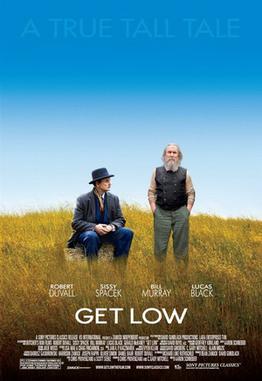
Get_Low_Poster.jpg


Get Low - An endearing drama. Less known going into it, the better. It was god-like watching Duvall, Spacek, and Murray deal with the material. Black played the perfect contrast character. And concerning a certain scene, the "finale"-ish moment,
the monologue from Duvall's standpoint has solidified him in my opinion as one of the greats - so much potential, always held back in a restraint that's amazing to watch. What a moment.

Reminded me of Godfather Part 2 where Tom finally confronts Michael about his under-use.

Edit: I understand the hatred for Gangs of New York, but the cast SELLS that movie so well. Really love it.
 
rocksteady1983 said:
Gangs of New York

LOVED this movie! Daniel Day-Lewis' character The Butcher was incredible! Movie is well over 2 hours and I didn't want it to end. I didn't care too much they way they handled the ending though,
I wanted to see a straight up epic battle between the Natives and the Dead Rabbits
, but overall, 5/5.
I wasn't a huge fan of this movie. I don't really know what it was that I didn't like either.

Day-Lewis was incredible though, but that's to be expected.
 
creativity said:
I'm having a little trouble discerning what it is that you're criticizing, especially in the case of Sarris, who is famous for his concision (The American Cinema is composed entirely of nuggets). As far as I can tell, the only thing these critics have in common, in contradistinction to Bordwell, is that they were rigidly systematic thinkers. This is a strength as much as it is a weakness, since every such system you acquaint yourself with gives you a readymade framework which you can apply to perceive films in a new way. Even if you find Deleuze largely silly and overburdened by ideology, I'd be very surprised if the concepts didn't frequently return to you when you're thinking critically about films, or even increase your sensitivity toward certain kinds of films.

To clarify my earlier point about batting averages---I only meant to suggest that you should take care not to prematurely dismiss critics simply because they don't share your feelings on particular films. While I defended Kael, I wouldn't necessarily agree with her about a great many films. Perhaps very few would agree with her excoriating review of La Dolce Vita (and others), but she writes with such conviction that it's hard not to sympathize with her reactionary derision of what she terms the "come-dressed-as-the-sick-soul-of-Europe parties"---she's calling out what she sees as the fashionable, the meretricious, the artistically opportunistic. Was she really so wrong to pass a negative verdict on these films? For me, yes, as she fails to capture what it is I find so ecstatic about them, but as you can see where she's coming from, not only are her thoughts worth entertaining, they positively contribute to a broader-minded understanding of these films.


This and the whole business of "transcending personal biases" seems like a huge mistake to me. Film criticism has to be grounded in the immediate perception of films. The work of criticism is only to serve our understanding of these personal experiences, which we may only by good fortune share intersubjectively. Because I'm too tired to argue this point for myself, I'm going to quote from Santayana:


Since it should be the task of film criticism to unite us in an understanding and appreciation of the medium rather than to divide us along sectarian lines, it seems thoroughly misguided to suppose it's possible, or (much worse) desirable, to "transcend" personal biases with criticism and strive for a false objectivity that is really just a narrow self-centeredness. To really care about objectivity means to attend more closely to the gifted critics with whom you disagree, not the ones who most often only flatter your personal biases.

My problem with such arguments is that they presume that because SOME people cannot think past their own personal biases, then nobody can. I simply disagree with this, for I don't think the human being so limited, at least not by any inherent forces. Again, I don't discount the idea of a personal experience with a film, but at the same time, I think that any critic worth their salt ought to be able to separate whether they liked/disliked a film from whether it was good or bad. I don't like Winter Light, all that much, but I also saw, almost immediately, that it was a great and greatly-written film that simply didn't cater to many of my aesthetic preferences. Same with Last Year at Marienbad, which I outright HATE but still think that it's a good movie. I fucking love Step Brothers, but I would be wrong to defend that on any sort of artistic grounds because it doesn't really sustain itself at any level beyond my liking of it. Indeed, the very fact that I DO discern my own personal biases and the place from whence they came and choose to try and think beyond them for the sake of criticism seems to me rather a refutation of that Santayana quote, and I don't think that there's anything provincial and superficial about such a judgment.

If one person says a film is good and one that it is bad, then logic dictates that one must necessarily be right and one wrong (or, more likely, given human weakness, one is MORE right than the other, for they may very well have some faulty reasoning), for one object cannot, in the same logical universe, possess two exclusive qualities (i.e. an object cannot be a cube and a tetrahedron at the same time). That's not to say that a film cannot have constituent parts that are good and bad, but those have to add up to something, have to lend themselves to an overall level of quality. The fact that different people will do the math differently and come up with different conclusions does not render every single conclusion a valid one; that seems to me something of a solipsistic way of looking at it. Rather, the breakdown will be something more complex. A small percentage will come up with a right (or more right) conclusion as well as showing a process in reaching that conclusion that is consistent and replicable (that is, to keep up with the math test metaphor, they will have the right answer and show the work that they did to get there). Another percentage will have the right answer but show that they may not be able to consistently hit the mark because there is a flaw in the way that they do their work or consider their problem. The rest, the ones that hit the wrong conclusion, may receive partial credit for the way in which they did their work. It's not the best metaphor, for art is neither math nor science, but criticism is, I think, somewhere in a middle ground between the two.

That's what I mean. And I don't think that criticism IS "to unite us in an appreciation and understanding of the medium." It would be nice if this is what it did, but if criticism is just people sharing how a film made them feel, then I feel like it becomes a much less useful medium than one that attempts to think past such things and more toward the overall construction of a work of art, for this latter is likely to be much more agreeable between people of differing stripes and, what's more, to make the great art more reproducible. What produces an emotional experience will not and cannot be the same from person-to-person, but what produces an intellectual response in people of comparable intelligence levels is more measurable and will, 99/100 times, produce an emotional response of some sort, as well. The thing is, I have no PROBLEM with the fact that I may be wrong on something. I try to see a film for what it is as best I can and make sure people understand why I came to the conclusion that I did. History will either bear me out or beat me, but I'll be damned if the critics who almost always gave Stanley Kubrick's work mixed or lukewarm reviews when it premiered have not been proven downright wrong by the march of time. No opinion can be invalid, but one opinion CAN prove itself more valid than others if the source can both show and tell the process by which they came to their beliefs.

Edit: WorriedCitizen, it is the intellectual in art that survives the dirt of history. The shit gets buried, particularly that shit that had no real value outside of the its ability to manipulate the emotions(for every society will have a different idea of what should or does produce emotion, as that often IS dictated by temporal experience and aesthetic preference); what survives is, usually, that which lived on some intellectual level primarily (or at least in some part). Nobody really reads something like Uncle Tom's Cabin these days except as a sort of historical curiosity, but everybody reads Huck Finn and The Great Gatsby. I believe that what separates these works is that in the latter works, there is an intelligence to their construction that transcends the fashions of the day and is appreciable regardless of your station in life. "Art for art's sake" is the right idea; "art for the artist's sake," which would be the way that art would come out of an impulse that is non-communicative (a generalization, I admit) leads to stuff like AbEx, or a Yoko Ono piece where she puts an apple on a pedestal and nothing else.

 
Just watched The Corporation a 2003 documentary. wtf at the happy birthday be copyrighted and commanding up to 10k to be said in a movie.
 
chicko1983 said:
also watched "the fighter": was good and bale was great but the fight scenes were pretty bad, but maybe thats because I watch boxing relatively often.

This is pretty much the consensus on the film. Excellent acting, joke boxing.
 
Snowman Prophet of Doom said:
Edit: WorriedCitizen, it is the intellectual in art that survives the dirt of history. The shit gets buried, particularly that shit that had no real value outside of the its ability to manipulate the emotions(for every society will have a different idea of what should or does produce emotion, as that often IS dictated by temporal experience and aesthetic preference); what survives is, usually, that which lived on some intellectual level primarily (or at least in some part). Nobody really reads something like Uncle Tom's Cabin these days except as a sort of historical curiosity, but everybody reads Huck Finn and The Great Gatsby. I believe that what separates these works is that in the latter works, there is an intelligence to their construction that transcends the fashions of the day and is appreciable regardless of your station in life. "Art for art's sake" is the right idea; "art for the artist's sake," which would be the way that art would come out of an impulse that is non-communicative (a generalization, I admit) leads to stuff like AbEx, or a Yoko Ono piece where she puts an apple on a pedestal and nothing else.
A really interesting discussion.
Anyway: What about 2001 though? That film will probably live up o be remembered, and it's the pinnacle of art as aestethics.
Nevermind that the fanbase, tried to attach to it all kind of meanings and bullshit, from what Kubrick has said, the film was made to create suggestion, so it played on emotions alone, basically.
But isn't the concept itself, of exploring what emotions are triggered by which element, a way of comunicating something, a way of telling something about our time and society? Granted, if this is done on purpose.
 
hey, this is random, but does anyone have a screen cap, or can you make one, from the movie "Blow" when Ray Liotta comes to the door and his face is all white?

I can't remember what is evening happening in the movie, I think it's a drug fueled hallucination or something. Can't find anything on Google image search.
 
UrbanRats said:
A really interesting discussion.
Anyway: What about 2001 though? That film will probably live up o be remembered, and it's the pinnacle of art as aestethics.
Nevermind that the fanbase, tried to attach to it all kind of meanings and bullshit, from what Kubrick has said, the film was made to create suggestion, so it played on emotions alone, basically.
But isn't the concept itself, of exploring what emotions are triggered by which element, a way of comunicating something, a way of telling something about our time and society? Granted, if this is done on purpose.

2001 is not pure aesthetics. Indeed, it affirms the need of a great script and writing for film to succeed. The characters are all very human, even the killer robot, and though it DOES create suggestion, it does so intelligently, creates depth and poetry out of it, rather than merely suggesting for the sake of suggesting.

also, I watched Wings of Desire in class today. Still pondering, but after 2 films from him, I just kinda feel like Wenders is Herzog + banalities. Interesting moments, but I don't think his films ever really coalesce into a solid whole. Again, this is after only two; by the end of the summer, I should have a better idea.
 
Anyone know any good sites that deal with film interpretation? Not necessarily reviews but just in-depth interpretations of films themselves. I recently watched Toy Story 3 on Netflix again and for some reason this time I noticed that there's a lot of death symbolism sprinkled throughout.

When I googled Toy Story 3 interpretations this was one of the most popular theories, as was a more controversial one that it was an allegory to the Holocaust. I'm not sure I buy into most of these, but they're extremely interesting to read. Any suggestions?
 
Futureman said:
hey, this is random, but does anyone have a screen cap, or can you make one, from the movie "Blow" when Ray Liotta comes to the door and his face is all white?
I can only guess it's one of these:

vlcsnap-2011-04-07-16h34m26s38.jpg

vlcsnap-2011-04-07-16h35m25s51.jpg

vlcsnap-2011-04-07-16h37m33s128.jpg
 
Snowman Prophet of Doom said:
Edit: WorriedCitizen, it is the intellectual in art that survives the dirt of history. The shit gets buried, particularly that shit that had no real value outside of the its ability to manipulate the emotions(for every society will have a different idea of what should or does produce emotion, as that often IS dictated by temporal experience and aesthetic preference); what survives is, usually, that which lived on some intellectual level primarily (or at least in some part). Nobody really reads something like Uncle Tom's Cabin these days except as a sort of historical curiosity, but everybody reads Huck Finn and The Great Gatsby. I believe that what separates these works is that in the latter works, there is an intelligence to their construction that transcends the fashions of the day and is appreciable regardless of your station in life. "Art for art's sake" is the right idea; "art for the artist's sake," which would be the way that art would come out of an impulse that is non-communicative (a generalization, I admit) leads to stuff like AbEx, or a Yoko Ono piece where she puts an apple on a pedestal and nothing else.


Again you're just stating your very personal view of what good art is and i don't think it's universaly applicable or relevant for a definition of art in general. Art is free. The dogmas are just in your head. Nobody knows what people in the future will remember and appreciate of todays art. In the past many artists only found wide recognition after their death. Mozart's music hundred of years later still creates emotions in people who don't know shit about music.

Funny that you mention Uncle Tom's Cabin and Huck Finn btw. Both books sit next to each other on my bookshelf and i've read them both when i was younger. The former is a good example why your opinion isn't universal. While it has a horrible reputation in your country for creating racial stereotypes it's still a popular book in my country and remembered favourably in humanistic circles for its influence on the abolishment of slavery.
 
Diary of a Country Priest (1951)
So apparently this is where Bresson's style emerged. Impossible not to think of Balthasar and Mouchette. I remember seeing Balthasar for the first time with Godard's quote in mind that it paints the world as it is, and I didn't want to accept that at all. It was very upsetting to watch. And now the priest's quote at the end I don't know how to take. Is it a sliver of hope or an irony, purely Catholic or not? Well if he was without hope he wouldn't have made Pickpocket and A Man Escaped. But I've become more open to the futility experienced throughout Priest and the other two. I don't really know why. There is great empathy though even for his villain characters who really are shaped by their environment more than anything.

The Social Network (2010)
It's funny at times but not as much as it should be. Sorkin's style of writing lends itself so well to comedy but everything has to be so dramatic for some reason. Line about getting a few thousand page clicks that's delivered as if the detective protagonist realizes he is in fact the killer. Thought the asshole hypothesis was perfectly fine. Didn't have to question that and make Zuckerberg into a tragic figure. I don't know, you have a writer and a director doing everything they can to make it as SEXY as possible when it doesn't really need it. Or maybe that's a commentary? About our generation? ??? ?

Stray Dog (1949)
Cool crime story almost perfectly executed. I think when people think of noir nowadays what they have in mind is more along the lines of this than actual noir. Rookie cop suffering from his error is done a bit too heavy-handed, but I guess that's Kurosawa, deal with it. Shimura is SO GOOD in this just SO GOOD.

Cleo from 5 to 7 (1962)
Is there a reason this doesn't go to seven at all? I like the slow transformation of the character, or at least what is shown of her, from shallow and spoiled to introspective and personable. Much more can be inferred than is actually said or shown, which is great. It's like one of those modernist novels but with all the thoughts and thoughts and thoughts visualized in a simple, effective way.

Bad Day at Black Rock (1955)
Coolest cast ever, damn. High Noon didn't do it for me but this one is great. Takes all these very familiar western scenes to uncharted places. Love how moody it is.

Still Life (2006)
I always feel ill-equipped writing about something like this. It deals with something very specific that I'm totally ignorant of, but I was very impressed with what I was shown. EDUCATIONAL. More generally though it's a beautiful lament for things lost, and uncertainty about the future.

for the record i edited this because i can't write well whops c u later
 
Source Code was a pleasant surprise for me, and inspired me to watch Duncan Jones' first film - Moon. I actually picked up the Blu-Ray on Amazon a while back when it was about nine dollars, but never found the motivation to watch it.

I really enjoyed it. I don't think it's a masterpiece, but it's really well written and executed. Rockwell is fantastic, as always. I remember reading a spoiler regarding
the clones
a while back somewhere, so I suppose it's possible that surprise may have hindered my enjoyment of the movie. I don't really agree with that though, as it was such a major part of the plot that it wasn't like it ruined any twist ending for me.

It had a wonderful portrayal of the sense of isolation. I'm of the stance that if one person can carry a movie themselves, the movie has done a great job. Another instance of this recently is 127 Hours, which I thought Franco handled admirably. Back to Moon, I really enjoyed the sci-fi elements. A lot of the imagery was really astonishing on what I seem to recall being a fairly limited budget.

Definitely a good buy for me and I'd definitely recommend anyone who's a fan of the sci-fi genre to find the time to watch it.

On a side note, I find myself almost inspired to watch Sunshine again because of the similar environment, but then I remember the end of that movie, which cripples a big part of it for me.
 
Status
Not open for further replies.
Top Bottom