• Hey Guest. Check out your NeoGAF Wrapped 2025 results here!

Movies you have seen recently?

Status
Not open for further replies.
I think my problem with No Country for Old Men, the more away from it I get, is that Anton Chigurgh is kind of a cartoon character. He's cool/badass/etc. but there's really nothing human in him, nothing that brings him beyond a good realization of the stereotypical professional hitman. I think that's one of the reasons that I think Crimes and Misdemeanors is so great: it's one of the most perfect, realistic realizations of a murderous sociopath ever put to film.
 
tangled-poster.jpg


God damn that was amazing. Best animated movie in a long while. I cry like babies.
 
Snowman Prophet of Doom said:
I think my problem with No Country for Old Men, the more away from it I get, is that Anton Chigurgh is kind of a cartoon character. He's cool/badass/etc. but there's really nothing human in him, nothing that brings him beyond a good realization of the stereotypical professional hitman. I think that's one of the reasons that I think Crimes and Misdemeanors is so great: it's one of the most perfect, realistic realizations of a murderous sociopath ever put to film.

He might as well be a T-800
 
Snowman Prophet of Doom said:
I think my problem with No Country for Old Men, the more away from it I get, is that Anton Chigurgh is kind of a cartoon character. He's cool/badass/etc. but there's really nothing human in him, nothing that brings him beyond a good realization of the stereotypical professional hitman. I think that's one of the reasons that I think Crimes and Misdemeanors is so great: it's one of the most perfect, realistic realizations of a murderous sociopath ever put to film.

Anton Chigurh isn't a human. He is a force of nature. That was his purpose.
 
I'll probably go into more detail on my next block of ratings, but after watching Whisper of the Heart and Gun Crazy last night, it's safe to say there are still movies that can dazzle me.
 
CaptYamato said:
Anton Chigurh isn't a human. He is a force of nature. That was his purpose.

Just because an author intends something doesn't make it good. NCfOM was also a commentary on coincidences and luck but that doesn't mean I enjoy watching 2 hours of random happenstance because its "making a statement"
 
Nappuccino said:
Just because an author intends something doesn't make it good. NCfOM was also a commentary on coincidences and luck but that doesn't mean I enjoy watching 2 hours of random happenstance because its "making a statement"
Nothing was Random except when he found the money. Have you read the book? Everything is explained.
 
CaptYamato said:
Nothing was Random except when he found the money. Have you read the book? Everything is explained.

Does this include the car crash at the end or the two-face coinflips or the timing of everything (Llewellyn is constantly being found by everyone at precisely the right (or wrong) time).

Not to mention the authors writing style makes it impossible for me to read what he's doing. Its too simplistic to keep my interests. I have no desire to read another McCarthy book.
 
CaptYamato said:
Nothing was Random except when he found the money. Have you read the book? Everything is explained.
Movies aren't companion pieces to books. At least I don't treat them that way. Movies based on books should stand on their own. A movie that requires you read the book it was based on to make it "make sense" or just make the movie watchable is not a good adaptation, IMO.
 
Watched the original 1960s The Housemaid last week.
Loved it too bits and was quite shocked at how controversial it must have been at the time.

Read on here a while ago about someone who wished her dead when they watched the movie many years ago.
Well, can't say that I felt the same as I actually sympathized a huge deal with her after everything that happened.
Lovely movie and I'm very glad that I found a DVD copy as it seems to be hard to get a hold off.
The original Korean Digipack release has English subs btw.

There were 2 reels that were missing when they restored the movie, but they used a different, and I have to say a much much lower quality print that was found a decade later for those two reels.
So the movie goes from looking absolutely incredible, to faded and blurry on two occasions for about 10 minutes.
Don't mind it though knowing the history of the film, and I'm just glad that we got to see the full version in one way or another.

I just saw the trailer for the 2010 "remake" and I have to say, after listening to a podcast that talks about both films, I'm very much looking forward to seeing this re-imagining of the classic since it isn't just a simple makeover.

The original appears to be on free-to-watch at mubi.com right now, so tracking down a copy to watch couldn't be easier. :)
 
All that Heaven Allows (1955)
Take that, suburbia. Finally got that Sirk boxset and finally saw one of his movies. Realize now that part of the reason I waited so long is that I was unconsciously afraid to be disappointed. Melodrama to me has been this elevated ideal, corny, I know, but it's true, and Sirk has been made synonymous with the term in my mind. But this didn't disappoint in the least. Finally see the influence he's had on Fassbinder. Fear Eats the Soul is the obvious one, but so much of what I loved about Maria Braun can be traced directly to this: the colors, the framing, the body language. "Acting has more to do with the strategic setting of gestures in space than it has to do with a trip to the flea market of emotions." I took that from a Top 10 on the Criterion site. The emotions are familiar, but the setting, the placement, the positioning, is perfect. This is probably why that bit in Johnny Guitar where Joan Crawford spins the roulette wheel and throws her head back is the best piece of acting in the world. Anyway great movie.

3-Iron (2004)
http://www.youtube.com/watch?v=fZM38u1KQY4

I Was Born, But... (1932)
Very light-hearted at the beginning with all the Our Gang-lite antics. But I like the boldness of expecting adults to laugh at crude children's humour. It works, of course. Something about universality??? Ozu was always great when he directed children. Good Morning is linked to this. Second half is brilliant. The subject of kids trying to make sense of the adult world is one that I really love. It exposes some things and points out the importance of others. None of it didactic, all of it believable.

Shoeshine (1946)
Speaking of kids, De Sica is probably the best director of children that I know of. It's the familiar stuff: The effects of the war and vestigial fascism, people (or kids in particular) turning to petty delinquency, at the mercy of others... But there's plenty to distinguish it. The friendship torn apart and all the above forcing the boys to mature in a twisted, hurried way. As a prison drama, many of its scenes could have taken place in an adult prison (and many have). He was melodramatic and I suppose that does undermine the realism a bit, but that's just a word people gave it so who cares.
 
Dali said:
Movies aren't companion pieces to books. At least I don't treat them that way. Movies based on books should stand on their own. A movie that requires you read the book it was based on to make it "make sense" or just make the movie watchable is not a good adaptation, IMO.

it does stand alone, this idea that nature and fate can be explained by a book or by life is looking at it the wrong way.

they don't watch detour because it was the only thing on tv.
 
Cosmic Bus said:
I'll probably go into more detail on my next block of ratings, but after watching Whisper of the Heart and Gun Crazy last night, it's safe to say there are still movies that can dazzle me.

this excites me. i guess i should watch whisper of the heart also.

gun crazy might be my ideal film. though for some reason it didn't crack my top 20 though versions of the ideal did.
 
swoon said:
it does stand alone, this idea that nature and fate can be explained by a book or by life is looking at it the wrong way.

they don't watch detour because it was the only thing on tv.
I've only seen No Country once and that was when it was first released. I don't remember much about it except everyone liking it waaaaay more than me and talking it up like it was some amazingly great movie. My comment was just my two cents on that way of thinking in general.
 
Dali said:
I've only seen No Country once and that was when it was first released. I don't remember much about it except everyone liking it waaaaay more than me and talking it up like it was some amazingly great movie. My comment was just my two cents on that way of thinking in general.

keep up the good work
 
CaptYamato said:
Anton Chigurh isn't a human. He is a force of nature. That was his purpose.
No, and I think you missed the point of the movie. Chigurh is a very, very talented and amoral killer who thinks he's a force of nature, and his coin-flippings and revenge killings, ultimately, have no meaning beyond ego satisfaction.
He never did find Llewelyn, and for all we know he was arrested, or died, shortly after his last scene.

Snowman Prophet of Doom said:
I think that's one of the reasons that I think Crimes and Misdemeanors is so great: it's one of the most perfect, realistic realizations of a murderous sociopath ever put to film.
Huh? Perfect, realistic realizations of murderous sociopaths don't involve nigh-endless where-is-my-god-now angsting.
 
DeadTrees said:
No, and I think you missed the point of the movie. Chigurh is a very, very talented and amoral killer who thinks he's a force of nature, and his coin-flippings and revenge killings, ultimately, have no meaning beyond ego satisfaction.
He never did find Llewelyn, and for all we know he was arrested, or died, shortly after his last scene.

Yep. He finally realizes this when
he decides to kill Llewelyn's wife at the end and she tells him flat out that what he does has nothing to do with chance or fate, he's just an asshole killing people for money and there is no justification for what he does.
 
CaptYamato said:
Anton Chigurh isn't a human. He is a force of nature. That was his purpose.

But he IS a human. That works with something like the xenomorph in Alien, but I don't think that a human being can be JUST a force of nature there to carry some thematic significance. It's character of the non-stereotypical sort that gives the audience a foothold into the ideas being carried. I get the intent of the Coen Brothers (such is rather evident), but I don't think that it really works if you're trying to create something serious and thought-provoking. I think their style works much better for their comedies than their dramas.

DeadTrees: A character like Anton Chigugh, as represented, is thin and unbelievable. There are countless Judah Rosenthal's throughout history, and the one shown in the movie is a fully developed character with a well-realized arc, for a religious man WOULD have such a crisis of conscience were he to undertake such a despicable act (but the fact that he invited his brother Jack in the first place, knowing his sorts of criminal connections, implies that murdering his mistress was always his intent). The fact that it's believable is what makes it chilling. Chigurgh has nothing, as a character, on that.
 
DeadTrees said:
No, and I think you missed the point of the movie. Chigurh is a very, very talented and amoral killer who thinks he's a force of nature, and his coin-flippings and revenge killings, ultimately, have no meaning beyond ego satisfaction.
He never did find Llewelyn, and for all we know he was arrested, or died, shortly after his last scene.

He came and went just like a hurricane. What happens to him after has nothing to do with the story. The effects were felt from his arrival to after his departure.
 
Just finished watching the bluray of Confessions (Kokuhaku) by Tetsuya Nakashima.

confessions.jpg


Wow, just wow.
I literally sat there with my jaw dropped from about 20 minutes into the movie until the end.
Had no idea this was going to be as dark as it was.

After Kamikaze Girls, Memories of Matsuko and now Confessions, I will blind buy any movie he'll make in the future.

Timber said:

Or Bin-Jip (Empty House) as it was released over here.
Love this movie.
Edit: lol at that youtube clip.
Just emphasizes just how dumb the English title 3-Iron is. :P
 
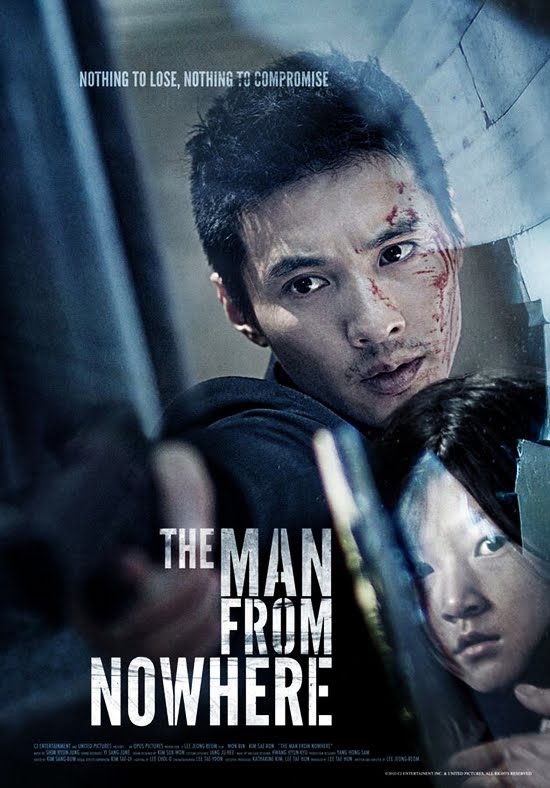
the-man-from-nowhere-poster-lg.jpg


Dont know how i came to watch this. Only 2 reviews on RT and havent heard much about it. I think a gaffer mentioned he saw it at a festival or something a year ago and i put it in my queue. Definitely an exceptional movie. Koreans make some great shit. I think at this point i can invest time in most of the stuff coming from them since they are on a hot-streak right now.
 
october-sky-movie-poster-1999-1020190824.jpg


Just seen October Sky for the first time. Really good film and has a cracking soundtrack.

Saw Role Models too recently. Didn't expect to find it too funny but was pleasantly surprised. You could tell that they had freedom to improvise and it worked out well.
 
2001: A Space Odyssey - 1969 Stanley Kubrick


Was flipping through the channels, found this, was like, hey i'll watch it while I wait for my other show to get off commercial...Never went back to my other show.

Very few films can carry the title "timeless", but this film embodies it. Every single time I have seen this film, I am blown away all together again. Such an incredible film.
 
Fast Five

It would have been more believable as an animated movie.

The Rock fucking nailed it.

Was a good brain vacation, I was laughing from the stupidity quite frequently.
 
24AGm.jpg


I watching this last night... and... wow. Wow? I think that's the right word for it. Very conceptual (a lot more than I thought it would be) but never dull. I think David Lynch got paranoid about getting a girl pregnant, took a lot of drugs, then wrote down his nightmares. Then filmed them. It makes sense when you think about it that way... I think. It's not on Canadian Netflix anymore, but I look forward to watching it again some day.
 
the_next_three_days_poster-535x792.jpg


^ Damn that was incredibly intense. For a movie with only 51% on rt i feel like this got thrown into the gutter or some shit by critics. Really emotional and riveting stuff. I was so satisfied with pretty much everything. One of the flaws critics point out was that it was implausible and i think the movie did a fantastic job making everything seem believable. Definitely recommend this.
 
Out of sheer boredom went and saw Rio in 3D. Not bad, usually George Lopez annoys me but thankfully he wasnt in it much and they mustve told him not to do coke when they recorded the voice acting.
 
Wes said:
Just seen October Sky for the first time. Really good film and has a cracking soundtrack.

Saw Role Models too recently. Didn't expect to find it too funny but was pleasantly surprised. You could tell that they had freedom to improvise and it worked out well.

Both are quality movies. October Sky is one I really liked more than I thought I would.
 
I don't understand the argument that Chigurh wasn't human enough and that NCfOM suffered as a result of it. The movie was not a study of a psychopathic mind, or a realistic portrait of a serial killer. It was about the existence of evil in the world and the effect that evil has on our psyche, with a bit of "morals for sale" mixed in for good measure.

Chigurh being brought down and made more "human" would have been to the detriment of the overall point about evil being a force of nature that we have to accept in life. Cold blooded, emotionless, "cartoon-like" killers like Anton Chigurh *do* exist in the world, and trying to humanize them or understand their mind is the subject of many other fine films, but I think it is folly to expect every film attempt to do so. GAF's OT alone is filled to the brim with impossibly evil acts of grim violence perpetrated by real people every day. Unbelievably horrible things. So I see no problem at all believing a character as evil as Chigurh. And while some people had a problem with Chigurh's two disappearing acts (after being shot by Llewellyn and inside the motel when Bell goes back at night), I think that it was a brilliant stroke because it emphasized the overall point the movie was making. That evil is some kind of power or force which will forever remain outside of our ability to control or stamp out, that it even has a supernatural tinge to it. Whether you believe that or not isn't the point, the point is that such evil does exist and coming to grips with it is a lifelong exercise which we never fully complete.

There are plenty of films which do examine the psychopath and which take pains to make them "real", and that is fine. It just seems quite limiting to suggest that if such a psychopath exists in a film's narrative, that he must fit a "realistic and believable" mold else the film can hold no weight. By having Chigurh behave as an agent of evil, rather than focus on making sure we believe everything about him, the story is allowed to explore evilness itself and focus on the characters' ways of dealing with it.

If Chigurh was presented as having had a traumatic childhood, saw his father kill his mother, be sexually abused, etc., then it becomes less about the existence of evil in the world and more about "well no wonder he turned out so crazy, look at what he went through." By leaving motivations and specificity about his character out, the scenes like the final one between Bell and his wife, Bell and Ellis, Bell and the El Paso Sherriff, Bell and Carla Jean, Carla Jean and Chigurh or even Carson Wells and Chigurh have much more gravity. Chigurh being mysterious and impossible to figure out forces you to empathize with all those characters' futile attempts to wrap their brain around him and the evil he represents. Evil is a nebulous concept, but having it personified is necessary in order to address it in a film. And by humanizing the personification of evil, you weaken the statement that "there is just some flat out EVIL shit out there which defies explanation", which was a major point of the story.

Snowman Prophet of Doom said:
A character like Anton Chigurh, as represented, is thin and unbelievable. There are countless Judah Rosenthal's throughout history, and the one shown in the movie is a fully developed character with a well-realized arc, for a religious man WOULD have such a crisis of conscience were he to undertake such a despicable act (but the fact that he invited his brother Jack in the first place, knowing his sorts of criminal connections, implies that murdering his mistress was always his intent). The fact that it's believable is what makes it chilling. Chigurgh has nothing, as a character, on that.
There are countless Anton Chigurhs throughout history as well, in case you hadn't noticed. Chigurh's character was not the focus of the film, and I think while he was more interesting than you give him credit for, he was meant to personify the cold, detached, and impossibly evil nature which we live alongside each day. He represented the "dismal tide", and it was a conscious and brilliant decision to make him opaque, incomprehensible, and enigmatic. Because that is what evil is. It is something most people struggle to understand when they encounter it or read about it, and they struggle with it for their entire lives. It is beyond our ability to rationalize or understand. So having a character which reflects that nature is much more effective than having him be some tortured soul which forces us to empathize rather than examine something as philosophical as the concept of evil.
 
Saw Thor today, it was way better than I thought it'd be. It's fun, frequently funny, has (mostly) great visuals, pretty good action, simplistic but engaging story/characters, and it ends (movie not the stinger) on the kind of note that I'm just a sucker for... it's not an amazing movie or anything, but it's the first I've seen in 2011 that I'm eager to go see again.

I want to smack the DP for doing so many goddamn canted angles though, it goes almost as overboard as John Adams.

Edit: The post-3D wasn't eye-gouging but save yourself a fin and see it in 2D.
 
faceless007 said:
Just watched Monsters, small indie sci-fi film made on a shoestring budget.

Wow.

Made for less than 500k. Unbelievable they did THAT with that budget. Even movies like Waiting and Hobo With A Shotgun cost $3 million.
 
Satyamdas said:
I don't understand the argument that Chigurh wasn't human enough and that NCfOM suffered as a result of it. The movie was not a study of a psychopathic mind, or a realistic portrait of a serial killer. It was about the existence of evil in the world and the effect that evil has on our psyche, with a bit of "morals for sale" mixed in for good measure.

Chigurh being brought down and made more "human" would have been to the detriment of the overall point about evil being a force of nature that we have to accept in life. Cold blooded, emotionless, "cartoon-like" killers like Anton Chigurh *do* exist in the world, and trying to humanize them or understand their mind is the subject of many other fine films, but I think it is folly to expect every film attempt to do so. GAF's OT alone is filled to the brim with impossibly evil acts of grim violence perpetrated by real people every day. Unbelievably horrible things. So I see no problem at all believing a character as evil as Chigurh. And while some people had a problem with Chigurh's two disappearing acts (after being shot by Llewellyn and inside the motel when Bell goes back at night), I think that it was a brilliant stroke because it emphasized the overall point the movie was making. That evil is some kind of power or force which will forever remain outside of our ability to control or stamp out, that it even has a supernatural tinge to it. Whether you believe that or not isn't the point, the point is that such evil does exist and coming to grips with it is a lifelong exercise which we never fully complete.

There are plenty of films which do examine the psychopath and which take pains to make them "real", and that is fine. It just seems quite limiting to suggest that if such a psychopath exists in a film's narrative, that he must fit a "realistic and believable" mold else the film can hold no weight. By having Chigurh behave as an agent of evil, rather than focus on making sure we believe everything about him, the story is allowed to explore evilness itself and focus on the characters' ways of dealing with it.

If Chigurh was presented as having had a traumatic childhood, saw his father kill his mother, be sexually abused, etc., then it becomes less about the existence of evil in the world and more about "well no wonder he turned out so crazy, look at what he went through." By leaving motivations and specificity about his character out, the scenes like the final one between Bell and his wife, Bell and Ellis, Bell and the El Paso Sherriff, Bell and Carla Jean, Carla Jean and Chigurh or even Carson Wells and Chigurh have much more gravity. Chigurh being mysterious and impossible to figure out forces you to empathize with all those characters' futile attempts to wrap their brain around him and the evil he represents. Evil is a nebulous concept, but having it personified is necessary in order to address it in a film. And by humanizing the personification of evil, you weaken the statement that "there is just some flat out EVIL shit out there which defies explanation", which was a major point of the story.


There are countless Anton Chigurhs throughout history as well, in case you hadn't noticed. Chigurh's character was not the focus of the film, and I think while he was more interesting than you give him credit for, he was meant to personify the cold, detached, and impossibly evil nature which we live alongside each day. He represented the "dismal tide", and it was a conscious and brilliant decision to make him opaque, incomprehensible, and enigmatic. Because that is what evil is. It is something most people struggle to understand when they encounter it or read about it, and they struggle with it for their entire lives. It is beyond our ability to rationalize or understand. So having a character which reflects that nature is much more effective than having him be some tortured soul which forces us to empathize rather than examine something as philosophical as the concept of evil.

Except I don't think that evil DOES exist in such a manner. Pure evil is easy to represent, for such really only requires a basic level of thought: how can we make this person appear evil? Making somebody a true human being is far more difficult. It's well and fine to have something like a xenomorph or a Michael Myers going around and killing people because, quite frankly, they are not truly human. A Michael Myers is a far more effective study of the idea of evil distilled into its purest form, for he is not given even a face to identify with. The problem is that human nature is simply more complex and intricate than something like Chirgurgh. I'm not saying that we need to be given a hackneyed backstory about his parents or whatever, but we need to have SOMETHING that the audience can grasp on to and say, "That is a human being, not just a stereotype." People are NOT philosophies nor essays, and trying to shoehorn them into that mold can end up just revealing the directors'/artists' own limited concepts of the idea of human nature. Even the mafia killers of the past had a life outside of that, and to present us with only a caricatured side of a person does less to illuminate us on the concept of evil than a fully realized characterization. If evil is as it is realized in Chigurgh, then it is rather evil to combat, for it is something separate from society and form humanity itself. If, however, it is as it is in somebody like Judah Rosenthal, it is FAR more difficult and chilling to cope with, for such lives within the societal apparatus that we are built and yet somehow slink by undetected.
 
Be Kind Rewind (2008)
I recall seeing the trailers for this and expecting it to be a typical Jack Black comedy. It definitely has humor that fits Black (and therefore would displease detractors of his) but it's actually a very good movie. Through the inevitable destruction of the video store and the scenes of films being sweded, Gondry does a nice job of communicating some of his feelings on the progression of film art. The best part about the statement he makes is that they aren't pessimistic. They're realistic. I've seen a few films where the meta-textual message is along the lines of "all modern film sucks and we'll never capture art again and there's nothing original left to be done". But here, it seemed to me like Gondry only said that while film will evolve, it will never be eradicated. The climax of
the town showing off their only truly original movie shows that creative works can still be made.
On the whole, I found it to be a fine little love letter to film as an art.

This Film Is Not Yet Rated (2006)
A documentary that doesn't even try to convince you that what it's presenting is unbiased. Still, it does give plenty of facts. It confirmed or reconfirmed things that I had already assumed or had already read. Essentially, the MPAA is weird and contradictory and really has no reason for existing when there are so many other ways to monitor the content of films.
Personally, I would like a government system (if regulation is to happen at all). I know that freaks a lot of people out, but if the government established clear guidelines for ratings AND didn't change requirements from case-to-case as the MPAA does, I'd be much happier.

Die Hard (1988)
Talk about a cultural blindspot, right? Sure it came out a few years before I was born, but by now I should have caught it on cable. Instead, I'd only seen select scenes until today when I sat down and watched the whole thing. Fantastic action film. Pacing is impeccable, action is intriguing, writing is memorable (well, obviously). But I think what I love most is that the characters don't completely break down under scrutiny. Hans and John are both interesting figures who are representative of the feelings of many in the late 80s. They're certainly not deep, but when a pure actioner provides even this much complexity it's refreshing.

Also watched Nashville for a second time and I think it's one of my favorites of all time. A third viewing could cement that.
 
Snowman Prophet of Doom said:
Except I don't think that evil DOES exist in such a manner. Pure evil is easy to represent, for such really only requires a basic level of thought: how can we make this person appear evil? Making somebody a true human being is far more difficult. It's well and fine to have something like a xenomorph or a Michael Myers going around and killing people because, quite frankly, they are not truly human. A Michael Myers is a far more effective study of the idea of evil distilled into its purest form, for he is not given even a face to identify with. The problem is that human nature is simply more complex and intricate than something like Chirgurgh. I'm not saying that we need to be given a hackneyed backstory about his parents or whatever, but we need to have SOMETHING that the audience can grasp on to and say, "That is a human being, not just a stereotype." People are NOT philosophies nor essays, and trying to shoehorn them into that mold can end up just revealing the directors'/artists' own limited concepts of the idea of human nature. Even the mafia killers of the past had a life outside of that, and to present us with only a caricatured side of a person does less to illuminate us on the concept of evil than a fully realized characterization. If evil is as it is realized in Chigurgh, then it is rather evil to combat, for it is something separate from society and form humanity itself. If, however, it is as it is in somebody like Judah Rosenthal, it is FAR more difficult and chilling to cope with, for such lives within the societal apparatus that we are built and yet somehow slink by undetected.
I guess I find your views of evil characters limiting and needlessly binary. I just don't see the need or benefit of comparing one character against another when the entire focus of each film is on something completely different. I don't even think the xenomorph or Michael Myers is a good example of evil, because there was no morality to consider in battling them. Those movies are not about the concept of evil, they are about visceral scenes of fright and horror.

Evil as a concept is rich enough that it can be presented as force of nature or as personal characterization, Chigurh or Rosenthal. Chigurh was not so cartoonish as to not resemble a human. In fact, the scenes between him and the gas station attendant, the motel manager, and Carla Jean did plenty to reveal his own inconsistencies and internal moral system, illogical though it may be.

Yes, evil as it is realized in Chigurh is evil to combat, that struggle against the force of evil was the entire point of NCfOM. The character's strength in this area was the very absence of making him relatable or humanizing him. He was thus something of an apparition or a force to deal with, rather than an examination of the particulars of an evil person, and this made the observations of Bell and the theme of the film more poignant. If you give Chigurh reasons for his evil nature, then you dilute the main message which is that pure evil exists and we can't understand it. You make Chigurh a sympathetic figure or give him too much exposition, and then the theme as evil as force of nature is lost completely.

Now if that theme doesn't sit well with you, I can understand that. But what I don't understand is the desire for every personification of evil to fit some preconceived mold or for every one to be a realistic portrayal in order for it to be an effective character.
 
watched coraline. really liked it and didn't it would have some horror elements in it. well it was horror to me since that other mom was really creepy. :p
 
Pi - Aronofsky's low budget directing debut just isn't for me. I saw it once before and didn't really like it, and I liked it even less this time around. I can see why people like it and it's just personal that I don't. I find the themes not interesting, I get agitated by the poor acting of some actors and I don't like the cinematography and music at times. The grainy black and white works great and the looks into obsession are things in this film that I do appreciate. 5/10

The Incredibles - One of my favorite Pixar films and it's still fantastic. The characters are rich, the story great, the jokes funny and the blu-ray looks amazing. It has a couple of powerful emotional moments, but it also has awesome action sequences. Still can't wrap my head around Pixar making Cars 2 instead of Incredibles 2. 9/10

Mortal Kombat - MOOORTAAAAL KOOMMBAAAAAT! So yeah, there's not much to say really. As a kid playing MK intensely this was probably the best thing I ever saw, so I basically just killed a fond memory. :( 3/10

Tucker & Dale Vs. Evil - Very decent, entertaining satire. The premise is great, but it's a shame to see the film is basically a one-gag-film and doesn't evolve into anything more. The cast is fun, the gore is great and GODDAMN Katrina Bowden is fine. 7/10
 
&Divius said:
Mortal Kombat - MOOORTAAAAL KOOMMBAAAAAT! So yeah, there's not much to say really. As a kid playing MK intensely this was probably the best thing I ever saw, so I basically just kind a fond memory. :( 3/10
Still, why didn't they use that theme song, for the last game? :\
 
~Kinggi~ said:
^ Damn that was incredibly intense. For a movie with only 51% on rt i feel like this got thrown into the gutter or some shit by critics. Really emotional and riveting stuff. I was so satisfied with pretty much everything. One of the flaws critics point out was that it was implausible and i think the movie did a fantastic job making everything seem believable. Definitely recommend this.

I watched about the first 45 minutes on a plane - the plane landed and I got cut off.

I do mean to watch the rest. Rusty was doing good work.
 
Satyamdas said:
I guess I find your views of evil characters limiting and needlessly binary. I just don't see the need or benefit of comparing one character against another when the entire focus of each film is on something completely different. I don't even think the xenomorph or Michael Myers is a good example of evil, because there was no morality to consider in battling them. Those movies are not about the concept of evil, they are about visceral scenes of fright and horror.

The human being is not a theme nor an essay, though. The human is a human, first and foremost, and their thematic place in a story can't supplant that face. Though he was speaking of Chekhov's short stories, I think Dan Schneider put it quite well:

"At a time where Post-Modernism and even Post-Post-Modernism are still spoken of as daring, and innovative, for they move beyond plot and character, Chekhov shows that while plot is often disposable, it is virtually impossible to construct even a passable story without solid characterization. readers need to be drawn in, and an idea, no matter how ingenious, needs to interact with a character, and one that is not a stereotype. Human mnemonics is centered upon emotions, which are limned with characters, not by mere ideas. Ideas can suffice in philosophy but character creation is the engine that sets the art in motion, indeed, is often the art in the art of storytelling."

Evil as a concept is rich enough that it can be presented as force of nature or as personal characterization, Chigurh or Rosenthal. Chigurh was not so cartoonish as to not resemble a human. In fact, the scenes between him and the gas station attendant, the motel manager, and Carla Jean did plenty to reveal his own inconsistencies and internal moral system, illogical though it may be.

I agree that he's not made to resemble something TOTALLY divorced from a human being, but there's really not a lot of depth nor breadth to what we do see. There's almost something at the end with Carla Jean, but it comes all too late and still doesn't really do enough. We see pretty much one side of the man throughout the movie, which is really like a surface-level characterization, no matter how cool or badass what we do see may be.

Yes, evil as it is realized in Chigurh is evil to combat, that struggle against the force of evil was the entire point of NCfOM. The character's strength in this area was the very absence of making him relatable or humanizing him. He was thus something of an apparition or a force to deal with, rather than an examination of the particulars of an evil person, and this made the observations of Bell and the theme of the film more poignant. If you give Chigurh reasons for his evil nature, then you dilute the main message which is that pure evil exists and we can't understand it. You make Chigurh a sympathetic figure or give him too much exposition, and then the theme as evil as force of nature is lost completely.

I say again, though, that if your evil is going to be personified, then the personification had BETTER be a person and not a caricature. Bell does say some very nice things, but if Chigurgh just sort of embodies them and nothing more, then you're really limiting the depth and poignancy that such observations can have. If, however, he lives up to them while simultaneously having moments that show that there is something more to him, some sort of humanity that seems to move beyond the unidirectional characterization that Bell makes of him, that ends up deepening both the character and the film. As it stands, the movie's message is to combat a form of evil that really does not and cannot exist, at least as shown. The thing is, the Coen brothers have done very well with this theme before, particularly in the later A Serious Man, which is actually an even bleaker movie but which ends up working far better because the evil/randomness in the main character's life is not a person but a nameless, faceless force.

Now if that theme doesn't sit well with you, I can understand that. But what I don't understand is the desire for every personification of evil to fit some preconceived mold or for every one to be a realistic portrayal in order for it to be an effective character.

That's the thing: I'm NOT asking for every personification of evil to fit some preconceived mold. Chigurgh, as depicted, fits pretty comfortably into a stereotypical mold of movie evil, which is ironic since the movie makes attempts at structuring itself in a way that subverts Hollywood tropes. The thing I'm asking for is for a character like Chigurgh to break the mold that he's cast in, to show that there is more to him than meets the eye; doing so would necessarily deepen the movie's examination of evil and its place in the world, for it would show not just his evil but how he is able to wield it against the fact that the world rejects it. I'm not asking for the cliche, Hollywood attempts to "humanize" people by giving them traumatic pasts or whatever. We don't have to know anything about his past. But I do think that we have to know that in the present, he is a human being living in the world, not just somebody that exists only to embody evil as it exists in the mind of a filmmaker.

Don't get me wrong: I'm not saying that No Country for Old Men is a bad or mediocre movie. It's not. It's a good, sometimes VERY good movie that I think is limited by the fact that one of its three main characters is not nearly as well-developed nor human as the other two, which is doubly disappointing since Javier Bardem put such gusto into the performance and could have, I think, handled added depth and humanization.

 
swoon said:
whenever snowman goes through his noir period i'm just going to not read this thread i think. .

I don't really go through genre "periods" all that often. And I usually give a different consideration to genre pieces, as cliches/stereotypes are almost a given but don't preclude the films from having greatness in their construction within their genre. Plus, they usually lack pretentiousness, which is refreshing in a world of supposed dramas. (Note: I'm not including NCfOM in the category of pretentious.)
 
~Kinggi~ said:
the_next_three_days_poster-535x792.jpg


^ Damn that was incredibly intense. For a movie with only 51% on rt i feel like this got thrown into the gutter or some shit by critics. Really emotional and riveting stuff. I was so satisfied with pretty much everything. One of the flaws critics point out was that it was implausible and i think the movie did a fantastic job making everything seem believable. Definitely recommend this.
Yeah, loved it
the point where he tries to duplicate the key at the prison and then he gets cought was the most intense scene I ever have expreienced
Absolutely amazing, the ending could have been better though.
 
I saw Fast Five. The Rock was great. It was an really good summer silly movie. It was Oceans 11 for every minority in the US.
 
Snowman Prophet of Doom said:
The human being is not a theme nor an essay, though. The human is a human, first and foremost, and their thematic place in a story can't supplant that face. Though he was speaking of Chekhov's short stories, I think Dan Schneider put it quite well:

"At a time where Post-Modernism and even Post-Post-Modernism are still spoken of as daring, and innovative, for they move beyond plot and character, Chekhov shows that while plot is often disposable, it is virtually impossible to construct even a passable story without solid characterization. readers need to be drawn in, and an idea, no matter how ingenious, needs to interact with a character, and one that is not a stereotype. Human mnemonics is centered upon emotions, which are limned with characters, not by mere ideas. Ideas can suffice in philosophy but character creation is the engine that sets the art in motion, indeed, is often the art in the art of storytelling."
Chigurh's effectiveness as an agent of evil comes as a result of his minimal characterization. He is not an idea or a theme, he is a character of which we know very little. I'm reminded of many of the characters in Lynch's films, where we know basically nothing about them and yet they serve the important purpose of supporting a thematic tone or atmosphere. Every character need not be fleshed out and exposited upon deeply in order to be relatable enough to serve their purpose in the story.

Snowman Prophet of Doom said:
I agree that he's not made to resemble something TOTALLY divorced from a human being, but there's really not a lot of depth nor breadth to what we do see. There's almost something at the end with Carla Jean, but it comes all too late and still doesn't really do enough. We see pretty much one side of the man throughout the movie, which is really like a surface-level characterization, no matter how cool or badass what we do see may be.
It *is* enough because the point of the movie is not to examine the character of Chigurh! The point of the movie is examining the characters' struggle with rationalizing evil and confronting it. By insisting that Chigurh be fleshed out further you are doing nothing less than demanding an entirely different theme be explored in the film.

Snowman Prophet of Doom said:
I say again, though, that if your evil is going to be personified, then the personification had BETTER be a person and not a caricature. Bell does say some very nice things, but if Chigurgh just sort of embodies them and nothing more, then you're really limiting the depth and poignancy that such observations can have. If, however, he lives up to them while simultaneously having moments that show that there is something more to him, some sort of humanity that seems to move beyond the unidirectional characterization that Bell makes of him, that ends up deepening both the character and the film. As it stands, the movie's message is to combat a form of evil that really does not and cannot exist, at least as shown. The thing is, the Coen brothers have done very well with this theme before, particularly in the later A Serious Man, which is actually an even bleaker movie but which ends up working far better because the evil/randomness in the main character's life is not a person but a nameless, faceless force.
This is another appeal for the film to mold itself to your ideas of what characterization must entail. I don't need Chigurh to have moments of humanity or be fleshed out as a character in order to have him be an effective catalyst. In fact, to do so would weaken him greatly. Exactly what would you propose he do to "move beyond [his] unidirectional characterization"?? Help an old lady across the street? Rescue a kitten from a tree? Buy lemonade from a children's lemonade stand? He doesn't do these things because to shoehorn some sentimental or humanistic qualities into him dilutes his effectiveness as a force of evil.

I submit that allowing the gas station attendant, the man in the office with Stephen Root's character, and the motel manager lady to live, is the perfect amount of minimal mercy which demonstrates he is more than a one dimensional caricature. He had already been introduced as a psychopathic murderer, so his decision to let them all live is a means of fleshing him out subtly.

This mercy is then tested again with Carla Jean, and before he leaves the house there is uncertainty in the viewer as to whether he will kill her or not, and that uncertainty is due to the mercy he showed earlier in the film. If he were truly a terminator-style caricature as you are suggesting, the scene would have held no weight because we would have no doubt that he was going to kill her.

Snowman Prophet of Doom said:
That's the thing: I'm NOT asking for every personification of evil to fit some preconceived mold. Chigurgh, as depicted, fits pretty comfortably into a stereotypical mold of movie evil, which is ironic since the movie makes attempts at structuring itself in a way that subverts Hollywood tropes. The thing I'm asking for is for a character like Chigurgh to break the mold that he's cast in, to show that there is more to him than meets the eye; doing so would necessarily deepen the movie's examination of evil and its place in the world, for it would show not just his evil but how he is able to wield it against the fact that the world rejects it. I'm not asking for the cliche, Hollywood attempts to "humanize" people by giving them traumatic pasts or whatever. We don't have to know anything about his past. But I do think that we have to know that in the present, he is a human being living in the world, not just somebody that exists only to embody evil as it exists in the mind of a filmmaker.
Again, you are asking for the film to take an entirely different direction than the one it was created to take. The whole point of the film is that there is NOT more than meets the eye. The point is driven home that this evil is a force which is upon us and which does not have some logical or rational explanation that would become visible if we could only peel back the curtain on men like Chigurh. The point of the film is that this evil is such that we can't wrap our head around it, we can barely confront it or fight it. This message cannot be enhanced by changing Chigurh to something more humanistic or fleshing him out further. That would only serve to dilute the message entirely.

Snowman Prophet of Doom said:
Don't get me wrong: I'm not saying that No Country for Old Men is a bad or mediocre movie. It's not. It's a good, sometimes VERY good movie that I think is limited by the fact that one of its three main characters is not nearly as well-developed nor human as the other two, which is doubly disappointing since Javier Bardem put such gusto into the performance and could have, I think, handled added depth and humanization.

I understand that you are not saying the film is bad. I also understand that you desire more humanization or characterization. My opinion is that were your desires fulfilled the film would be much weaker for it, and the character of Chigurh would have been far less effective. Chigurh is simply not meant to be humanized and well-developed like Tom Bell. To do so would be to make a completely different movie, one that I am certain would be far, far less compelling.
 
Satyamdas said:
Chigurh's effectiveness as an agent of evil comes as a result of his minimal characterization. He is not an idea or a theme, he is a character of which we know very little. I'm reminded of many of the characters in Lynch's films, where we know basically nothing about them and yet they serve the important purpose of supporting a thematic tone or atmosphere. Every character need not be fleshed out and exposited upon deeply in order to be relatable enough to serve their purpose in the story.

The thing is, though, that he was one of the three main characters and probably the most 'iconic' one of the movie. It's one thing to have a moody sort of character that we don't know much in the background (I think of the dad in Blue Velvet, if we're going to cite Lynch), but if you're going to feature a character prominently, I think that they HAVE to be more than what Chigurgh is.

It *is* enough because the point of the movie is not to examine the character of Chigurh! The point of the movie is examining the characters' struggle with rationalizing evil and confronting it. By insisting that Chigurh be fleshed out further you are doing nothing less than demanding an entirely different theme be explored in the film.

The thing is, though, that if you're going to HAVE characters grappling with the idea of evil/what it is/how to deal with it, etc., I think that it has to be the sort of evil that could reasonably be conceived as something existing in the world. It would be one thing if the film, say, was told entirely from Sheriff Bell's perspective, with the scenes of Chigurgh being his imagining of what Chigurgh is like, only to present with a different reality. But that's the thing: Chigurgh behaves and acts like people's stereotypical conception of what a cold and/or emotionless character would behave like, almost like a perfect embodiment of what people (incorrectly) think Stanley Kubrick characters are like. That's why I say that something like Michael Myers is, ultimately, a more effective study of the idea of pure evil, as he ends up being less a character and more the force of nature that people want Chigurgh to be. Human nature necessarily adds complexity and depth to themes and theory, and when you strip away any and all humanity from one of the central characters of a film, you ultimately limit the film's ability to have relevance and probing more than you enhance it.


This is another appeal for the film to mold itself to your ideas of what characterization must entail. I don't need Chigurh to have moments of humanity or be fleshed out as a character in order to have him be an effective catalyst. In fact, to do so would weaken him greatly. Exactly what would you propose he do to "move beyond [his] unidirectional characterization"?? Help an old lady across the street? Rescue a kitten from a tree? Buy lemonade from a children's lemonade stand? He doesn't do these things because to shoehorn some sentimental or humanistic qualities into him dilutes his effectiveness as a force of evil.

I submit that allowing the gas station attendant, the man in the office with Stephen Root's character, and the motel manager lady to live, is the perfect amount of minimal mercy which demonstrates he is more than a one dimensional caricature. He had already been introduced as a psychopathic murderer, so his decision to let them all live is a means of fleshing him out subtly.

This mercy is then tested again with Carla Jean, and before he leaves the house there is uncertainty in the viewer as to whether he will kill her or not, and that uncertainty is due to the mercy he showed earlier in the film. If he were truly a terminator-style caricature as you are suggesting, the scene would have held no weight because we would have no doubt that he was going to kill her.

What could he do? What couldn't he do? When a character is fleshed out, you can place them in almost any situation and create something of value. Perhaps he has some friends that he interacts with, or a girl of some sort? Perhaps he has thoughts on things (or does things) other than his job as a killer? SOMETHING that shows what he is beyond a mere killer and psychopath, something that would give him (and, therefore, the film) more complexity and depth. He's stripped of almost anything resembling humanity; that may have been "the point" that the Coen Brothers were reaching for, but the intention of the artist is meaningless versus what the work actually is. I'm sorry, but when you so fully abstract a character from reality that they don't even remotely resemble the sort of person that could reasonably be encountered in the world, you strip away their potency and impact. Were he to have those cold, chilling moments that we witness in the movie mixed with moments that are perhaps more normal and which contradict others' perception of him, that would make it all the more unsettling, for the viewer would be able to reasonably guess that such an evil that the characters are grappling with could exist in this world. As it stands, he's so limited in his scope and depth that he almost resembles a comic book villain. It's cool and creates startlingly visceral moments, but even the coldest killer has something human to them, some contradiction or idiosyncrasy that makes the viewer step back and realize that, despicable as they are, they are still of the same species and relate to them in some ways. You can't have it both ways by claiming that he's both a force of nature and actually a subtly developed person as well.

Again, you are asking for the film to take an entirely different direction than the one it was created to take. The whole point of the film is that there is NOT more than meets the eye. The point is driven home that this evil is a force which is upon us and which does not have some logical or rational explanation that would become visible if we could only peel back the curtain on men like Chigurh. The point of the film is that this evil is such that we can't wrap our head around it, we can barely confront it or fight it. This message cannot be enhanced by changing Chigurh to something more humanistic or fleshing him out further. That would only serve to dilute the message entirely.

I KNOW that it changes the film. That's the point of criticism: to make suggestions as to how a weakness in a film might be made better. My point is that men like Chigurgh AREN'T just "men like Chigurgh," and to portray them as some ineffable force of nature that we cannot wrap our heads around ultimately delimits them. My point is that evil, at least on the human level, is NOT illogical or irrational and that portraying it as such ultimately turns what could have been an interesting character into something more limited than what they otherwise could have been. The fact that the Coen Brothers achieved their intention does not really change anything, as my point is that the Coen Brothers' intention was misguided and that the work of art suffers for it.


I understand that you are not saying the film is bad. I also understand that you desire more humanization or characterization. My opinion is that were your desires fulfilled the film would be much weaker for it, and the character of Chigurh would have been far less effective. Chigurh is simply not meant to be humanized and well-developed like Tom Bell. To do so would be to make a completely different movie, one that I am certain would be far, far less compelling.

We'll just have to agree to disagree on that last point. The movie is good, overall, but it could have been GREAT if Chigurgh had been more than a caricature. It would be a far more potent idea to show that, warts and all, the evil that Tom Bell is pursuing is as human as he, for it calls into question the very idea of what it means for a person to be "evil." Joe Pesci was a psychotic killer in Goodfellas, but if ALL we'd seen of him was his psychotic killing, the film would be much worse.
 
Status
Not open for further replies.
Top Bottom