• Hey Guest. Check out your NeoGAF Wrapped 2025 results here!

The obsession with "flawed" camera shots

Status
Not open for further replies.

Boss Doggie

all my loli wolf companions are so moe
You know what I mean. Shaky cams, lens flare, apparently CA is a recent trend, and then there's film grain.

I find weird that technology and engineers developed ways to prevent shit like that from happening even on the 90s, yet somehow film makers (and developers pretending to be film makers) like to insert them in movies (and video games). Apparently they are going for a genuine look but isn't it a bit odd that an actual "genuine" shot would have none of those?

It's like people are stuck in a certain era.
 
You know what I mean. Shaky cams, lens flare, apparently CA is a recent trend, and then there's film grain.

I find weird that technology and engineers developed ways to prevent shit like that from happening even on the 90s, yet somehow film makers (and developers pretending to be film makers) like to insert them in movies (and video games). Apparently they are going for a genuine look but isn't it a bit odd that an actual "genuine" shot would have none of those?

It's like people are stuck in a certain era.

Done well, these elements make the camera seem a bit more grounded and "real." A camera that is too perfect can feel eerie, distant, or staged (which isn't a bad thing--depends entirely on the look you want to achieve).
 
Yeah but nowadays those feels artificial because we never see them anymore in an average camera unless you really went all intentional.

Hell, Cloverfield (ugh) shots feel fake because cameras by that point have better shooting and quality.
 
You know what I mean. Shaky cams, lens flare, apparently CA is a recent trend, and then there's film grain.

Chromatic Aberration is an effect applied almost exclusively to video games to mimic a specific cinematic effect (unintended as it may be) to evoke a certain tone.

Lens flare/shaky cam has been around forever, and will always be around forever, because they're legitimate parts of a filmmaker's vocabulary, as is film grain and the fact film moves at 24fps, as well as stuff like whip pans, rack zooms, focus errors, etc. etc. Your conception of a "Genuine" shot is as flawed as the effects you're describing.

There's a whole thread over on gaming side for people who want to bitch about chromatic aberration, I don't know why there needs to be one here, since most of the time, films aren't after-the-fact applying the effect in post.
 
"Imperfect shots" can also help convey the world how we see it. We don't perceive the world the same way a perfect camera does. I.e., we don't see across an expansive vista with everything being perfectly in focus, so sometimes a filmmaker might want a depth-of-field effect. If we don't focus on a fast-moving object it's a blur to us, so they also have motion blur. When we stare at the sun or abruptly go to a bright light source after being a low-lit area for a long time the light blinds us, so filmmakers put in a lens flare to simulate the effect. If we're running fast away/toward something we don't see clearly with the high amount of motion, so filmmakers put in shaky-cam to simulate the disorienting nature of that motion.
 
Yeah but nowadays those feels artificial because we never see them anymore in an average camera unless you really went all intentional.

Hell, Cloverfield (ugh) shots feel fake because cameras by that point have better shooting and quality.
Cloverfield felt fake because it was shot in landscape orientation.
 
Done well, these elements make the camera seem a bit more grounded and "real." A camera that is too perfect can feel eerie, distant, or staged (which isn't a bad thing--depends entirely on the look you want to achieve).

This. These techniques can add motion and tension and set the mood. They aren't bad, they're just bad when handled badly. Like with anything.
 
If there's anything resembling an "obsession," it's usually on the part of people who don't have a decently developed film vocabulary, who only just recently even learned of some of this stuff, and are taking great pains to point out to people that they know what this stuff is (now) and can recognize it when they see it (on a rudimentary level), whether or not they have a functional understanding of whether that stuff is being used well in the context of the larger work.
 
It can be overused, but I think all of those techniques can also work super well depending on the context they're used it.

Everything being sharp and perfectly smooth would just be constraining!
 
If there's anything resembling an "obsession," it's usually on the part of people who don't have a decently developed film vocabulary, who only just recently even learned of some of this stuff, and are taking great pains to point out to people that they know what this stuff is (now) and can recognize it when they see it (on a rudimentary level), whether or not they have a functional understanding of whether that stuff is being used well in the context of the larger work.

One and done. People are gonna go nuts when they realise how much colour grading is used in a film's post production. And how awful a picture looks without it.
 
You know what I mean. Shaky cams, lens flare, apparently CA is a recent trend, and then there's film grain.

I find weird that technology and engineers developed ways to prevent shit like that from happening even on the 90s, yet somehow film makers (and developers pretending to be film makers) like to insert them in movies (and video games). Apparently they are going for a genuine look but isn't it a bit odd that an actual "genuine" shot would have none of those?

It's like people are stuck in a certain era.

I don't mind a -small- amount of anamorphic lens flare.

Anamorphic-Lens-Flare.png


But it's been heavily abused.

Chromatic aberration? There's just no justification for it. It looks like shit. It's like serving someone a steak covered in live cockroaches because hey, cockroaches exist, so we might as well give them to you.
 
I dunno, I prefer how say Jackie Chan directs his films. So much clarity and focus.

And sure they've been in films for a long time, but a lot of times they feel like they're phoned in than anything else. I've yet to see shaky cam done properly.
 
Film grain is pretty obvious. You add it to make digital shots match film, or when you use a stock with the look you want to emulate. Like say war reels in Saving Private Ryan.

Same reason people add brushstroke textures to digital paintings. Or choose to apply paint on a real canvas in a way that their brush strokes are more visible as opposed to using a technique that make them not obvious.
 
I don't mind a -small- amount of anamorphic lens flare.

Anamorphic-Lens-Flare.png


But it's been heavily abused.

Chromatic aberration? There's just no justification for it. It looks like shit. It's like serving someone a steak covered in live cockroaches because hey, cockroaches exist, so we might as well give them to you.

Chromatic aberration already exists in film. Directors don't choose to add it, it's part of the physics of optics.
 
Watch more movies.

I do, and like I said I prefer clarity over blurriness. I prefer a continuous shot that pans over shaky cams that make things worse. They show a great shot without the need to sacrifice blurriness.

Also I don't like that tone in your other post but I'll let it pass, especially on this post.

If there's anything resembling an "obsession," it's usually on the part of people who don't have a decently developed film vocabulary, who only just recently even learned of some of this stuff, and are taking great pains to point out to people that they know what this stuff is (now) and can recognize it when they see it (on a rudimentary level), whether or not they have a functional understanding of whether that stuff is being used well in the context of the larger work.
 
I dunno, I prefer how say Jackie Chan directs his films. So much clarity and focus.

And sure they've been in films for a long time, but a lot of times they feel like they're phoned in than anything else. I've yet to see shaky cam done properly.

Shaky cam isn't a thing, as much as hand held is a thing. For instance, a cinematographer doesn't think "I want this to be shaky to emulate documentary footage" as much as she thinks "this should be hand held so it physically puts the camera in the immediacy of a documentary". So I guess hand held done right doesn't have to be shaky, and that may be what you are looking for.
 
If there's anything resembling an "obsession," it's usually on the part of people who don't have a decently developed film vocabulary, who only just recently even learned of some of this stuff, and are taking great pains to point out to people that they know what this stuff is (now) and can recognize it when they see it (on a rudimentary level), whether or not they have a functional understanding of whether that stuff is being used well in the context of the larger work.

This. So very much this.
Shaky cam isn't a thing, as much as hand held is a thing. For instance, a cinematographer doesn't think "I want this to be shaky to emulate documentary footage" as much as she thinks "this should be hand held so it physically puts the camera in the immediacy of a documentary". So I guess hand held done right doesn't have to be shaky, and that may be what you are looking for.
Watch the climactic dialog scene in the movie the Fourth Kind. For someone reason the camera is constantly shaking throughout the entire scene but if you pay attention it is only panning left and right.

I hate that movie so much :)
 
Chromatic aberration already exists in film. Directors don't choose to add it, it's part of the physics of optics.

I know that it exists, my point is that it is undesirable. It degrades image quality. And the engineers who design those optics go to great lengths to eliminate it. And filmmakers are willing to buy those optics, at great cost.

http://www.bandpro.com/leica-summilux-ctm-lenses.html

http://cw-sonderoptic.com/developme...lenses-receives-scientific-engineering-award/
 
The tone that suggests you probably don't really know what you're talking about when it comes to any of that stuff? I wouldn't appreciate it either, probably.

Watch more movies.

Depends on what you mean by "more movies".

And it comes off more of these should be used because it's in film dammit! rather than making a viewable piece.

Shaky cam isn't a thing, as much as hand held is a thing. For instance, a cinematographer doesn't think "I want this to be shaky to emulate documentary footage" as much as she thinks "this should be hand held so it physically puts the camera in the immediacy of a documentary". So I guess hand held done right doesn't have to be shaky, and that may be what you are looking for.

The thing is though, it sacrifices clarity. Honestly I feel viewers would prefer clarity over "being there".
 
I know that it exists, my point is that it is undesirable. It degrades image quality.

No doubt. And a lot of filmmakers would prefer they didn't have those artifacts. Again - filmmakers typically aren't ADDING the effect in post to regular footage they shot. VFX guys might be adding it to their shots in order to match it up with whatever live-action imagery was already captured, sure, but Directors aren't typically going "gimme some red & green fringe around... fuckin everything. Put it everywhere. It just looks cool."

The only reason it's being brought up is because there's like 4 threads about it over on gaming side right now.

Depends on what you mean by "more movies".

That doesn't even make any sense.
 
If there's anything resembling an "obsession," it's usually on the part of people who don't have a decently developed film vocabulary, who only just recently even learned of some of this stuff, and are taking great pains to point out to people that they know what this stuff is (now) and can recognize it when they see it (on a rudimentary level), whether or not they have a functional understanding of whether that stuff is being used well in the context of the larger work.

Yeah, pretty much I guess. Can't say that I disagree, but that's the internet for you. Now what is more visible in film isn't actually something perceived with eyes, but what you learn about on the web. and it happens on every form of culture, I wouldn't know much about politics outside what I get from online news, and would end up putting myself in an awkward and embarrassing situation outside of the web, I guess.
 
No doubt. And a lot of filmmakers would prefer they didn't have those artifacts. Again - filmmakers typically aren't ADDING the effect in post to regular footage they shot. VFX guys might be adding it to their shots in order to match it up with whatever live-action imagery was already captured, sure, but Directors aren't typically going "gimme some red & green fringe around... fuckin everything. Put it everywhere. It just looks cool."

The only reason it's being brought up is because there's like 4 threads about it over on gaming side right now.

I can't think of any films that deliberately add or exaggerate CA, maybe some stuff that's supposed to be found footage. Thank god there is no JJ Abrahms of CA.

Unfortunately, quite a few game devs seem to think it's actually worth spending resources on.
 
If there's anything resembling an "obsession," it's usually on the part of people who don't have a decently developed film vocabulary, who only just recently even learned of some of this stuff, and are taking great pains to point out to people that they know what this stuff is (now) and can recognize it when they see it (on a rudimentary level), whether or not they have a functional understanding of whether that stuff is being used well in the context of the larger work.

boom.gif

I worry about this new generation that seems to want all video media to be perfectly steadicam, magically 100% in focus on every plane, indistinguishable from reality's framerate, and with flawless perfect-sunny-day white balance in every shot. Never have I seen so many creative choices blithely referred to as "imperfections."
 
Unfortunately, quite a few game devs seem to think it's actually worth spending resources on.

I think it's used well in Alien: Isolation (as do a fair amount of people in those threads over on Gaming Side) but it's kind of an ongoing problem, the idea that game developers are trying to ape film cinematography and use film vocabulary without the sort of understanding needed to effectively employ those techniques. So right now, stuff like Chromatic Aberration is the gaming equivalent of everyone "discovering" lens flare after Star Trek 09, but it's just a symptom of a larger problem in games, which is that you have a LOT of developers doing bad movie karaoke for an audience that isn't in this to appreciate the notes you're trying to hit even IF you had the range and the skill to hit them.

I watch a lot of films, but barely those that are Oscar bait.

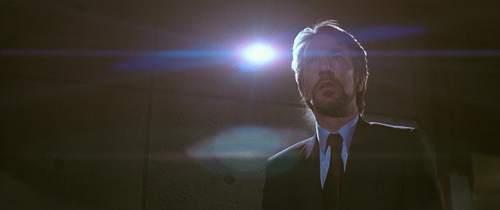
Oscar bait's got nothing to do with it. There was a screencap of Die Hard posted up in here earlier, for example. Watching more movies (and paying a LOT of attention to the visual language being used) will reveal more of the hows and whys of the cinematography choices, just like reading more books automatically makes you aware of the ways you can play with language.
 
The thing is though, it sacrifices clarity. Honestly I feel viewers would prefer clarity over "being there".

Just like entirely losing sound in a moment has a meaning (lack of audio following a loud noise, being the most used), the lack of clarity has a meaning. Movies usually convey mood in not the most overt forms. Presence and absence of color, camera movement, sound, among others, occur outside of the plot and may distract from it, but those are moments when the direction is telling the viewer 'forget about this line of dialogue, this punch, or this kiss and notice how the movie is different on this scene, because there is something important going on (often abstract, sometimes having to do with the mind or emotions of a character) "
 
See the thing is you make it sound like I am attacking all of them. But I am specifically targeting those specific stuff I mentioned because they make the movies less clear.

Okay, so they exist in non-bait films and I know for a fact techniques exist even in animated form. The thing is though, the fact that they are unnoticed and are so well integrated is a plus because they are not distracting. It's why I am especially calling out shit like shaky cams and lens flare. Because most of the time they like to stand out.

Yes I know a continuous shot that doesn't cut exists in a lot of films - but because they're so well made that they are unnoticeable is so great... and they do not make the shots terrible to see.

Just like entirely losing sound in a moment has a meaning (lack of audio following a loud noise, being the most used), the lack of clarity has a meaning. Movies usually convey mood in not the most overt forms. Presence and absence of color, camera movement, sound, among others, occur outside of the plot and may distract from it, but those are moments when the direction is telling the viewer 'forget about this line of dialogue, this punch, or this kiss and notice how the movie is different on this scene, because there is something important going on"

Oh yeah silence is great. And like I agree Saving Private Ryan does it well, but honestly I feel like I'm bogged down by shaky cams used in other stuff.
 
Oh yeah silence is great. And like I agree Saving Private Ryan does it well, but honestly I feel like I'm bogged down by shaky cams used in other stuff.

A whole movie shot in in the shakiest camera possible would lose the meaning of the single scene in that film that uses it. Most of the more extreme manipulations of this sort would be pretty distracting if used throughout and do more harm than good, I agree.
 
A whole movie shot in in the shakiest camera possible would lose the meaning of the single scene in that film that uses it. Most of the more extreme manipulations of this sort would be pretty distracting if used throughout and do more harm than good, I agree.

I see it applied on "generic military/army action shot" like say, Transformers. I think even Avengers had that moment. It works well if it's shown as a perspective of a character to show the desolation of his state, but in say Transformers it feels so... wonky.
 
The annoying thing about lens flares is that they actually have to go out of their way to add them in digitally sometimes because modern film lenses are designed to reduce them.
 
I see it applied on "generic military/army action shot" like say, Transformers. I think even Avengers had that moment. It works well if it's shown as a perspective of a character to show the desolation of his state, but in say Transformers it feels so... wonky.

I guess sometimes it may be a case of " I saw it work on this film, so I'm replicating it now in my own film" and it ends up conveying the meaning they want, but mostly due to reference rather than because it works there as well as it worked on the other movie.
 
There's obviously a line you can cross (shakycam has certainly been abused over the last 10-12 years)... but I see nothing wrong with wanting to add analog dirt and and other quirks to our now sterile and artificial digital compositions.

If I'm making graphic designs, I'll add textures, I'll add gradients... it's all part of my toolkit to create a certain emotional vibe (including real world vibes, where things can be messy). I see no reason why filmmakers and game creators can't have access to the same kinds of tools.

I like my clean and digital images too... but they too must be justified with a design direction. If it's a modern vibe, with themes of digital sci-fi or corporate cleanliness, then sure, keep it clean. But if I'm making a gritty war movie, or a period piece, or story about being mentally unhinged.... I think it makes sense to have grain, camera shake, etc.
 
The newer seasons of breaking bad and better call Saul are more crisp than the older seasons which I preferred as they felt closer to an ordinary world so there's definitely something to it
 
The newer seasons of breaking bad and better call Saul are more crisp than the older seasons which I preferred as they felt closer to an ordinary world so there's definitely something to it

I don't get why TV shows update technology mid-way through a run. Those alterations really bother me unless they fit in thematically.
 
I don't get why TV shows update technology mid-way through a run. Those alterations really bother me unless they fit in thematically.
Fortunately for the breaking bad production anything they write will outshine the film medium by miles but if they were to stick with the old grain look it would have made a good deal of difference in mood, especially since Saul is set in the early 00s
 
I see it applied on "generic military/army action shot" like say, Transformers. I think even Avengers had that moment. It works well if it's shown as a perspective of a character to show the desolation of his state, but in say Transformers it feels so... wonky.
I get why BobbyRoberts was saying you should watch more movies if these are your comparisons.

Are we start going to be hating on bokkeh? A huge part of many night scenes and transitions in great films. So we can get some arbitrary level of cleanliness?

All of these effects have plenty of great examples. Don't hate the tools, hate the player.

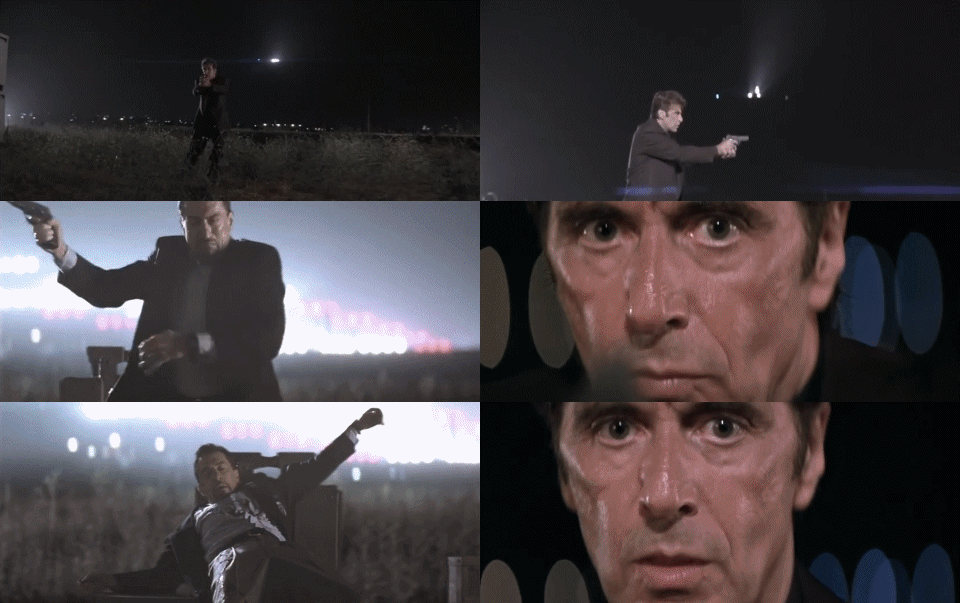
heat_ending_by_digi_matrix-d8njhmr.gif

Michael Mann, you hack. Get that genuine shot, dude.
 
I get why BobbyRoberts was saying you should watch more movies if these are your comparisons.

Are we start going to be hating on bokkeh? A huge part of many night scenes and transitions in great films. So we can get some arbitrary level of cleanliness?

All of these effects have plenty of great examples. Don't hate the tools, hate the player.

heat_ending_by_digi_matrix-d8njhmr.gif

Michael Mann, you hack. Get that genuine shot, dude.

See my post though - they're great when you almost never notice them. And if you see my post I'm totally not against them, but they're really not that used properly nowadays.
 
Any art that doesn't attempt to fully emulate reality without interpretation is flawed.

962px-VanGogh-starry_night_ballance1.jpg


Did this asshole have astigmatism out the ass or what?
 
See my post though - they're great when you almost never notice them. And if you see my post I'm totally not against them, but they're really not that used properly nowadays.
there's an argument that there shouldn't really be a proper use of film/camera techniques in order to promote experimentation and development of the medium
 
So much hostility in this thread eheh.

Shaky cam isn't a thing, as much as hand held is a thing. For instance, a cinematographer doesn't think "I want this to be shaky to emulate documentary footage" as much as she thinks "this should be hand held so it physically puts the camera in the immediacy of a documentary". So I guess hand held done right doesn't have to be shaky, and that may be what you are looking for.

But hand held isnt synonym of a camera shaking. There is a lot of stabilized , well composed , and with extremely clear pans using hand held. But the shaky thing is real. Like shaking the mag :0


shake1f5umo.gif


shake2hsu3r.gif


shake4l9rum.gif


shake5wssyy.gif
 
Status
Not open for further replies.
Top Bottom