
• Hey Guest. Check out your NeoGAF Wrapped 2025 results here!

We should have just one spelling for there/their and your/you're

Status
Not open for further replies.
Really?

I would say "you" as "yoo". SO "you're" is pronounced "yoo're". But "your" sounds more like "yore" (rhymes with "bore"/"lore"/"more".

But maybe I'm not pronouncing correctly, or it's our accent.


Yeah, this is me too. "They're" sounds more like "thayer" and "their" sounds like "there".

It seems we pronounce all these words the same. At least, when my mouth isn't being lazy. *high five*

EDIT: In case people are curious, I'm from the west coast of the US.
 

It's to do with the fact that an Australian accent relies on some slack-jawed shit. Your, yore and you're just sound like your/yore haha. It's the same reason Americans say "ba-na-na" and Australians say "buh-nah-nah". Being raised by a bunch of drunk convicts didn't give our great grandparents a good grip on jaw use during pronunciation.

When I speak properly and clearly, like to someone I respect or whatever, "your" and "you're" sound differently like you said, but otherwise I go back to my bad ways.
 
They´re different words. I can maybe comperehend non-native speakers to have this opinion but native english speakers? Learn your goddamn language.

Also, your and you´re don´t sound the same when spoken out loud at all. Get those marbles out of your mouth and speak up.
 
It seems we pronounce all these words the same. At least, when my mouth isn't being lazy. *high five*

EDIT: In case people are curious, I'm from the west coast of the US.

YEAH! *high five*

It's to do with the fact that an Australian accent relies on some slack-jawed shit. Your, yore and you're just sound like your/yore haha. It's the same reason Americans say "ba-na-na" and Australians say "buh-nah-nah". Being raised by a bunch of drunk convicts didn't give our great grandparents a good grip on jaw use during pronunciation.

When I speak properly and clearly, like to someone I respect or whatever, "your" and "you're" sound differently like you said, but otherwise I go back to my bad ways.

Yeah, probably true, lol.
 
Your/their/there are words. They're/You're are contractions. Simple omissions of letters. You can do it for any word or group o' words actually. If they are too confusing for people then stop using contractions and say "you are" and "they are".
 
If they are pronounced the same then why would they need to be spelt any differently?
Its not as if people get confused mid conversation so why would it be any more or less confusing when reading?
 
No. Sorry. Just no. Nothing sets my grammar Nazi radar off more than people misusing they're their there and your, you're. Live with it.

Because people make the mistake constantly and always will?

People commonly mistake loose for lose. We should not adapt things as simple as this for people.
 
"i'm too lazy to learn things. can't the world just change to accommodate me?"

if you use you're/your/their/they're/there/too/to incorrectly i will judge you. not in a major way, just a little black mark against your name that says you are scum and can't be trusted.
 
If they are pronounced the same then why would they need to be spelt any differently?
Its not as if people get confused mid conversation so why would it be any more or less confusing when reading?

You do realize their and there are different words right? Why would you have a possesive pronoun and an adverb spelt the same? It would only lead to unnecessary confusion.
 
Really?

I would say "you" as "yoo". SO "you're" is pronounced "yoo're". But "your" sounds more like "yore" (rhymes with "bore"/"lore"/"more".

But maybe I'm not pronouncing correctly, or it's our accent.


Yeah, this is me too. "They're" sounds more like "thayer" and "their" sounds like "there".

Yep, I'm English and do the same. It's only a very slight difference, but a difference nonetheless. They're and There/Their are pronounced differently, for They're imagine saying they are, it comes out theyer. There/Their has no Y sound. Same with You're and your as you pointed out, though it's probably less noticeable.
 
What I am trying to say is why do two words that sound the same have different meanings and spellings. Shouldn't we use a different word? Can't we make a new sound?

Google for why we still got monkeys homophones.

We don't need to make a new word as long as confusion is minimal.

We could make a new sound because we don't need to, or because it hasn't caught on. You can start one if you'd like.
 
We could do that, or people could stop being idiots and learn the difference. It takes 30 seconds and a modicum of pride in your language.
 
"i'm too lazy to learn things. can't the world just change to accommodate me?"

if you use you're/your/their/they're/there/too/to incorrectly i will judge you. not in a major way, just a little black mark against your name that says you are scum and can't be trusted.

Agreed. But there's a special place in hell for people who mistake two/to.
 
If there actually weren't any practical reasons for those distinctions to exist, they would have phased out naturally.

This is a bad idea and you should feel bad, OP.
 
Really?

I would say "you" as "yoo". SO "you're" is pronounced "yoo're". But "your" sounds more like "yore" (rhymes with "bore"/"lore"/"more".

But maybe I'm not pronouncing correctly, or it's our accent.


Yeah, this is me too. "They're" sounds more like "thayer" and "their" sounds like "there".

I say them this way too.
 
I mean, language does evolve and who knows what state they're/their/there and your/you're is going to be in 50 years from now.

The thing is, there has to be a path for it to change, and I think there is here. Context will give us enough clues to differential between the meanings in the written form and spoken American english already has no distinction between them. We could be witnessing the start of the evolution with the number of people getting these words plainly wrong with no corrections.

You can't just say we should have just one spelling tho. Language going to do what it's going to do, can't force the issue.
 
That is a bad idea.

What we should do is change some of the stupid words that are spelt the same but mean different things.

Like 'read' and 'read'.
 
Languages are fucked up and weird and work by different logic all the time.

It's what makes them fascinating and beautiful expressions of human culture.
 
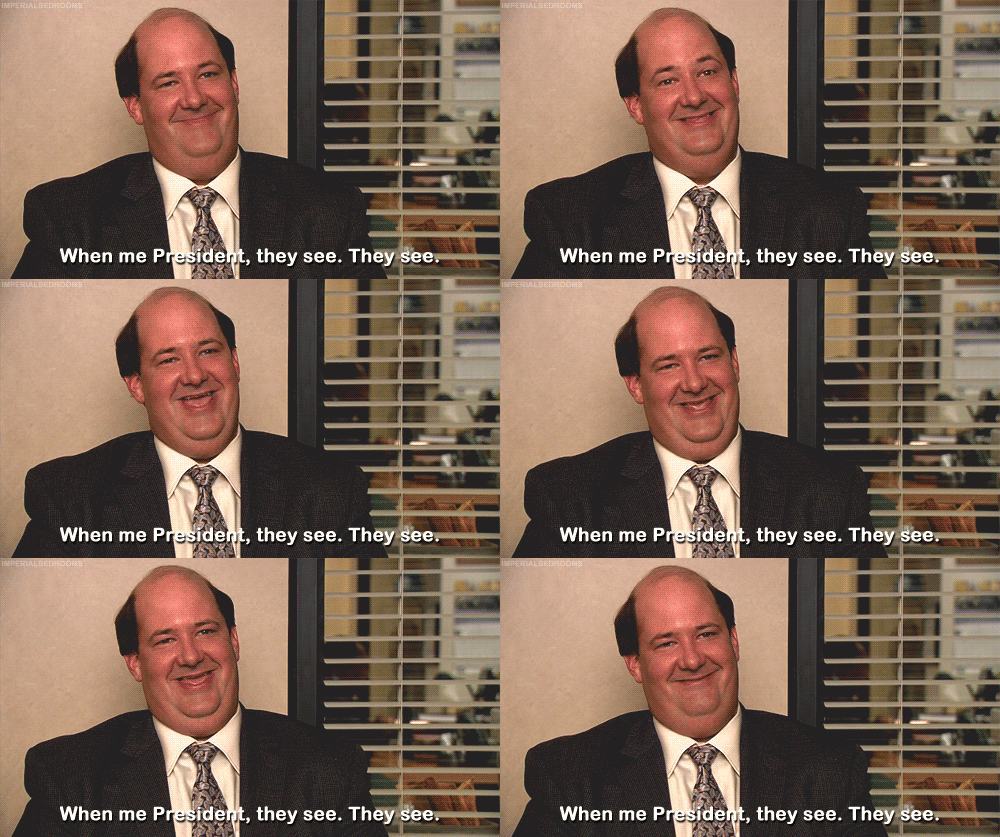
Let's just follow Kevin's(The Office) lead.

Me mechanic, not speak english. But he know what me mean when me say "car no go", and we best friends, so me think why waste time, say lot word when few word do trick.

That's the true evolution of the English language, with all the time saved we can see/sea world.

tumblr_nsy4wnNd5E1us3bdso1_500.gif

America did basically make Kevin president already.
 
Yep, I'm English and do the same. It's only a very slight difference, but a difference nonetheless. They're and There/Their are pronounced differently, for They're imagine saying they are, it comes out theyer. There/Their has no Y sound. Same with You're and your as you pointed out, though it's probably less noticeable.

I'm english and I pronounce them all yore. I get what you mean but I don't think I have ever met someone from the south east of england pronounce it the way you do. However I bet it's a regional thing. Same for there by the way. If you are pronouncing it Theyer you are basicaly just saying they are but rolling the are straight of the y. But again its prob just regional.

However it's important to distinguish it in writting because you don't have things like body language to assist and in cases such as legal documents etc, it is very important to be as clear and accurate as possible.
 
As a non-native speaker I think they're one of the easiest things to write correctly. I don't get the confusion. With what I really struggle is the tenses. I'll never understand the diference between 'I did somethng' and 'I have done something'.
 
They´re different words. I can maybe comperehend non-native speakers to have this opinion but native english speakers? Learn your goddamn language.

I was under the impression that this one was an issue for native speakers more often than for non-native speakers. They tend to have trouble with different things and it varies depending on their native language too.
 
Status
Not open for further replies.
Top Bottom
