

• Hey Guest. Check out your NeoGAF Wrapped 2025 results here!

GAF Book Club (Sept 2013) - "If on a winter's night a traveler" by Italo Calvino

Status
Not open for further replies.

Cyan

Banned
wRAub.jpg


Relax. Concentrate. Let the world around you fade...
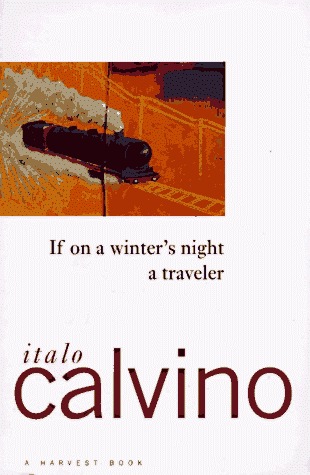

If on a winter's night a traveler by Italo Calvino

Italo Calvino's novel If on a winter's night a traveler is about you. You are trying to read Italo Calvino's book If on a winter's night a traveler when something quite annoying happens: due to some kind of printing error, only the first chapter is included, repeating over and over. So you go back to the bookstore and try to exchange your copy of If on a winter's night a traveler for another one, but the person at the bookstore tells you that the chapter you just read — which you wish to continue reading, after all — was not actually a part of If on a winter's night a traveler at all, but a different book entirely. And so you go off in search of that book and, naturally, you find hilarity, an international book-fraud conspiracy, and true love.

"One of the world's best fabulists."
- New York Times Book Review

"Calvino is a wizard."
- New York Review of Books

"Manages to charm and entertain the reader in the teeth of a scheme designed to frustrate all reasonable readerly expectations."
- John Updike


Find it here:
Amazon paperback
Kindle edition

Or try your local library. Let's read!


Guidelines:
-Discussion of anything and everything is encouraged. It's a book club, let's chat!
-Please use spoiler tags sensibly.
-The milestones are there to help keep you on the path. If you get ahead or behind, don't worry--it will have no impact on your final grade.


Reading Milestones:
Sept 1-7 - 1-3
Sept 8-14 - 4-6
Sept 15-21 - 7-8
Sept 22-28 - 9-12


Previous Book Club Threads:
Lolita by Vladimir Nabokov (July 2013)
Atlas Shrugged by Ayn Rand (Feb-Mar 2013)
The Brothers Karamazov by Fyodor Dostoyevsky (September 2012)
Catch-22, by Joseph Heller (January 2012)
The Shadow of the Wind, by Carlos Ruiz Zafón (December 2011)
Blood Meridian: Or the Evening Redness in the West, by Cormac McCarthy (Oct 2011)
The Master and Margarita, by Mikhail Bulgakov (Sep 2011)
The Count of Monte Cristo, by Alexandre Dumas (Aug 2011)
Master and Commander, by Patrick O'Brian (July 2011)
The Happiness Project, by Gretchen Rubin (June 2011)
A Visit from the Goon Squad, by Jennifer Egan (May 2011)
The Afghan Campaign, by Steven Pressfield (Apr 2011)
Stranger in a Strange Land, by Robert A. Heinlein (Mar 2011)
Flashman, by George MacDonald Fraser (Feb 2011)
 
Uh, nice! I heard so much good stuff about this book. Heading to the Kindle Store right this second.
Only book I read from Calvino so far was Castle of crossed Destinies which was somewhat weird because it read more like a concept (a cool one though) than an actual novel.
 
I love this book, and I love Calvino.

Since I've read it, I think I might pick up Cosmicomics as I'm in the mood for some short stories.

Enjoy everyone!
 
People might mistake you for some kind of train fetishist.
 
Probably the most pretentious opening I've ever read.
 
In 50s years' time, a book like this would never be written.

It wasn't until I was more than halfway through the book that I went back to the copyright page to check the date of publication and, sure enough, it was written in the 80s, before cell phones and internet and e-readers. So many concepts, the searching for Ludmilla, the puzzling over the inconsistencies of the books, even something as innocuous as a library, would no longer be natural life experiences to authors of the future, but would actually be a relic of the past. Any author trying to write this book in 2050 would be writing historical fiction.

It says a lot about how fast society has progressed in a mere decade that a book from 1979 could already feel outdated, when older books seemed so much more closer to the then present days of the 90s, or even the 00s.
 
For some reason I thought Cyan would pick a non-fiction book. Plenty of people I would call readers only read non-fiction. And no, it's totally not because I'm on a non-fiction binge, because I'm not. ;)

I'll stick to the milestones. If I get the book.
 
For some reason I thought Cyan would pick a non-fiction book. Plenty of people I would call readers only read non-fiction. And no, it's totally not because I'm on a non-fiction binge, because I'm not. ;)
I would not call those people readers. *angry face*

Ok, maybe.

I don't know, nothing non-fiction comes to mind as something I'd really want to do in the book club. Feel free to make suggestions though. Ooh, wait, maybe GEB. That'd be fun. :) Big project, though.
 
I would not call those people readers.

:O


Philosophy

The Symposium by Plato (c380 BC)
A lively dinner-party debate on the nature of love

Meditations by Marcus Aurelius (c180)
A series of personal reflections, advocating the preservation of calm in the face of conflict, and the cultivation of a cosmic perspective

Essays by Michel de Montaigne (1580)
Montaigne's wise, amusing examination of himself, and of human nature, launched the essay as a literary form

The Anatomy of Melancholy by Robert Burton (1621)
Burton examines all human culture through the lens of melancholy

Meditations on First Philosophy by René Descartes (1641)
Doubting everything but his own existence, Descartes tries to construct God and the universe

Dialogues Concerning Natural Religion by David Hume (1779)
Hume puts his faith to the test with a conversation examining arguments for the existence of God

Critique of Pure Reason by Immanuel Kant (1781)
If western philosophy is merely a footnote to Plato, then Kant's attempt to unite reason with experience provides many of the subject headings

Phenomenology of Mind by GWF Hegel (1807)
Hegel takes the reader through the evolution of consciousness

Walden by HD Thoreau (1854)
An account of two years spent living in a log cabin, which examines ideas of independence and society

On Liberty by John Stuart Mill (1859)
Mill argues that "the only purpose for which power can be rightfully exercised over any member of a civilised community, against his will, is to prevent harm to others"

Thus Spake Zarathustra by Friedrich Nietzsche (1883)
The invalid Nietzsche proclaims the death of God and the triumph of the Ubermensch

The Structure of Scientific Revolutions by Thomas Kuhn (1962)
A revolutionary theory about the nature of scientific progress

Source: http://www.theguardian.com/books/2011/jun/14/100-greatest-non-fiction-books

And that is just one subject. Shame on you Cyan. You is a brother no more to me.

P.S. What about biographies? or non-fiction books by authors, e.g.Letters to a Young Novelist by Mario Vargas Llosa (2002), News of a Kidnapping by Gabriel García Márquez (1996).

Cyan said:

phew... Crisis averted.
 
Generally I refuse to read non-fiction for, what I imagine, are the same reasons other people read it.

The only non-fictions books I've read in recent years and truly enjoyed are Bonk! and The Poisoner's Handbook, because the topics actually interest me.

And Guns, Germ and Steel I guess but the prose was so dry and repetitive it felt like a textbook (which it was, in hindsight). In fact, it was so dull Guns, Germ and Steel was one of the few books I never finished to completion, along with Taco Nation, a book I picked up on a whim and sadly never learned anything about making tacos from.
 
Generally I refuse to read non-fiction for, what I imagine, are the same reasons other people read it.

For pleasure, satiating curiosity, and self-education? Quite similar to the reasons I read.. decent examples of literature.

Reading is a solitary experience, and each to their own. Great stories and comments on the human condition exist in both. Which is why I read 'em both. Or at least try to.
 
For pleasure, satiating curiosity, and self-education? Quite similar to the reasons I read.. decent examples of literature.

Pleasure is universal and completely subjective so I'll give you that. But for the latter two, yes. I read books for escapism and the appreciation of the craft of fiction, which, obviously, I can't really get from a non-fiction story unless it was framed in such a way as to feel like fiction. Historical non-fiction tends to do this, as well as biographies. The exception to this (for me) is non-fiction dealing with particular areas of interest, which includes science topics.
 
Pleasure is universal and completely subjective so I'll give you that. But for the latter two, yes. I read books for escapism and the appreciation of the craft of fiction, which, obviously, I can't really get from a non-fiction story unless it was framed in such a way as to feel like fiction. Historical non-fiction tends to do this, as well as biographies. The exception to this (for me) is non-fiction dealing with particular areas of interest, which includes science topics.

Fair enough. I picked the above list specifically for Cyan, and to give a sense of gravitas to the debate - Michel de Montaigne for example launched the essay as a literary form.

I have a friend who only reads sports biographies, and another who reads only celebrity biographies. I can understand the case being harder for the latter person to be called a reader, but I do. To demonstrate what I would call a 'reader', perhaps it is better for me to call them 'avid readers', who read books, as opposing to merely reading the news, or articles, or features. The person mentioned above reads at least ten fifteen biographies a year.
 
I've tried and failed about three times to finish this book. I just can't seem to get myself to stick with it. Looks like I might have to give it another go!
 
I read this maaaany years ago for school, but don't remember much anymore. Picked it up again a few months ago, so I might as well read it this month. :]
 
Yeah, I'd call that being a reader. It doesn't feel quite the same to me, though. I think that for me, a key part of reading is being drawn into the world created by the story, when you're not so much reading the words as playing it out in your mind. Which, of course, doesn't happen with non-fiction books. Maybe that's why I usually don't care for reading them.

I think I know what I mean. They do qualify - just about - but you hardly hear of book reading clubs reading such books.

cyan said:
Good list. I will take it under consideration. :)

ha ha.

I don't know why this made me laugh. Looking forward to reading the nominated book. Three more days of freedom!
 
You are reading a book written in the second person. Now you should...

Relax. Concentrate. Let the world around you fade...

I read the first two paragraphs to my wife and she said, "Nope, no way."

So far it's incredibly annoying, like the author had zero idea what to write and started masturbating furiously on his typewriter.

I'll try to stick with it but either I'm either too stupid for this book (quite likely) or Italo is being intentionally obtuse just to annoy me (also very likely).

It reminds me of when bands release albums and the first track is just awful, like they're intentionally trying to challenge the listener to get passed it. Who are they trying to drive away? I can't imagine this book sold well...
 
I read the first two paragraphs to my wife and she said, "Nope, no way."

So far it's incredibly annoying, like the author had zero idea what to write and started masturbating furiously on his typewriter.

I'll try to stick with it but either I'm either too stupid for this book (quite likely) or Italo is being intentionally obtuse just to annoy me (also very likely).

It reminds me of when bands release albums and the first track is just awful, like they're intentionally trying to challenge the listener to get passed it. Who are they trying to drive away? I can't imagine this book sold well...

It's a very experimental book. Hardly anyone ever writes in the second person (this is likely the most famous book written from that perspective) and this is why. He's basically writing from your perspective. I happen to think it's brilliant, but it's very obvious that the book isn't for everyone.
 
I read the first two paragraphs to my wife and she said, "Nope, no way."

So far it's incredibly annoying, like the author had zero idea what to write and started masturbating furiously on his typewriter.

I'll try to stick with it but either I'm either too stupid for this book (quite likely) or Italo is being intentionally obtuse just to annoy me (also very likely).

It reminds me of when bands release albums and the first track is just awful, like they're intentionally trying to challenge the listener to get passed it. Who are they trying to drive away? I can't imagine this book sold well...

Stick with it!

Some spoilers about the structure (though no spoilers about the story) if you'd like some motivation:

The odd numbered chapters are in the second person, focusing on the protagonist who is referred to as "You." It isn't actually you, but rather it is written as if you were the protagonist and you were seeing directly through his eyes. It's a very strange perspective, and a bit disconcerting when (at least in my experience) you and, er, "You" have similar opinions or ideas. The even-numbered chapters come from the book that "You" are currently reading - ten in all. Over time, the odd-numbered chapters form a cohesive story, and the even-numbered chapters form a series of story excerpts in different genres and styles that relate to what the main plot is about.
 
The problem with this second person approach is that if the author's accuracy rate when describing "you" isn't above a certain threshold, it just feels like a third person narrative where "he" is replaced with "you". I've always wondered whether it'd be possible to write a good story in the second person and this book is kind of proof that it's really difficult. Such a story would only really work for a particular section of your potential readers.
 
The problem with this second person approach is that if the author's accuracy rate when describing "you" isn't above a certain threshold, it just feels like a third person narrative where "he" is replaced with "you". I've always wondered whether it'd be possible to write a good story in the second person and this book is kind of proof that it's really difficult. Such a story would only really work for a particular section of your potential readers.

Mm. It worked really well for me - the first chapter describes my experience going to the bookstore (or a library) to a T, and I strongly identified with the character's description as a reader. It actually worked so well for me that it took a few chapters for me to separate my identification with the protagonist to treating the protagonist as a character in a story and not simply a looking glass version of myself. The effect was sort of like one of those "personality tests" where the result you get describes aspects of yourself just well enough that you ignore or rationalize all the stuff that doesn't really fit yourself.

Of course, if you don't get that effect, I can see how it might not work for you.
 
A lot of it was lost on me because I do all my reading on the Kindle these days. I was never much into reading and bookstores before the advent of e-readers.

Now, if Calvino was talking to me about flipping through Amazon reviews and struggling with 3G reception, that would've been much better

EDIT: Annnnd done. I don't really have anything to say about it. Well written but definitely not my kind of thing.
 
Perfect timing--we're doing this book in my Postmodern Literature class on September 17th. It'll be great to hear people's opinions before then.
 
I started early, on Chapter 6 at the moment. Looking forward to some others getting going so we can discuss. It is obviously a very strange, unique, and experimental format for a novel. I like it, but I don't love it yet. The "real world" portions are always interesting. The stories themselves vary, sometimes excellent and sometimes a bit rougher. Certainly the kind of book that could be made or broken by how it plays out.
 
Finished the first chapter and I have to say that I really like how this is written. I was a bit sceptical about the whole the second person thing but think that it works really good.
 
Ran across it by chance at the university library while looking for Dostoyevsky which they didn't have (only as e-book). Now it better be better than A Clockwork Orange (my second choice) or you've done me a disservice, BookGAF.

(Also ran across the collected screenplays of Andrei Tarkovsky, but it seemed like quite a thing to tackle.)
 
Ran across it by chance at the university library while looking for Dostoyevsky which they didn't have (only as e-book). Now it better be better than A Clockwork Orange (my second choice) or you've done me a disservice, BookGAF.

Tall order! But I'm liking it so far. Only a few chapters in, but I'm definitely getting a strong identification with the protagonist. It's... kind of odd?

Oh man! I didn't know about these. Eeeeeeee

:D
 
Man, you people are killing me with this lack of interest!

I haven't even started rereading yet. My word of the day is "Hypocrisy"!
 
Finished the first milestone and I like it a lot. The only thing that bothers me is that I have the distinct feeling I will never learn what was in the suitcase.
 
Read up to the milestone. It's funny, in that so far the Reader's reactions really are much like my own. With each new first chapter I get captivated with the writing and the characters (the little details really make them, beautifully done), and then somewhat annoyed when we swap over to something else, and then captivated anew.

I clearly need to read more Calvino.
 
Status
Not open for further replies.
Top Bottom