
I was actually jokingly using Gone Home as an example because of how much ire was thrown at it for exploring a controversial topic, often by the same people complaining about how video games aren't allowed to be controversial.In terms of tone? Sure, why not. Unless you think one can't take on tough topics without being light on gameplay.

-
Hey Guest. Check out your NeoGAF Wrapped 2025 results here!
You are using an out of date browser. It may not display this or other websites correctly.
You should upgrade or use an alternative browser.
You should upgrade or use an alternative browser.
Anita Sarkeesian: 'What I Couldn't Say'
- Thread starter oni-link
- Start date
- Status
- Not open for further replies.

paolo11
Member
As a female gamer and woman in general, it pains me to see the vitriol that Anita is receiving on a daily basis. No one should have to go through that for having an opinion and challenging the status quo. I'm glad that we have people like Anita in the gaming industry pushing more diversity in the representations of women in this media and also fighting to stop the harassment of women online. The comments on the video only further prove why this is necessary.
This.
The comments on Youtube against her are extremely vile. It is not deserved.
Mr_Antimatter
Member
didn't catch the edit.
the way I see it, it's going to impact very negatively the console market.
I mean Nintendo basically got their getoutjailfreecard with trying to monetize outside of the pure gaming medium.
But otherwise MSFT clearly showed they had no interest in satisfying their core customers, let alone expanded ones.
And Sony is back in business with a product focused on regaining the core customers they lost on ps3 and had on ps2.
None of the 3 are looking to expand much and they're losing customers anyway so outlook is not looking very bright.
Except It seems like the company motivations were the opposite of what you are stating. All attempted, in various ways to expand their audience.
Nintendo turned to a new novelty, combined with their old one, to attract new players interested in said novelty.
MS focused on their successful, or so it seemed last gen, Kinect functions, and added in a lot of multimedia stuff to attract TV viewers to the platform.
Sony added a slew of social functions, designed to connect players together, and indeed, attract the more social sort of gamers and users. People using playroom to host talk shows is a good example of reaching an audience that they didn't normally have.
Not all attempts to get a new audience are successful, but that doesn't mean they aren't trying.
DoktorEvil
Banned
Male gamers aren't being dragged kicking and screaming anywhere. If anything, the segregation the Wii tried to break down is now total and complete. (ie. the Wii failed) This is practically why Sarkeesian is so upset at the state of modern console / PC gaming. It's almost a walled garden for the hardcore at this stage. Want something else? Go iOS / Android.
It's not almost a walled garden. It is.
The barrier to entry to console/PC gaming grows as the market grows and differentiates. Even exposing someone new to video games to dual stick controls is a task onto itself.
There's a lot of entitlement thrown around with respect to gaming and most seasoned gamers become too entrenched to see it from a fresh pair of eyes. That's why I like Anita's series.
It's easily consumable but it's cursory enough for someone with a fresh pair of eyes to see things an average entrenched gamer would not see or not care to see.
Gnome Scat
Member
I'm ashamed that other gamers can be so cruel.

OfficerZap
Neo Member
I'm English, and I don't think any of our political parties would oppose a debate on gender representation on political grounds
Like I was saying, political doesn't mean a flavour of domestic politics and parties.
Taking an established societal entrenchment and seeking to educate, highlight, promote discussion, gather support, raise awareness or engender change is inherently political.
It's great that there isn't an issue in governmental politics in England. There doesn't seem to be in Sweden either. It's still a political discussion.
DoktorEvil
Banned
Isn't any slippery slope argument, by definition, a logical fallacy? And by the way, pretending all arguments are equally valid is a fallacy in itself.
Good thing I said most and not all, eh?
But yes, please quote rational wiki as an authoritative source on discourse.
block tower
Member
i feel for anita and the bullshit that she puts up with. its really bizarre that gaming has such radical individuals that get violent over others opinions. that being said, while i most definitely agree with anitas fight for more representation of women and non-whites in gaming, a lot of other subjects and things she says cause my eyes to roll back into my head. a lot of what she does just comes off to me as manufactured and the way some of the people in the gaming industry talk about her is almost hyperbolic.
Except It seems like the company motivations were the opposite of what you are stating. All attempted, in various ways to expand their audience.
Nintendo turned to a new novelty, combined with their old one, to attract new players interested in said novelty.
MS focused on their successful, or so it seemed last gen, Kinect functions, and added in a lot of multimedia stuff to attract TV viewers to the platform.
Sony added a slew of social functions, designed to connect players together, and indeed, attract the more social sort of gamers and users. People using playroom to host talk shows is a good example of reaching an audience that they didn't normally have.
Not all attempts to get a new audience are successful, but that doesn't mean they aren't trying.
If Nielsen is to be believed, they all failed.
No one is buying these systems for their function that is supposed to expand their base.
I mean Nintendo admitted that they didn't provide incentive to make their pad experience interesting.
MSFT has all but give up on the Kinect+Tv (that was never going to fly outside the US and is a big reason why they're so far behind).
And Sony's stuffs is something of an afterthought that will not push people to their platform in any significant way.
Worse than that, the software offering they provide is awfully narrow and aren't going to help them expand.
So you want more games like Gone Home?
They worked just fine for naughty dog way back when, with only the merest fraction of the interaction gone home had.
So, if this:

Can lead to this:

Then yeah, I might want to see where this:
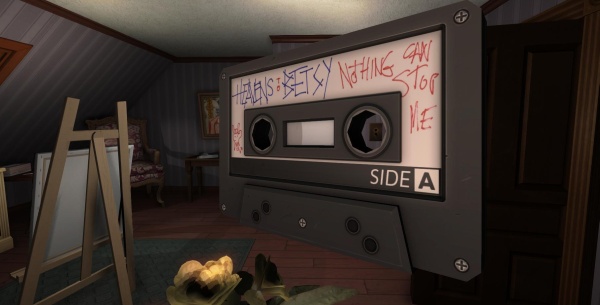
ends up going.
Aztechnology
Member
It's so incredibly sad to see someone who's clearly developed a form of PTSD as an outcome of speaking their mind and attempting to make video games better because she loves meaningful stories. What she does has become nothing short of what seems like a Sisyphean feat.
The values held by the administrators are basically "don't harass people". If you disagree with that, get the hell off of the forum. There are plenty of people in this thread and many others calmly and rationally debating the actual content of Anita's videos.I find it interesting that neogaf users are forced to comment on youtube should their opinion contradict the values held by the administrators here. That really doesn't facilitate discussion.
Good thing I said most and not all, eh?
But yes, please quote rational wiki as an authoritative source on discourse.
I don't know I like their gamergate entry.
D
Deleted member 126221
Unconfirmed Member
I find it interesting that neogaf users are forced to comment on youtube should their opinion contradict the values held by the administrators here. That really doesn't facilitate discussion.
Huh. Looking at the youtube comments, I don't feel like we're missing anything interesting or intelligent.
Male gamers aren't being dragged kicking and screaming anywhere. If anything, the segregation the Wii tried to break down is now total and complete. (ie. the Wii failed) This is practically why Sarkeesian is so upset at the state of modern console / PC gaming. It's almost a walled garden for the hardcore at this stage. Want something else? Go iOS / Android.
Could you specify what you mean by hardcore?
PC has many different services where tons of games are released every week for different genres. From steam you can purchase strategy games from Paradox, all kinds of indie titles from platformers to rpg's, old school classics, point and click adventures and what have you. We are talking about thousands upon thousands of releases every year - more than enough to satisfy all people who are willing to look beneath the surface of generic AAA franchises (the kind of games that many players mock enthusiastically) .
I've been playing since the early 90's and I sincerely believe the selection is larger now than ever before so I don't see where you are coming from with this segregation sentiment. Ten years ago people would know the names of most games that were released every month, now there is a flood and I have no idea what most of these titles are in GOG, Steam or even in Origin.
King Gilga
Member
Avoid the comments guys...
I dunno, those comments do nothing but prove her right and make their movement lose any credibility. Their comments are their own worst enemy.
I find it interesting that neogaf users are forced to comment on youtube should their opinion contradict the values held by the administrators here. That really doesn't facilitate discussion.
Judging by those comments, we're not losing anything of any value, nevermind 'discussion'.
I've been playing since the early 90's and I sincerely believe the selection is larger now than ever before so I don't see where you are coming from with this segregation sentiment.
I've been there since pretty much the 90's too and I echo that sentiment.
That's the wonderful thing about this medium, the past is still there.
I mean it, even if you curse every single new releases out there, there's so much stuffs to discover and play that it's easy to have a backlog the size of the ET landfill.
Could you specify what you mean by hardcore?
PC has many different services where tons of games are released every week for different genres. From steam you can purchase strategy games, all kinds of indie titles, old school rpg's, point and click adventures and what have you. We are talking about thousands upon thousands of releases every year.
Judging by the context Im going to go ahead and say its AAAAAAAAAAAAAAAAAAAA budget games full of dramatic presentations of faux challenge, designed to make them feel like they are amazing at games despite them never actually doing anything, and standard shoot the other multiplayer full of incredibly obnoxious auto and sticky aim.
And not those broken games with controls that dont work like monster hunter. I mean, they hit that dinosaur like five times and it didnt go into a QTE where it kneeled before them, told them how awesome they were at videogames, before rolling over dead. Completely broken.
Your last sentence is an entirely new problem that is doing some serious damage to the people most think are benefitting greatly from it.
PrioritySe7en
Banned
No, do not avoid the comments.
Look at them.
Look at them.
This is what the current state of our hobby has bred. This is the new generation that represents our hobby, formed by the media they consumed.
Look at them.
You want to change this, stop supporting what creates them. And actively rebuke it, and them.
Do not cover your eyes and ignore it. Anita sure as hell doesnt have that luxery.
Well said, I couldn't agree more.
SolicitorPirate
Member
How is gamergate still going? How are these people still acting like human pieces of shit with absolutely no self reflection? Why has there been almost zero consequences for these people?
Fuck. I'm so tired, guys. I'm not even a target for these assholes, and I already feel broken.
Fuck. I'm so tired, guys. I'm not even a target for these assholes, and I already feel broken.
It's never going to end.
Let's dispatch with the defeatist attitude and start doing everything we can, every chance we get, to bring it closer to an end. How about starting with holding Google accountable for the shit they let flourish in their comment sections?
blankempathy
Member
Could you specify what you mean by hardcore?
PC has many different services where tons of games are released every week for different genres. From steam you can purchase strategy games from Paradox, all kinds of indie titles from platformers to rpg's, old school classics, point and click adventures and what have you. We are talking about thousands upon thousands of releases every year - more than enough to satisfy all people who are willing to look beneath the surface of generic AAA franchises (the kind of games that many players mock enthusiastically) .
I've been playing since the early 90's and I sincerely believe the selection is larger now than ever before so I don't see where you are coming from with this segregation sentiment.
And its true. Theres more options for people then ever. A lot has changed over the 30 or so years of gaming but people want to think that isn't true. Has the change been slow? Of course. Just like any new medium. As it grows more and more people of different races/sex/backgrounds will become a part of that genre. Hell the mmo boom alone brought in a whole brand new type of demographic. Games like Final Fantasy XI and WoW brought in a huge female audience. Even though the end game for wow only targeted the hardcore at the start that didn't stop people from casually playing or even becoming interested in raiding.
lol fohSo:
1. Businesses design and market product for a variety of target audiences.
2. Somebody gets offended when a group of products have a design that they don't like
3. Group takes donations to publicly say "Fuck You" to an entire industry
4. Group successfully picks a public fight with an industry
5. Group acts surprised when consumers and figures in and around industry say "Fuck You" and lash back
6. Group reacts by literally saying "Fuck You"
7. Group acts like a victim in a fight they started in public
Am I accurate? close? 50/50? way off?
Aztechnology
Member
Male gamers aren't being dragged kicking and screaming anywhere. If anything, the segregation the Wii tried to break down is now total and complete. (ie. the Wii failed) This is practically why Sarkeesian is so upset at the state of modern console / PC gaming. It's almost a walled garden for the hardcore at this stage. Want something else? Go iOS / Android.
Absolutely not, the niche markets have never been stronger. There's an abundance of unique games that break stereotypes and cliches on PC and consoles are starting to come around. The problem is the ones that still sell extremely well have a very set agenda, and they have to market to what sells and what sells is stuff that is often full of sexism because it's formulaic.
NoirVisage
Banned
Let's dispatch with the defeatist attitude and start doing everything we can, every chance we get, to bring it closer to an end. How about starting with holding Google accountable for the shit they let flourish in their comment sections?
speak for yourself, the comments are the best part of youtube, for better or worse, censorship is not going to help anyone.
not_so_special
Banned
i ask a honest question...how do you fell about the man who coproduce the videos and cowrite them? because thats my principal problem with femfreq his views are to extreme and simplistic for me..and he have a clear agenda on this..its more than "women depiction on games"
yes..im talking about macintosh
yes..im talking about macintosh
Mr_Antimatter
Member
Absolutely not, the niche markets have never been stronger. There's an abundance of unique games that break stereotypes and cliches on PC and consoles are starting to come around. The problem is the ones that still sell extremely well have a very set agenda, and they have to market to what sells and what sells is stuff that is often full of sexism because it's formulaic.
Also, the wii didn't really fail, it didn't quite awesomely. The wii's problem was nintendo really failed to keep the momentum going in it's later years, and thus surrendered any sales to the ps3 or 360.
SketchTheArtist
Member
How is gamergate still going? How are these people still acting like human pieces of shit with absolutely no self reflection? Why has there been almost zero consequences for these people?
Fuck. I'm so tired, guys. I'm not even a target for these assholes, and I already feel broken.
It seems to be a social issue rather than something exclusively to gaming. Anonymous assholes are rampant on the web but the scariest thing is, some people don't even hide their identity after acting like monsters towards another human being. And the police/government/social media companies are doing their bare minimum to help solve this issue.
It's gonna get better but I fear there needs to be an absolutely horrible event that's probably gonna cost lives before anyone with authority does anything.

the comments are the best part of youtube
This is something I never thought I'd ever see someone say. Surely not better than, perhaps, the videos?
i ask a honest question...how do you fell about the man who coproduce the videos and cowrite them? because thats my principal problem with femfreq his views are to extreme and simplistic for me..and he have a clear agenda on this..its more than "women depiction on games"
yes..im talking about macintosh
Could you be more specific about said agenda?
Judging by the context Im going to go ahead and say its AAAAAAAAAAAAAAAAAAAA budget games full of dramatic presentations of faux challenge, designed to make them feel like they are amazing at games despite them never actually doing anything, and standard shoot the other multiplayer full of incredibly obnoxious auto and sticky aim.
So essentially games like Uncharted where the mechanics themselves are uninspired and the whole brouhaha revolves around production values. The Transformers of gaming industry. But then what is even the point of obsessing over them if there is an ocean of titles behind these risk-averse releases?
This is what I don't understand about people who criticize the gaming industry for being too one dimensional or people who go on crusades when Sarkeesian creates a new clip. There are so many options, in any genre, but it feels like people are only looking at a few dozen titles and then are afraid that their access will somehow be removed, because of XYZ.
Massive Duck. C.M.
Banned
I find it interesting that neogaf users are forced to comment on youtube should their opinion contradict the values held by the administrators here. That really doesn't facilitate discussion.
They're not forced.
They choose to say what they want there because they are largely incapable of carrying on a civil and/or logical argument.
You'd think after people like Tim Schafer, Will Wheaton, Joss Whedon, Neil Gaiman, Pendleton Ward, Adam Sessler, Jim Sterling, the New York Times, Time Magazine, Jimmy Wales, Slate, Verge, Felicia Day, Notch, Blizzard, Boston Globe, NeoGAF, Huffington Post, and who know show many else I'm forgetting, showing disdain for this GG bullshit would have caused at least some of them to realize "hey, maybe this is all bullshit".
EDIT: Fuck it, I'ma make a list of this stuff, it'd be nice to have a reminder that actual decent and cool people are on the side of actual decency. Hold on to your horses;
Prominent People against GG:
Tim Schafer
Will Wheaton
Joss Whedon
Stephen Colbert
Neil Gaiman
Pendleton Ward
Adama Sessler
Jim Sterling
Jimmy Wales
Felicia Day
Notch
Rich Amtower
Alison Rapp
Christ Kluwe
Anita Sarkeesian
Zoe Quinn
Rebeca Wattson
Other Places:
New York Times
Time Magazine
Wikipedia
Slate
Verge
Boston Globe
BuzzFeed
Huffington Post
Patreon
Able Gamers
EDIT: Fuck it, I'ma make a list of this stuff, it'd be nice to have a reminder that actual decent and cool people are on the side of actual decency. Hold on to your horses;
Prominent People against GG:
Tim Schafer
Will Wheaton
Joss Whedon
Stephen Colbert
Neil Gaiman
Pendleton Ward
Adama Sessler
Jim Sterling
Jimmy Wales
Felicia Day
Notch
Rich Amtower
Alison Rapp
Christ Kluwe
Anita Sarkeesian
Zoe Quinn
Rebeca Wattson
Other Places:
New York Times
Time Magazine
Wikipedia
Slate
Verge
Boston Globe
BuzzFeed
Huffington Post
Patreon
Able Gamers
Absolutely not, the niche markets have never been stronger. There's an abundance of unique games that break stereotypes and cliches on PC and consoles are starting to come around. The problem is the ones that still sell extremely well have a very set agenda, and they have to market to what sells and what sells is stuff that is often full of sexism because it's formulaic.
They are recovering, even proliferating, for now, thanks to to advancements in technology making small game projects... But a lot of serious problems are cropping up.... Mostly at the hands of large corporate incumbents....
But thats not what this post is about.
People who have a low saturation point for AAAAAAAAAAAA games because they are not mentally challenging or stimulating enough, but ALSO have a low tolerance for indie games, because they are simply too small in scope, the people who relied on the mid tier, have been completely marginalized.
AAAAAAAAAAA incumbents would NEVER take a risk to make something out of the ordinary, and indie studios dont have the budget to make a project that large.
OfficerZap
Neo Member
I find it interesting that neogaf users are forced to comment on youtube should their opinion contradict the values held by the administrators here. That really doesn't facilitate discussion.
There are two threads there, though.
This is for talking about the harassment.
I'm sure you'd be welcome to start a new thread debating the philosophy of the videos. However, it seems to encourage people to youtubeify their comments,which derails the discussion.
As a female gamer and woman in general, it pains me to see the vitriol that Anita is receiving on a daily basis. No one should have to go through that for having an opinion and challenging the status quo. I'm glad that we have people like Anita in the gaming industry pushing more diversity in the representations of women in this media and also fighting to stop the harassment of women online. The comments on the video only further prove why this is necessary.
She is so brave for sticking with this and going the distance, 3 years of abuse with no end in sight, it would have been so easy to give up, hopefully more woman follow in her footsteps
nrvalleytime
Member
You'd think after people like Tim Schafer, Will Wheaton, Joss Whedon, Neil Gaiman, Pendleton Ward, Adam Sessler, Jim Sterling, the New York Times, Time Magazine, Jimmy Wales, Slate, Verge, Felicia Day, Notch, Blizzard, Boston Globe, NeoGAF, Huffington Post, and who know show many else I'm forgetting, showing disdain for this GG bullshit would have caused at least some of them to realize "hey, maybe this is all bullshit".
While there's always the danger of Argumentum ad populum, I completely agree with you. Gaming's easily critiqued because it's rarely had to be introspective, and the agreement from these widely different avenues carries quite a bit of validity.
not_so_special
Banned
They're not forced.
They choose to say what they want there because they are largely incapable of carrying on a civil and/or logical argument.
to be fair some anita defenders ( i dont know how to call them.everybody should defend her againts the hate) pile up aggresively on anyone who disents on their point of view very often
its good to see mods taking notice of that and making threads better places to discuss you can defend her from the hate and at the same time dissent of her points of view or videos the key is being a decent human being

cm osi
Member
i ask a honest question...how do you fell about the man who coproduce the videos and cowrite them? because thats my principal problem with femfreq his views are to extreme and simplistic for me..and he have a clear agenda on this..its more than "women depiction on games"
yes..im talking about macintosh
mcintosh is legit nuts. i mean, duck tales reinforce neo-colonialism and capitalist messages?
can't take him seriously
i don't like anita's video but at least she's a normal person.
The values held by the administrators are basically "don't harass people". If you disagree with that, get the hell off of the forum. There are plenty of people in this thread and many others calmly and rationally debating the actual content of Anita's videos.
How exactly could one say anything critical of Anita's behavior without being branded a harasser? (I have deleted the second paragraph of this post for fear of being banned)
civilstrife
Member
You'd think after people like Tim Schafer, Will Wheaton, Joss Whedon, Neil Gaiman, Pendleton Ward, Adam Sessler, Jim Sterling, the New York Times, Time Magazine, Jimmy Wales, Slate, Verge, Felicia Day, Notch, Blizzard, Boston Globe, NeoGAF, Huffington Post, and who know show many else I'm forgetting, showing disdain for this GG bullshit would have caused at least some of them to realize "hey, maybe this is all bullshit".
In their minds, it's collusion. Much easier to think that than to accept the possibility that the reprehensible shit they believe is wrong.
FF Seraphim
Member
I find it interesting that neogaf users are forced to comment on youtube should their opinion contradict the values held by the administrators here. That really doesn't facilitate discussion.
Are you reading the same comments as we are on youtube? Majority of them do not leave for an educated discussion on the issue at hand bro...
not_so_special
Banned
Could you be more specific about said agenda?
you just need to follow his twitter...believe me its full of gems,and sometimes its pretty obvious he writes the femfreq twitter too
mcintosh is legit nuts. i mean, duck tales reinforce neo-colonialism and capitalist messages?
can't take him seriously
i don't like anita's video but at least she's a normal person.
the problem is ...he is behind the videos he cowrote them
i dont have any problem with anita..she is ok on my books...but man...macintosh on the other hand...

Riposte
Member
Anita has done more good for the industry in a 3 years then every major publisher has done in decades.
That's a very odd set of values: more or less creating and growing the industry (and thus in most respects, the artform/technology it's based on) in a few decades being "less good" than critiquing one aspect of aesthetic choices found in their games.
Artistic vision, every single time I read that here I can't help but think it's a sick joke.
I mean we're talking about the equivalent of Hasbro trying to make money off toys.
Considering the constraint devs go through, artistic vision is not high on the scale.
You hold the current creative process with such disrespect, you nullify the creativity that exists within those constraints (or "despite them", if you must). At best, you idea is a fallacy, where one must accept more constraints because of those that already exists (and that's assuming they hold these constraints in equal measure). What really bothers me though, is that you expect people to feel the same dismissive cynicism (e.g., these are toys, in a negative connotation), since that's the only real bite of your rebuttal.
Far Cry 4 is an amusing example, because it was a clear case of misdirected rage. In other words, a pretty firm counterexample to the dismissive idea of "artistic vision".
The people who hate her are all keyboard warriors or just, I don't even know why people hate her, they think she wants to change their games? Or take them away from them?
I don't mean to speak to why people go as far as to hate her and take hateful actions against her, but on the idea that she wants to "change their games" (which is effectively the same as "take away", if we speak frankly), I don't think there is any question on that: she does. That is her goal, that's why she has spent so much time on this project (and it has been said as much, in other words). That's the goal of a lot of people who write about games and she's definitely not an exception; if anything, this is a quintessential case: she has been made the spearhead (perhaps outside her initial intent) of a movement (some parts critique, some parts activist) that seeks change. Change in industry norms, which goes up and includes content in games. Trying to imply anything else is simply a convenient falsehood. I mean, Feminism itself, is a concept about changing and challenging values (i.e., present values, the "Status Quo" as the popular phrase goes).
The whole hubbub is about what change and fighting for change in this context means. And here we have chaos, even excluding the angry internet mobs. Within this chaos, I have a strong dislike when people try to dismiss a position through deceptive ideas, with the above "she doesn't want to change games" being a very common case. No, instead we should look exactly what "change" means, rather than dismiss a notion that is obviously true (i.e., as true as people having strong feelings about the content games that are put through such a lens). I feel as if there's simply some inconsolable disagreements here (I mean here as in GAF or similar outlets of civil debate, let's ignore Sarkeesian for a moment) and people attempt to hide this by shifting one's attention to more amicable interpretations and exchanges - like "just wanting to make developers think more about choices". That's not untrue, but it's not the whole truth. Sexism is considered harmful and various ideologies have a basis in trying to diminish this effect, to fight it. How is simply asking people to be not sexist and stopping there acceptable on a moral level? What if it doesn't work? And is labeling examples, concepts, or individuals as sexist an example of "asking"? Here comes the disagreement with how one progresses with those ideals, that only a second ago was unthinkable.
What I would mainly like to point out though, is that if you find someone who seems completely unreceptive to even simple, safe ideas, maybe they don't disagree with them, but rather have not put out more draconian ones out of their minds? Perhaps cynically, I would say the those harsher ideas showing up is just a matter of time and context, maybe within the same person. Can you not already see them in this thread? I think it is naive to think they wouldn't set the conversation (to which maybe Sarkeesian is sometimes just a lightning rod for).
What does this mean in the larger context of her online abuse, what I take this thread originally be about? Pretty much nothing, as far as "justification" goes. However, people really like to have arguments about her ideas (or the ideas of those who champion her), including those who make wild claims that beg rebuking (like Overside's baseless psychological effects of videogames). Maybe this is a bad thing that people have these conversations in this context, but it takes two to tango.
So essentially games like Uncharted where the mechanics themselves are uninspired and the whole brouhaha revolves around production values.
The Transformers of gaming industry. But then what is even the point of obsessing over them if there is an ocean of titles behind these risk-averse releases?
Their entitlement has been cultivated and pandered to for years. Its how theyve been groomed into whales. An ocean isnt enough for them. It has to be ALL about them, thats what theyve been told, for years, its what draws them. Its all about them.
NoirVisage
Banned
of course not..This is something I never thought I'd ever see someone say. Surely not better than, perhaps, the videos?
then again..it actually depends.
You'd think after people like Tim Schafer, Will Wheaton, Joss Whedon, Neil Gaiman, Pendleton Ward, Adam Sessler, Jim Sterling, the New York Times, Time Magazine, Jimmy Wales, Slate, Verge, Felicia Day, Notch, Blizzard, Boston Globe, NeoGAF, Huffington Post, and who know show many else I'm forgetting, showing disdain for this GG bullshit would have caused at least some of them to realize "hey, maybe this is all bullshit".
None of those people were ever high on a majority of the typical gamergate fans list.
No, do not avoid the comments.
Look at them.
Look at them.
This is what the current state of our hobby has bred. This is the new generation that represents our hobby, formed by the media they consumed.
Look at them.
You want to change this, stop supporting what creates them. And actively rebuke it, and them.
Do not cover your eyes and ignore it. Anita sure as hell doesnt have that luxery.
Wow, this hits really hard.
This is something I never thought I'd ever see someone say. Surely not better than, perhaps, the videos?
Not really. But it can be fun to run in and mess with the people like we see on this video.
- Status
- Not open for further replies.