• Hey Guest. Check out your NeoGAF Wrapped 2025 results here!

Help explain cultural body language! (anime neck-grasp itt)

Miyazaki himself dislikes most anime because most of the animation reference is based on other anime and not real life:
http://en.rocketnews24.com/2014/01/...strys-problem-is-that-its-full-of-anime-fans/

Edit: I'd have to agree with him. Body language, even if it's from another culture, is natural and shouldn't have to be explained to someone. Even if it's from another culture, if it's real body language, you should be able to interpret and assume some things. Otherwise that's not natural body language, that's just a weird thing that someone does that's not communicating anything correctly.

Animation is fiction, having non realistic body language is fine as the characters don't actually exist and can be set to do what they want within the boundries of their own world.

Fiction would be really boring if everything was super grounded in reality.
 
I'm talking about exactly what you're posting about. If you can only understand body language because you grew up with anime that made it up, then that's unnatural body language. I agree with Miyazaki that this makes it bad animation because those animators are only using other animation as reference and not looking at real life for reference.

Take that Attack on Titan run gif posted earlier in the thread for instance. No one would ever run like that unless they had seen an anime where a character does that. It's not natural body language. What is it supposed to convey? Is the character excited? Scared? Fragile? Timid? I have no clue. And yet it is used in a lot of anime. But that's bad animation, in my opinion, since it doesn't clearly communicate what it's supposed to unless you are "in" on it.
And you completely ignored the part about japanese culture. Anime and most of what it adapts are usually made with the japanese audience in mind. Thus they reference what that audience understands. Western fans usually don't becaude they of course didn't grew up in the japanese society. Why would anime need to comform to what you know and grew up with, you're not the primary target audience.

And funny that you call the running titan. Because that's actually a thing in Japan. Girls put their knees together because that's perceived as cute.
 
Animation is fiction, having non realistic body language is fine as the characters don't actually exist and can be set to do what they want within the boundries of their own world.

Fiction would be really boring if everything was super grounded in reality.

Believable is the key word in animation. I'm not arguing for realism.

And you completely ignored the part about japanese culture. Anime and most of what it adapts are usually made with the japanese audience in mind. Thus they reference what that audience understands. Western fans usually don't becaude they of course didn't grew up in the japanese society. Why would anime need to comform to what you know and grew up with, you're not the primary target audience.

Then how come I can watch a Miyazaki movie and completely understand all the body language?

And funny that you call the running titan. Because that's actually a thing in Japan. Girls put their knees together because that's perceived as cute.

Is it considered cute because cute girls do it in anime? Which came first? Honest question, I'm not being snarky.
 
Why does it need to be believable? Most fiction is totally unbelievable, that's the point.

Because believability is the core to good animation. It's the foundation upon which it is built. Most fiction, if done well, is believable within the world they create. If it's not believable, most people's reactions are "that's so cheesy/corny/impossible/stupid/cheap/unlikely" and that's when the reality of that world breaks.
 
Because believability is the core to good animation. It's the foundation upon which it is built. Most fiction, if done well, is believable within the world they create. If it's not believable, most people's reactions are "that's so cheesy/corny/impossible/stupid/cheap/unlikely" and that's when the reality of that world breaks.

I think "making gestures as realistic and culture-agnostic possible" are a separate concept to "making body-language that fits into the fictional world." What do you think about Disney characters randomly breaking into dances?
 
Then how come I can watch a Miyazaki movie and completely understand all the body language?
Because he was oriented beyound Japan in the first place and had audiences in mind that didn't knew much or nothing about japanese culture.
Is it considered cute because cute girls do it in anime? Which came first? Honest question, I'm not being snarky.
Real life of course. As usual it's not quite clear when and why exactly it started, but it ceryainly predates the trend in anime. It has something to do with the different traditional ways of sitting and the concept of beauty in Japan.
 
I guess I'm just conflating culture-specific body language with body language that originated in anime. What about that girl falling down on her knees, splaying her legs out, in the video posted in this thread? Is that something that originated in anime and she's doing it because she's seen a lot of anime, or is that related to the running thing?

On a similar note, are there body language things in american animation that other countries have to have explained to them? I'd be curious as to what we take for granted.

I think "making gestures as realistic and culture-agnostic possible" are a separate concept to "making body-language that fits into the fictional world." What do you think about Disney characters randomly breaking into dances?

Disney characters randomly breaking into dance doesn't reflect the real world, but other cultures understand what dancing is.
 
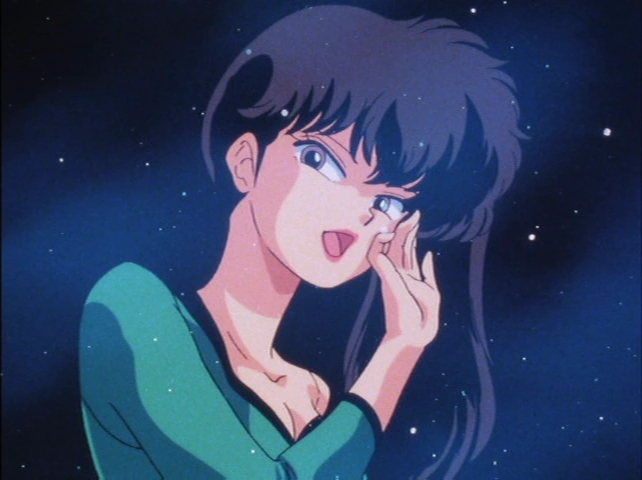
I'm more interested in the origin to the cackling noblewoman laugh:
ZP948Mt.jpg
IDwZ3.jpg
To_Love-RU_laugh_1215.jpg
latest
c6987052d5d0579fb07b6da6ab5add7a.jpg


It's something that has seeped into Japanese video games too. Is it, like, based on some actual Japanese noblewoman that was known to laugh like that(or something)?
 
People imitating anime mannerisms is not an indication that these are common gestures you see in life. Anime is an incredibly insular medium with many artists imitating each other instead of drawing from life via observation and past experiences.

True, these things aren't something you'd see from the vast majority of the population, however, given enough time and repetition, they will be natural gestures to the people I mentioned and may even be passed down to the next generation. These other students will likely incorporate these sorts of mannerisms into their creations influencing even more people outside of anime, further spreading their adoption. And as always, life imitates art and vice versa.
 
I think "making gestures as realistic and culture-agnostic possible" are a separate concept to "making body-language that fits into the fictional world." What do you think about Disney characters randomly breaking into dances?
Disney is like the perfect example of believability t, especially when it comes to their 3D film. They have movement down to perfection, even during their dance sequences. As an animator myself I completely agree with what that dude is saying and hate the excuses that people come up with that very clearly don't understand the core concepts of the craft, like this for instance:

"It's supposed to be fiction."

would absolutely never fly as an excuse during critique especially not for the gif in the OP because:Believability comes first and foremost.

You could watch any song from their films with the audio muted and be completely sold on what you're seeing, you could slow it down. Which is astounding because unlike the gif in the OP they use no motion capture, only video reference. That's how well they understand the nuances behind human movement and most importantly: believability. Not to mention, the animation in these games isn't abstract at all. So the "it doesn't have to make sense because it's fiction" never makes much sense. It's not like we're watching something that's incredibly stylized. This is why you never see these sorts of things in Miyazaki films, because he has an incredibly western mindset behind the craft.
 
I don't think the neck grasp is of Japanese origin. I'm pretty sure it shows up in western stuff, but usually, as is even the case in the OP's example, the person doing it is wearing something around their neck that they grasp. Usually it's a keepsake from someone they love/respect or a symbol of the their faith/determination and they grasp it and bow their head, possibly to pray to whoever or whatever the object around their neck represents, and then they look up and maybe nod to signify that they are ready to move forward or acknowledge whatever feeling they were having. There doesn't have to be an object to grasp, though, as clutching your chest and bowing your head is a commonly understood visual signifying prayer, thought, or psyching oneself up. It's a movie trick that tells the viewer what the person is thinking without having to explicitly have you hear their thoughts.
 
Found an article on this shit that bugs me

D812dt6.png

I don't think anyone answered this. That pose is called wariza, and it's a traditional informal sitting style for women. Basically it's the equivalent of sitting cross-legged (agura) for men. Women's kimonos were worn without underwear so it's a sitting position that is less formal and uncomfortable than seiza (sitting on the heels with the legs folded underneath) but also preserves modesty and is actually possible to get into with a fairly tight kimono around the legs. In terms of modern usage in anime and so on as well as real life it's intended to be a sitting style that works well with all those short skirts - much less chance of accidental panty exposure.
 
Because he was oriented beyound Japan in the first place and had audiences in mind that didn't knew much or nothing about japanese culture.

What on earth are you talking about here? Most of Miyazaki's works didn't even become widely known or available in Western countries until after the surprise success of Spirited Away 2003. In fact, because Nausicaa was chopped up so badly in localization by US distributors in the late '80s, he refused to let his work be released internationally for years. It took a figure as highly regarded and powerful as John Lasseter of Pixar personally visiting him and promising that Disney would not destroy his films before he'd relent.

The idea that Miyazaki or Ghibli more broadly was focusing on an international audience doesn't hold up. In what way were My Neighbor Totoro, Grave of the Fireflies, Princess Mononoke, Spirited Away, Only Yesterday, Pom Poko, My Neighbors the Yamadas, From Up on Poppy Hill, The Tale of Princess Kaguya, or Miyazaki's final film The Wind Rises, a glowing, fictionalized biopic about a guy who hung out with Italian and German fascists and made the suicide attack planes that killed our grandfathers, easy sells or concepts meant more for audiences outside of Japan?

Miyazaki is certainly more experienced and more interested in a multitude of pursuits beyond just anime and manga than perhaps any other living Japanese animation director (what with the absolutely tragic loss of Satoshi Kon) but he's never tried to make movies for the entire world's pop culture machine. He made movies for a home audience and for himself with an emphasis on real, human emotion and sentiment. It just so happens that's more universally appealing than the wider anime market.
 

I have little trouble imagining that the ojousama laugh is a fictional embellishment of actual behavior common among very rich, upper class ladies with little sense of humility. But I’m sure that the true, boisterous ojousama laugh is not a behavior you’ll see in real life Japan (or anywhere else, for that matter).


This is what I think on it. I think it originates from the old practice of hiding one's mouth when they laugh; especially prim and proper aristocratic women. I think it's related to the trope of covering one's face with a fan that you'd see powerful women like queens do. Then it evolved to where they put a fan or hand up to their face in an exaggerated manner to invoke sarcasm, where they don't really hide their mouth and the laugh is mocking. It's also common to depict royalty constantly fanning their faces.
 
It's something that has seeped into Japanese video games too. Is it, like, based on some actual Japanese noblewoman that was known to laugh like that(or something)?

The oujousama archetype in general...i'd like to know...it seems similar to spoiled rich princess characterization, but its way too specific and defined.
 
I don't think anyone answered this. That pose is called wariza, and it's a traditional informal sitting style for women. Basically it's the equivalent of sitting cross-legged (agura) for men. Women's kimonos were worn without underwear so it's a sitting position that is less formal and uncomfortable than seiza (sitting on the heels with the legs folded underneath) but also preserves modesty and is actually possible to get into with a fairly tight kimono around the legs. In terms of modern usage in anime and so on as well as real life it's intended to be a sitting style that works well with all those short skirts - much less chance of accidental panty exposure.
Thanks for the insight. I can see that pose fostering X legs.
 
I think Miyazaki films read better to foreigners because he prefers high-budget fluid animation like Western studios. Most anime is low budget and rely on exaggerated static poses to convey emotions cheaply and as efficiently as possible.

And not directly the noble woman's laugh, but covering the mouth when laughing is common for women across East Asia.

http://blog.gaijinpot.com/why-japanese-women-cover-mouth-laughing/

https://books.google.com/books?id=Z...=0ahUKEwjcx_7y8YzKAhUDxGMKHUN_Aq04ChDoAQgiMAM
 
I think Miyazaki films read better to foreigners because he prefers high-budget fluid animation like Western studios. Most anime is low budget and rely on exaggerated static poses to convey emotions cheaply and as efficiently as possible.

And not directly the noble woman's laugh, but covering the mouth when laughing is common for women across East Asia.

http://blog.gaijinpot.com/why-japanese-women-cover-mouth-laughing/

https://books.google.com/books?id=Z...=0ahUKEwjcx_7y8YzKAhUDxGMKHUN_Aq04ChDoAQgiMAM

Miyazaki mostly makes films right? So wouldn't it be better to compare his animated films the other animated films instead of TV series? Doesn't the difference in medium effect what is normally expected and what the creators are trying to accomplish? Like you said, the budget is different right?
 
This is why you never see these sorts of things in Miyazaki films, because he has an incredibly western mindsetbehind the craft.

Amusing leap of conclusion, but nah.

For one, to craft the believability of body movements and relatable emotions to humanise an individual is not exclusive to either culture. The Disney video you post is no more realistic to the gif in the OP, the only contexts where they are more appropriate are the world the stories are set in.

And when you compare the bottom of the barrel of poorly budget anime to its counterparts in American cartoons, tropes that are unnatural are part of the stylistic designs, often exaggerating to get the point across easier.

People in the West making movies for the worldwide audience should ideally be more proactive in understanding the cultural & behaviour nuances of Asia. Though it might be a tall task stepping out of the insular bubble unlike the people in the East who have little issue in embracing western cultural products.
 
I don't think anyone answered this. That pose is called wariza, and it's a traditional informal sitting style for women. Basically it's the equivalent of sitting cross-legged (agura) for men. Women's kimonos were worn without underwear so it's a sitting position that is less formal and uncomfortable than seiza (sitting on the heels with the legs folded underneath) but also preserves modesty and is actually possible to get into with a fairly tight kimono around the legs. In terms of modern usage in anime and so on as well as real life it's intended to be a sitting style that works well with all those short skirts - much less chance of accidental panty exposure.

Good stuff!
 
Amusing leap of conclusion, but nah.

For one, to craft the believability of body movements and relatable emotions to humanise an individual is not exclusive to either culture. The Disney video you post is no more realistic to the gif in the OP, the only contexts where they are more appropriate are the world the stories are set in.

And when you compare the bottom of the barrel of poorly budget anime to its counterparts in American cartoons, tropes that are unnatural are part of the stylistic designs, often exaggerating to get the point across easier.

People in the West making movies for the worldwide audience should ideally be more proactive in understanding the cultural & behaviour nuances of Asia. Though it might be a tall task stepping out of the insular bubble unlike the people in the East who have little issue in embracing western cultural products.
Which video? Because I could point out a ton of nuances that are incredibly common in life. And it's not just about nuance, it's about the movement in general being incredibly believable.
And yes, Miyazaki has an incredibly western mindset, every part of the way he ran his studio was incredibly similar to the way Disney ran his.
-Making staff stay in for drawing exercises
-Using video reference and visiting places for reference
-Drawing from life for nuance and characters instead of using an incredibly insular medium for reference or "because it looks cool"
Just to name a few examples.
FF is in no way poorly budgeted or bottom of the barrel either, which is odd to see it become like this overtime. I wouldn't call the tropes and mannerisms being way too repetitive in anime a stylistic choice either. And it's not like we've never seen western films make adjustments for a different audience. But you certainly aren't going to see them adopting anime tropes like in their films because the animators are aiming for believability first and foremost.
 
Which video? Because I could point out a ton of nuances that are incredibly common in life. And it's not just about nuance, it's about the movement in general being incredibly believable.
And yes, Miyazaki has an incredibly western mindset, every part of the way he ran his studio was incredibly similar to the way Disney ran his.
-Making staff stay in for drawing exercises
-Using video reference and visiting places for reference
-Drawing from life for nuance and characters instead of using an incredibly insular medium for reference or "because it looks cool"
Just to name a few examples.
FF is in no way poorly budgeted or bottom of the barrel either, which is odd to see it become like this overtime. I wouldn't call the tropes and mannerisms being way too repetitive in anime a stylistic choice either. And it's not like we've never seen western films make adjustments for a different audience. But you certainly aren't going to see them adopting anime tropes like in their films because the animators are aiming for believability first and foremost.

Frozen's dancing video.

You can point out that normal folks broke out in dances during a conversation as common occurrences? How about the girl reaction @ 50 sec after the guy embrace her chin?

Never once said FF was poorly budget, how did you come to that conclusion? The same way where you exert a kind of mindset as questionably western? The three points you made are of filmsy reasonings just to claim good practices as exclusively western properties. How could you not see that?

Now, correct me if I'm wrong, we are on the topic of believable body languages isn't it? The link you post to show western entertainment adapting are frankly irrelevant to what I had said. None of changes, while commendable, are about illustrating body languages.

I know ( real life, not anime ) body languages that scream uniquely Asian and I grew up with both western and eastern media. I do not see either as ideal and de facto of how things ought to be. And this is especially hard for western content producer to portray because most of them did grow up with less exposure, perhaps more to do with choices than circumstances in the later stage of their life.
 
Isn't something they can do because 1) they don't write characters like this and 2) they are unable to come up with the kinds of subtle physical manipulations that a real actress could to portray a character.
I don't think that's quite true. They can do subtler scenes & acting like the brief clip of discussion between Noctis & Cor that is very low key and devoid of any overacting, Noctis sitting in the car being bored in the old Versus XIII trailers and the whole long scene with kid Noctis in his father's arms in the much hated Dawn trailers. All of those have fairly believable, non-exaggerated mannerisms/acting. It's just that they fail to uphold that kind of thing throughout the game, resorting to more typical anime-ish mannerism elsewhere.
 
Frozen's dancing video.

You can point out that normal folks broke out in dances during a conversation as common occurrences? How about the girl reaction @ 50 sec after the guy embrace her chin?

Never once said FF was poorly budget, how did you come to that conclusion? The same way where you exert a kind of mindset as questionably western? The three points you made are of filmsy reasonings just to claim good practices as exclusively western properties. How could you not see that?

Now, correct me if I'm wrong, we are on the topic of believable body languages isn't it? The link you post to show western entertainment adapting are frankly irrelevant to what I had said. None of changes, while commendable, are about illustrating body languages.

I know ( real life, not anime ) body languages that scream uniquely Asian and I grew up with both western and eastern media. I do not see either as ideal and de facto of how things ought to be. And this is especially hard for western content producer to portray because most of them did grow up with less exposure, perhaps more to do with choices than circumstances in the later stage of their life.
Well anecdotally yes if you've ever lived with a musical theater major. >_> Again, it's not about realism, it's about Believability. Frozen and other Disney films are musicals, hence why singing is believable. If the song was completely out of place and there were no other songs before and after it'd be very odd to see. Those three things seem to be excluded from most Japanese studios when it comes to their production of their films, and undoubtedly were trends started by Disney, hence calling them western because they were trends adopted by many other studios afterwards. And yes that reaction to the chin rub, isn't that out of the ordinary or unbelievable. And again, western entertainment likely isn't gonna spend time adapting reanimating "cultural body language" when they'd be much more successful using culturally agnostic body language in their films, (animated in these films take forever). It's why so many people around the world relate to characters like Elsa or Anna when they have scenes like this. Despite not being princesses themselves because of subtle things like the way she mispronounces the last word she heard or uses the age old excuse "Nah i've been up for hours."
 
Well anecdotally yes if you've ever lived with a musical theater major. >_> Again, it's not about realism, it's about Believability. Frozen and other Disney films are musicals, hence why singing is believable. If the song was completely out of place and there were no other songs before and after it'd be very odd to see.

And yes that reaction to the chin rub, isn't that out of the ordinary or unbelievable.

Your notion of 'believablitiy' is heavily influenced by what you grew up with and expose to. What you thought to be believable is what I see as things that are appropriate mostly only in the world the stories are set in. This goes for both Western and Eastern media.

As for the reaction in particular, sure, in some rather rare circumstances I can picture it in my mind but at the end of the day, that's as believable as the FFXV head nod gif shown in the OP.

Those three things seem to be excluded from most Japanese studios when it comes to their production of their films, and undoubtedly were trends started by Disney, hence calling them western because they were trends adopted by many other studios afterwards.

The thing is how sure are you and if you are drawing conclusion from a limited sample?

When did Japan represent the East since you clearly use the term Western to signify your claims?

I'm not a Japanese film expert, I won't make statements like 'making staff stay in for drawing exercises' unless I am adequately aware of their working culture. And this is assuming the first point is actually 1) a useful practice and 2) something the animators in Japan lacks.

Same goes for point 2. However, I am pretty confident if you can seek the answer in animeGAF thread and see for yourself if you are right or wrong. I am betting you are wrong. That is unless you are able to prove in our conversation big budget anime films ( I use big budget films for because the counterpart is Disney and even then it pales in comparison like maybe sub 1/5 of the amount Disney spends ) do not do their dues in research for places and references.

The last point is ridiculous to the point of being reductionist. Trying to portray something natural, right down to the micro-expressions and gestures are something humanity throughout history had done. To sell a story, people had to relate to them. Even if we disagree on what's natural and what's not atm, this basic idea is definitely not pioneered by Disney. This is started and popularized by artists so many centuries again and in an era where most civilizations do not have contact with each other. Do you really think animation films exist in a vacuum without drawing influences from other established media?

And again, western entertainment likely isn't gonna spend time adapting reanimating "cultural body language" when they'd be much more successful using culturally agnostic body language in their films, (animated in these films take forever). It's why so many people around the world relate to characters like Elsa or Anna when they have scenes like this. Despite not being princesses themselves because of subtle things like the way she mispronounces the last word she heard or uses the age old excuse "Nah i've been up for hours."

From the video you posted, yes, that is 'culturally agnostic body language'.

I am not asking for animators to redo their work to fit an audience because that is quite frankly not feasible financially. I am, however, asking them to portray characters of different culture adequately if the situation permits and not ultimately a white character but in different skins.
 
Your notion of 'believablitiy' is heavily influenced by what you grew up with and expose to. What you thought to be believable is what I see as things that are appropriate mostly only in the world the stories are set in. This goes for both Western and Eastern media.

As for the reaction in particular, sure, in some rather rare circumstances I can picture it in my mind but at the end of the day, that's as believable as the FFXV head nod gif shown in the OP.


The thing is how sure are you and if you are drawing conclusion from a limited sample?

When did Japan represent the East since you clearly use the term Western to signify your claims?

I'm not a Japanese film expert, I won't make statements like 'making staff stay in for drawing exercises' unless I am adequately aware of their working culture. And this is assuming the first point is actually 1) a useful practice and 2) something the animators in Japan lacks.

Same goes for point 2. However, I am pretty confident if you can seek the answer in animeGAF thread and see for yourself if you are right or wrong. I am betting you are wrong. That is unless you are able to prove in our conversation big budget anime films ( I use big budget films for because the counterpart is Disney and even then it pales in comparison like maybe sub 1/5 of the amount Disney spends ) do not do their adequate research for places and references.

The last point is ridiculous to the point of being reductionist. Trying to portray something natural, right down to the micro-expressions and gestures are something humanity throughout history had done. To sell a story, people had to relate to them. Even if we disagree on what's natural and what's not atm, this basic idea is definitely not pioneered by Disney. This is started and popularized by artists so many centuries again and in an era where most civilizations do not have contact with each other. Do you really think animation films exist in a vacuum without drawing influences from other established media?


From the video you posted, yes, that is 'culturally agnostic body language'.

I am not asking for animators to redo their work to fit an audience because that is quite frankly not feasible financially. I am, however, asking them to portray characters of different culture adequately if the situation permits and not ultimately a white character but in different skins.
I grew up with tons of different media actually, not just Disney films. Frankly I hate using anecdotes but I have seen an unfortunate amount of people fall for silly cheesy moves like chin rubs accompanied by a compliment or joke. >_> I'm not drawing a conclusion from a limited sample. Those are things that Disney is famous for in the animation community. They're also incredibly useful and still things that are taught everyday in animation schools. Any animator would tell that, myself included, those practices are part of the reason why Disney was and still is in many ways very ahead of the curve and why Miyazaki was ahead of the curve. I certainly wouldn't seek the answer from animeGAF i'm giving you the perspective the history of my profession, I never said that Japan represents Eastern animation btw. Also what do you mean by a white character in different skins? Pocahontas and Mulan were white characters in different skins?
 
Top Bottom