• Hey Guest. Check out your NeoGAF Wrapped 2025 results here!

What makes a perfect RPG?

Avalon said:
There is a whole sub-genre of RPGs dedicated to this. Insane stat managing, lots of battling and lots of endurance base dungeon crawling. It is something a lot of people enjoy.

I'm aware of that. I used to enjoy them myself, but I want to know WHY you think these elements contribute to the "perfect RPG." As you can see above, I find many of these aspects to be negative influences on the genre. As such, I would earnestly like to see what they bring to the table and not just "I like them."
 
traveler said:
I'm aware of that. I used to enjoy them myself, but I want to know WHY you think these elements contribute to the "perfect RPG." As you can see above, I find many of these aspects to be negative influences on the genre. As such, I would earnestly like to see what they bring to the table and not just "I like them."

Personally, I love stat-based gameplay (which is almost always involves turn-base battles) because it involves a lot of time, dedication and and when I finally get a build just right it really provides a great sense of satisfaction. I like the structure it provides, I don't like always being right or parameters and skills being negligible (as they are often in real-time battle systems) because I can simply make up for it with manual dexterity.

Excessive battling and dungeon crawling is just a great way to test what you have spent your time building. Not only in how immediate strategies play out, but how they adjust over time as resources become more an more limited.

Something about it just feels right in RPGs. Maybe it's because the first RPGs I played were western and those always involve interacting with the world with formulas and number. I know real-time should provide a more intimate feel, but I have yet to see it.
 
traveler said:
I'm aware of that. I used to enjoy them myself, but I want to know WHY you think these elements contribute to the "perfect RPG." As you can see above, I find many of these aspects to be negative influences on the genre. As such, I would earnestly like to see what they bring to the table and not just "I like them."
Nobody asks me but I can give reasons somebody might enjoy those elements.

With random battles exploration feels more free. You go wherever you want without trying to dodge monsters, a practice that I find annoying and stifling. Not knowing when you'll be ambushed or what will be in the party additionally provides a nice level of suspense, and when you're in a rush a lot of games with random battles include items to reduce the encounter rate or turn it off altogether, which can be nice.

Turn based combat allows you to micromanage items and spells, playing very strategically and developing a precise plan of attack. Personally, in most other combat systems I will just find a general strategy that seems to work and apply it to most every battle since I won't have time to consider a different course of action anyway. But that gets boring.

Level-grinding is a pure time waster but also addictive. Especially when your characters are at different points it's fun to play for five more minutes to get one of 'em that next level. You either need an emotional investment in the character or again just enjoy micromanaging for this to be fun though.
 
Avalon said:
Personally, I love stat-based gameplay (which is almost always involves turn-base battles) because it involves a lot of time, dedication and and when I finally get a build just right it really provides a great sense of satisfaction. I like the structure it provides, I don't like always being right or parameters and skills being negligible (as they are often in real-time battle systems) because I can simply make up for it with manual dexterity.

Excessive battling and dungeon crawling is just a great way to test what you have spent your time building. Not only in how immediate strategies play out, but how they adjust over time as resources become more an more limited.

Something about it just feels right in RPGs. Maybe it's because the first RPGs I played were western and those always involve interacting with the world with formulas and number. I know real-time should provide a more intimate feel, but I have yet to see it.

Well put. I can see what you enjoy them.

Unfortunately, I have a much harder time enjoying them these days. I bought and played Dragon Quest VIII when it came out and found myself highly disappointed. The game was annoyingly slow and its battles felt totally devoid of skill. I was either leveled too low and incapable of progressing despite my own ability or leveled too high and destroying everything with ease. Eventually it got to the point where I was only playing while doing something else. (A behavior, I've heard, that is not entirely unique) It became a complementary activity to me. Needless to say, I quit playing it altogether shortly afterwards and began playing the (much superior) Final Fantasy XII.

This is not to say I despise turn-based battle systems altogether. (Indeed, I've liked plenty more RPGs employing turn based systems than those with real time ones) Final Fantasy Tactics Advance is a perfect example of a game that has a reason to be turn based. Between its huge job variety, elevation system, character positioning effects, and laws, I actually wanted to stop and think between each move. Also, there were no useless battles in it. Everything you did, you did to progress the story or complete a mission. To me, it's the best turn based game of the past few years.

Edit:

haircut said:
Turn based combat allows you to micromanage items and spells, playing very strategically and developing a precise plan of attack. Personally, in most other combat systems I will just find a general strategy that seems to work and apply it to most every battle since I won't have time to consider a different course of action anyway. But that gets boring.

Ah, therein lies the problem. You see, in theory turn based battle systems should cause what you say above, but I've found that, more often than not, that is rarely the case. In fact, what you have listed as your strategy with other combat systems is pretty much exactly what I see in turn based systems. (The problem may lie more with the imbalancing level grinding causes or with the numerous "weak enemy" battles found in so many RPGs though.)
 
traveler said:
I'm aware of that. I used to enjoy them myself, but I want to know WHY you think these elements contribute to the "perfect RPG." As you can see above, I find many of these aspects to be negative influences on the genre. As such, I would earnestly like to see what they bring to the table and not just "I like them."

How can such a thing be explained to you in a satisfactory manner? This is entirely a subjective matter.

I like traditional mechanics because they tend to allow you to have larger parties and more tactical control, with each party member having a defined and important role. I like the notion of random battles, though I wish they were handled in a manner closer to say, a game of D&D, where the monsters were truly random and scaled somewhat to your experience level.

Monster grinding can be fun. Once upon a time, it used to be a requisite part of any RPG - look at Dragon Warrior. Nowadays it's been shunted to being necessary for sidequest bosses, outside of niche, traditionalist, uber-hard fare. Like I said earlier, I preferred games like Baldur's Gate or its sequel, games where the last boss fight was incredibly hard and you'd best be at max level to take them on.

I don't mind a very active, action based system on occasion, but I far prefer a complex system with a lot of stats involved and a lot of strategy.

I can enjoy a turn-based strategy game like Civilization and Galactic Civilizations 2 and still love Warcraft 3 and the Command and Conquer series. It's a matter of general preference, but overall quality is a major trump card.

 
traveler said:
Ah, therein lies the problem. You see, in theory turn based battle systems should cause what you say above, but I've found that, more often than not, that is rarely the case. In fact, what you have listed as your strategy with other combat systems is pretty much exactly what I see in turn based systems. (The problem may lie more with the imbalancing level grinding causes or with the numerous "weak enemy" battles found in so many RPGs though.)
A lot depends on implementation. For FFX I was always using different abilities, characters, items, spells, etc. based on the enemy group I was fighting. And bosses were the best, developing strategies around whichever status ailments they weren't immune to and whatnot. But in DQ8 combat was a little boring, since I found myself often just using falcon slash (Hero), wind sickle (Yangus), raise staff or use group attack magic (Jessica), and falcon slash or heal (Angelo). Boss battles were still fun and varied, but that might be because I was continually changing my strategy since at any time at least 2 members of my party would be either dead, under some type of status, or with under 10 HPs left.

I still think real-time battle systems are less conducive to actual strategy since you're rushed. Tales of Symphonia was mostly button-mashing and as long as your party had Raine and Lloyd and you tuned abilities to the enemy's elemental weakness you'd be fine. FFXII you set some good gambits and watch your characters play themselves until you have to start throwing items. Since you can't scan bosses\hunts\other strong enemies for weaknesses even those battles were more of the same except you'd throw more healing items than usual (unless you read a FAQ which takes a lot of the fun out). And Kingdom Hearts... well... you know.

So basically I really liked the FFX battle system and would love to see more games with something like that, and the same variety in enemies. But either system can get dull.
 
Story - 0 (I've come to the realization it's essentially impossible for RPGs to have a decent story anymore due to the festering writing talent in the industry, so I've put my hopes for the medium aside for the foreseeable future.)

I think the limitations of game stories have relatively little to do with available talent and much more to do with market conditions.
 
for me the story, the chars and the style are very important. I really dont care about the combat system but i dont want an shooter RPG.I need my meele weapons and if its turn based it would be perfect. Oh and please an excellent syncro. The best would be japanese syncro and english subtitles^^

Oh and dont forget this:

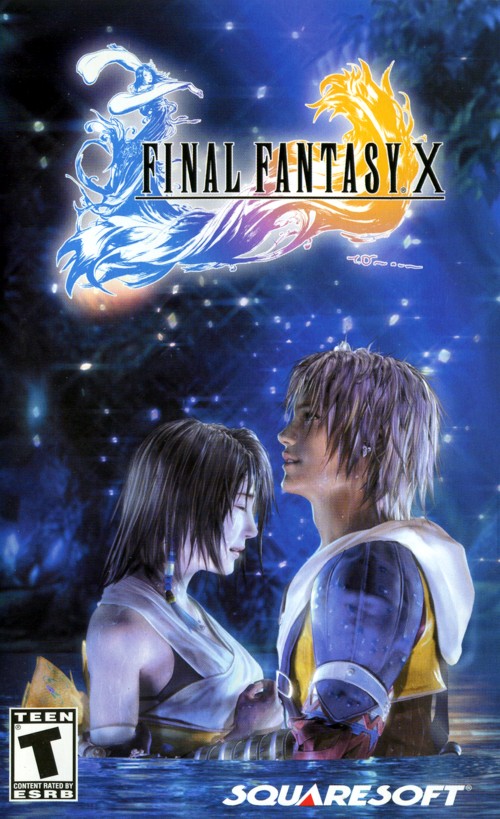
ffx_manual.JPG


I NEED ROMANCE!!!! And a nice Love Story
 
im only talking about turnbased Japanese RPGs

but I imagine the perfect RPG will have an improved version of the Grandia 2 battle system.

and almost getting rid of grinding all together. Instead of walking around on a field fighting nonstop, the RPG should have a large number of side quests that will level you up but also have an objective and their own stories.
 
When I think of 'RPG' I think of JRPG. Games like Oblivion and Mass Effect are in a whole other genre of their own as far as I'm concerned.

Anyway, the perfect RPG has a mysterious story IMO and relies on working through different quests to piece it all together.

One thing I really liked about the original Phantasy Star Online was that I knew something had happened to Ragol but didn't understand why. But I just couldn't wait to do more and more quests to piece more of the story together.

But I still don't understand why the ice-cream ladies were in the bottom of the cave - probably the longest quest in the whole game which lead to the most pointless ending.
 
Customization.

What really makes RPGs interesting to me is when I can tweak my stats, powers and items.

Sure a great plot is nice, but ultimately what I love about RPGs is creating a character.

Sure, I'll play a game that doesn't have a ton of customization, but the ones that I love the most have this feature.

With that said, every game needs RPG elements.
 
A perfect RPG has got to have an engaging story, one that keeps you interested from beginning to end. There needs to be a good plot with a great atmosphere, so there needs to be nice environments, good music and a decent script so that the charatcers dont sound cheesy. The atmosphere and the story is what made digital devil saga so good for me. The battle system in the game was ok, but it did get repetative. Now I would have stopped playing the game if it wasnt for the excellent story.

The most important thing is a good battle system. The gameplay needs to be entertaining. The reason why I play fewer RPGs is because I'm bored of turn based combat. I recently started playing DQVIII againg and I couldnt play if for very long because the battles were very slow and there really wasnt much startegy involved. There are some trun based battle systems which are actually quite fun like FFX, but I'd rather stay away from turn based combat and play games with a real time combat like FFXII. I think that FFXII has got one of the best battle systems in an RPG. The gambit system worked so well. Some people complain that it doesnt give you that much control, but you were never forced to use it, you could always control the charatcers manually and give them commands rather than letting the gambits do it. ToS is another example of a great battle system. Its entertaining and things happen quickly. I think that real time battles are more entaining and it makes levelling up a lot easier. FFXII and ToS didnt make levelling up feel like a chore.
 
* Good Battle System
* Variety

What was particularly good about KOTOR is that it was full of VARIETY. It didn't just rely on dungeons for gameplay, and didn't make the "towns" a seperate entity to the dungeons, which most Japanese RPGs do. In the areas not populated by enemies, there were still non fighting challenges to do. Also, the sidequests had variety, and weren't the typical "fetch quest."
 
Avalon said:
Personally, I love stat-based gameplay (which is almost always involves turn-base battles) because it involves a lot of time, dedication and and when I finally get a build just right it really provides a great sense of satisfaction. I like the structure it provides, I don't like always being right or parameters and skills being negligible (as they are often in real-time battle systems) because I can simply make up for it with manual dexterity.

Excessive battling and dungeon crawling is just a great way to test what you have spent your time building. Not only in how immediate strategies play out, but how they adjust over time as resources become more an more limited.

Something about it just feels right in RPGs. Maybe it's because the first RPGs I played were western and those always involve interacting with the world with formulas and number. I know real-time should provide a more intimate feel, but I have yet to see it.
very good post and I agree completely with this, I greatly prefer turn based over real-time.
 
My three favorite non pokemon RPGs are Breath of Fire Dragon quarter, Chrono Cross, and Baten Kaitos Origins. For all of these, I'd say they stand out because of their battle systems and music.
 
polyh3dron said:
Yep, get the people together who made Chrono Trigger, and you'd have another perfect RPG. Just don't let Artoon develop it :D

They did get together....the made Blue Dragon....it was far from perfect.

polyh3dron am fail :(
 
chemicals said:
apparently if you like JRPG's, Persona 3 is seemingly near perfect.


No, if you like good games, you'll like P3. Though, if Bioware developed the game, if it would be GAF's goty.
 
Nuke said:
For me, I break it down like this, as far as JRPG's go. Western RPG's and MMO's are a different breed of animal.

Story/Characters - 50%
Graphics/Sound/Presentation - 45%
Gameplay - 5%

The Gameplay just has to not suck. I don't play JRPG's for the amazing raw gameplay. I play JRPG's for the Story, Characters and Presentation. Those are what drive the gameplay. In just about any other genre, it's the opposite, but not for RPG's and specifically JRPG's.

If you take away the Story, Characters and Presentation from any of the great JRPG's, you're basically left with Grinding and Stat Twinking. And to me, that's not very fun.

Well you said it very simply. I agree completely.

I think Final Fantasy VI has it spot on, even according to your ranking system. The gameplay in FFVI was mediocre, but it was very polished, and didn't suck. It was perfect in every other regard.

Now take a game that had great characters, story, and presentation....Xenosaga. It had mediocre gameplay, but the way it was executed was terrible. The animations took far too long, and the whole thing was very unpolished...that just ruined the game for me. I just kept forcing myself real hard to get to the next cutscene, until I quit.
 
Vagabundo said:
Most important, DND rules.

I disagree. The problem with DND rules, is that making a character requires too much planning, and you end up worrying far too much about how your character will end up in the end. I think you need a system with the deepness and customization of the DND ruleset, but with which you can still effectively "max-out" your character. One of the problems (though it's one of the great things about it too), is that you never truly feel powerful in DND. The advantage to this though, is that combat stays fresh and challenging throughout the game.

My main problem with DND though, is the lack of focus on the story, and the lack of presentation.
 
Each one of those could easily be broken down into sub categories:

Story:35%
Originality:10%
Emotional Depth:10%
Epicness:8%
Dialogue:7%

Graphics:20%
Walkaround Graphics:8%
Combat Graphics:8%
Cutscene Graphics:4%

Gameplay:30%
Immersiveness: 6%
Combat system: 8%
Walkaround System: 8%
Player Choices:8%

Sound:15%
Background Music:5%
Main Theme:3%
Sound Effects:7%
 
Pacing - I'm getting kind of annoyed with games that have 40-50 minute cutscenes, or hours worth of wandering around towns with nothing going on, then have a dungeon and some battles... or games where you spend hours traversing dungeons and battling, with zero story. Xenosaga and FFXII being 2 polar opposites but perfect examples of this bad pacing. I'd want a game where after going through a large dungeon, I'm rewarded with a really interesting plot development, not be told I have to go through another 6 large dungeons to advance the story.

Dungeon design - Large, branching dungeons, with pitfalls, traps, logic puzzles, lots of quality loot to find. Examples - Lufia II, Phantasy Star series, Nocturne and the DDS games.

Fast paced, challenging battles - require you to sometimes "think outside the box" to win, something a bit more substantial than "Use Fire on Ice Monster". Turn-based is definitely appreciated. Low encounter rate is definitely appreciated.

Extraneous "systems" - could either help or hurt the game... I want a well-balanced way of developing my characters, nothing too obscure though that requires you to go on Gamefaqs for (SO3's alchemy system).

Good music - I can't stress how important this is... this goes for any game with me, but one with quality music is gonna be much more memorable to me than games with generic soundtracks, hence why I have such fond memories of a lot of the SNES greats. Chrono Trigger, FF4-6, SOM, hell even Mystic Quest... all had such awesome soundtracks.

Storyline - Most RPGs are gonna have a similar "coming of age" storyline anyways, where you have to defeat the big baddie, and that's fine, I have no problem with that... it's really the characterization that makes or breaks an RPG. I want cool and likeable characters, . I didn't like Kalas and Xelha from BK at all, and that hindered my enjoyment of the game I think... while on the other hand, the reason I love the SH games so much is because I think they have a great cast of characters.

Cool/varied environments - A good RPG makes me feel like I'm in another world, so having varied and unique looking environments you travel to improves it in my mind. Good examples - the PSX FF games (especially 8, loved that game's envrionments), Skies of Arcadia, Tengai Makyo 4 (a wacked out America at the turn of the 20th century). Bad examples - Rhapsody (the same dungeon over and over again!), the Tales series (oh look, I have to go to the elemental dungeons and get Undine, Gnome, Ifrit, etc AGAIN... I've already done this in every other Tales game!).

Linearity - has to strike a balance between being linear and nonlinear.
 
ex0du5 said:
I disagree. The problem with DND rules, is that making a character requires too much planning, and you end up worrying far too much about how your character will end up in the end.

Other skill systems do this, like say, in Fallout, and you obviously don't have to plan a billion steps ahead. Besides, in this case you're basically griping about customization and player choice. :lol These are good things. In fact, 3.5 handles this very, very well I think.

I think you need a system with the deepness and customization of the DND ruleset, but with which you can still effectively "max-out" your character. One of the problems (though it's one of the great things about it too), is that you never truly feel powerful in DND. The advantage to this though, is that combat stays fresh and challenging throughout the game.

I dunno dude, I've played in a lot of tabletop 3.5 (Forgotten Realms, Eberron, Song of Ice and Fire, Wheel of Time, Star Wars) and a lot of 2nd Ed. & 3rd Ed. D&D video games - I feel plenty powerful with a level appropriate magical weapon (Power-wrought blade, Valyrian Steel, Lightsaber, whatever) in hand, laying Balors and Red Dragons low. You don't feel powerful at first, because you aren't. And that's as it should be.

My main problem with DND though, is the lack of focus on the story, and the lack of presentation.

Baldur's Gate 2 and Planescape: Torment have incredible stories and solid presentation.
 
I would be very interested in what less famous rpgs exodu5 and nuke like, as I also share a love of story and can forgive bad gameplay.
 
traveler said:
Ah, therein lies the problem. You see, in theory turn based battle systems should cause what you say above, but I've found that, more often than not, that is rarely the case. In fact, what you have listed as your strategy with other combat systems is pretty much exactly what I see in turn based systems. (The problem may lie more with the imbalancing level grinding causes or with the numerous "weak enemy" battles found in so many RPGs though.)

Play Etrian. Get to the second floor. Come back and talk to us then.
 
JayDubya said:
How can such a thing be explained to you in a satisfactory manner? This is entirely a subjective matter. (I was assuming there were reasons you liked it, even if it was largely subjective. The rest of your post is pretty much what I wanted)

I like traditional mechanics because they tend to allow you to have larger parties and more tactical control, with each party member having a defined and important role. (Once again, this seems like the ideal to me. I can think of plenty of games where having specialized party members is completely possible, but also completely unnecessary.) I like the notion of random battles, though I wish they were handled in a manner closer to say, a game of D&D, where the monsters were truly random and scaled somewhat to your experience level. (Monster distribution can still be random and level scaling can still occur in non-randomized encounters. Why wouldn't a game that features enemies on the map be able to accomplish these things?)

Monster grinding can be fun. Once upon a time, it used to be a requisite part of any RPG - look at Dragon Warrior. Nowadays it's been shunted to being necessary for sidequest bosses, outside of niche, traditionalist, uber-hard fare. Like I said earlier, I preferred games like Baldur's Gate or its sequel, games where the last boss fight was incredibly hard and you'd best be at max level to take them on. (Developers should ensure the last boss fight in games are tough, regardless of your leveling. The "skill" needed to beat the final boss should not be "time spent killing X number of foes so I could get to a high enough level;" it should be actual skill. Ex: By the time I reached the final boss "gauntlet" in FFX, I was already too powerful for them. Summons took care of the whole thing. There was no challenge at all.)

I don't mind a very active, action based system on occasion, but I far prefer a complex system with a lot of stats involved and a lot of strategy. (I do too. What was the last game you played where you actually needed to look at and/or manage your statistics and formulate strategies that couldn't be beaten by simply leveling too high and that could be beaten while "underleveled" if one played using said strategies and stats to their advantage?)
I can enjoy a turn-based strategy game like Civilization and Galactic Civilizations 2 and still love Warcraft 3 and the Command and Conquer series. It's a matter of general preference, but overall quality is a major trump card.


One thing I should note here (since it seems to be the main thing people are addressing in my posts) is that the central problem I see in most RPGs isn't the turn-based system; it's all the aspects surrounding it that make needing time to plot out your every move completely unnecessary. Like I said, I've played far more turn based games that I've liked than real time ones.

Edit: I'll check out Etrian. From what I'd heard, though, it appeared to be a game geared quite strongly towards leveling. I didn't like the idea of being unable to defeat monsters wondering around my general vicinity simply because I hadn't spent enough time in the game.

It all comes back to needing gameplay that rewards primarily skill and penalizes mainly errors in tactical decision making. Amount of time played should influence depth of the gameplay systems opened up to you and progress made in the actual game world. It shouldn't harm you in actual battle.
 
I've never done any level grinding in etrian odyssey, except when I built up a freshly made character I had just retired. No real grinding was required by me to beat the regular game... and definitely nothing as repetitive as most times when you think of level grinding. It's far more about having good stat/skill builds and a balanced party. Leveling in the game is fast, and while it may seem important early on, it gets easier as you go through it. The game makes a big point about FOEs being too tough to handle early on, telling you to avoid them, but by the time you can kill the first boss, there's not many FOEs you run into that you can't take at the level you initially meet them.

Also, in all honesty, the leveling never has that grind pace where you just want to get to your next level already.
 
firex said:
I've never done any level grinding in etrian odyssey, except when I built up a freshly made character I had just retired. No real grinding was required by me to beat the regular game... and definitely nothing as repetitive as most times when you think of level grinding. It's far more about having good stat/skill builds and a balanced party. Leveling in the game is fast, and while it may seem important early on, it gets easier as you go through it. The game makes a big point about FOEs being too tough to handle early on, telling you to avoid them, but by the time you can kill the first boss, there's not many FOEs you run into that you can't take at the level you initially meet them.

Also, in all honesty, the leveling never has that grind pace where you just want to get to your next level already.

Good to hear. So the focus truly is more on the party management and stat distribution systems?
 
Dragona Akehi said:
GOOD GOD MAN HOW MANY TIMES DO WE HAVE TO SAY YESYESYES!!

:lol :lol :lol

I had just heard too much about it being "leveling"-oriented to consider it. Sorry for the hassle. :lol
 
Final Fantasy XII is a big step into the direction that I consider to be a perfect rpg.

It has a fantastic battlesystem that doesn't get old (I realise opinions vary here), it has loads of dungeons which are all different enough from each other to keep the played interested. Huge environments with loads to see and do without forcing the player to continue the storyline, but still being clear as to what to do next.

Also very important is the sense of discovery. I don't want cutscenes around every corner which show cool stuff that I'm not actually able to do in the game (I hate it when they do that).

I don't tend to play rpg's for the characters and story anymore. It has to be solid sure, but in all my years of playing these games I've come to the conclusion that an original and creative story/ characters probably won't happen anyway (though Western developers seem to have a way better grasp at this than Japanese devs). As long as devs realise this, they should focus on giving us a more solid experience gameplay-wise, without all the clichéd story/ character crap. Again FFXII is a pretty good example of a game that has fantastic gameplay (really it does) but a fairly basic story and characterisation, yet the game is clearly the best out of any FF yet (really it is).
 
here's what makes a perfect RPG for me, using the 4 best examples I can think of:
Breath of Fire: Dragon Quarter (for jRPGs)
Deus Ex (for real time/more action oriented RPGs)
Fallout 2 (for open ended RPGs - please don't bring that weaksauce Oblivion into this discussion, that pile of shit is more of a non-game than any of the Wii/DS games typically hailed as such)
Planescape: Torment (for how to do an engaging story right)

I realize 3/4 of those are western, and Deus Ex is almost as much of an FPS as it is an RPG, but them's the breaks. jRPGs can make for some good dungeons and occasionally a good battle system, but I would say literally 3% of the ones I've played have a story good enough for me to think it's worthwhile, compared to the western RPGs I've played. I have (and still do) played far more jRPGs than western ones, because there's more available, but even when a western RPG is as stereotypical as a jRPG, it's automatically going to be more interesting if they provide the customary character interaction/real dialogue choices.

This doesn't mean I think games like Etrian Odyssey or FF or DQ or a lot of the typical RPG standards bandied about here are bad games at all. In fact, I think Etrian Odyssey is by far the best DS game I've played, and I like a lot of the jRPGs I play. But there's just no doubt in my mind that the stories in nearly every jRPG are pretty impersonal. They don't really let you get inside the head of any characters or get attached to them, favoring awesome cutscenes instead, and that doesn't really draw me into them like any good western RPG does.

Oh, and as far as stories go... I'm not comparing them to books, tv, movies, or even comic books. I'm just saying most jRPG stories don't draw me in, while the story in every western RPG I've played is just awesome by videogame standards.
 
firex said:
Fallout 2 (for open ended RPGs - please don't bring that weaksauce Oblivion into this discussion, that pile of shit is more of a non-game than any of the Wii/DS games typically hailed as such)

You're mental. Explain yourself.
 
It has to be japanese made
Great story
Monsters on screen
Coherence
Don't go to another screen in fights (why on earth with the power of actual consoles do we have to enter a battle screen??)
Good artwork
Great Music

The answer is Chrono Trigger :D

Dragon Quest is close, but the random encounters are too much
 
Top Bottom