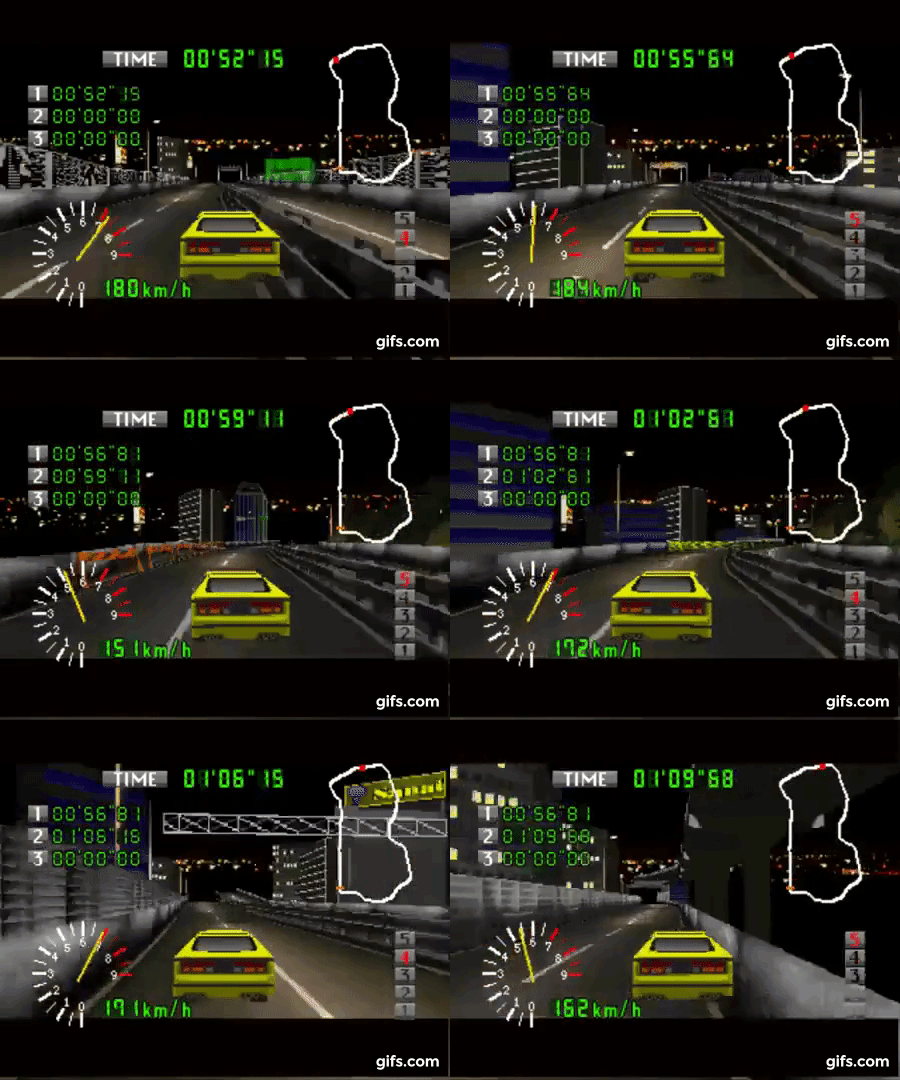
Using specs sheets is not pointless at all. Sure these systems have different architecture from each other (3DO is ARM based, Sega Saturn uses dual SH2 CPU's) but the way these systems function are not radically different from each other. There is no secret pixie dust in the 3DO that gives it an advantage over the Saturn.
The Sega Saturn has a clear advantage in raw CPU processing processing power, with two CPU's that are clocked much higher than the ARM60 in the 3DO. Granted, the dual CPU setup in the Saturn is not like a modern multi-core CPU seen in modern CPU's, most docs on the Saturn cited that it was a challenge for developers to keep both CPU's in synchronization with each other. Both CPU's share the same BUS and could tie each other up in waiting for one to finish a task. The general performance increase is something like a 50% boost over using one CPU.
Most third party developers didn't even use the second CPU because they could not be bothered to learn how it worked. But developers that did take advantage of both CPU's did get some interesting results.
The ARM CPU in the 3DO aint that hot in comparison. It runs at half the clock speed of a single Saturn SH2. But, I could only imagine that the 36 DMA channels do give the ARM CPU some leverage when used right. That is like blast processing x 36 in a way.
The Saturn also clearly has the advantage on 2D raster based sprites, as it has some strong dedicated hardware just for that. The Saturn most definitely did have the best 2D hardware of that generation.
As far as 3D goes they do both use quads to render polygons. They have that similarity. But the 3DO does appear to separate its tasks between two GPU's that seem to have the same functionality? The 3DO also does have a custom math co-processor. This is one area where it might be similar to the Saturn.
The Sega Saturn on the other hand, also has two video processing units, but for this machine the VPD1 and VPD2 have different functions. VPD1 handles all polygon rendering tasks, while VPD2 handles background layers and multiple mode 7 like playing fields.
You can make the case that any later game release in a console library will make better use of the hardware than earlier release hardware. Just compare early PS1 games to later releases. The Saturn really seemed like a hard machine to get the most out of, especially when it came to 3D. But when used to its full potential, it could still produce some interesting results. the PS1 was much easier for developers to get better results out of when it came to polygon rendering.
One of the better looking 3DO games is Blade Force, which is a late release in that system's life cycle:
https://www.youtube.com/watch?v=T9VUNi2fNZM
It does show off some really good use of textured mapping and polygon environments. But I don't think it is comparable to what was seen on the Saturn during this point in time.
Though one interesting example of a game that looked better on the 3DO was StarFighter:
https://www.youtube.com/watch?v=XwnbWbueCf8 which featured longer draw distances and no fogging, unlike the PS1, Saturn and PC versions.
The 32x shares some similarities to the Saturn. Both are based around dual SH2 CPU's. But the Saturn has a much stronger set of support chips. The 32x doesn't really have any 2D or 3D hardware, as 3D rendering is all done in software. The 32X also relies on the Sega Genesis for 2D hardware. I feel like it is closer to being in the same range as the 3DO though.
Fight for Life on the Jaguar was released in a buggy incomplete state, the developer didn't give Atari the finished version because he didn't get paid. I've heard that the intentionally leaked Fight For Life "beta" is generally better than the retail game.
But looking at the game, it is not really better looking than
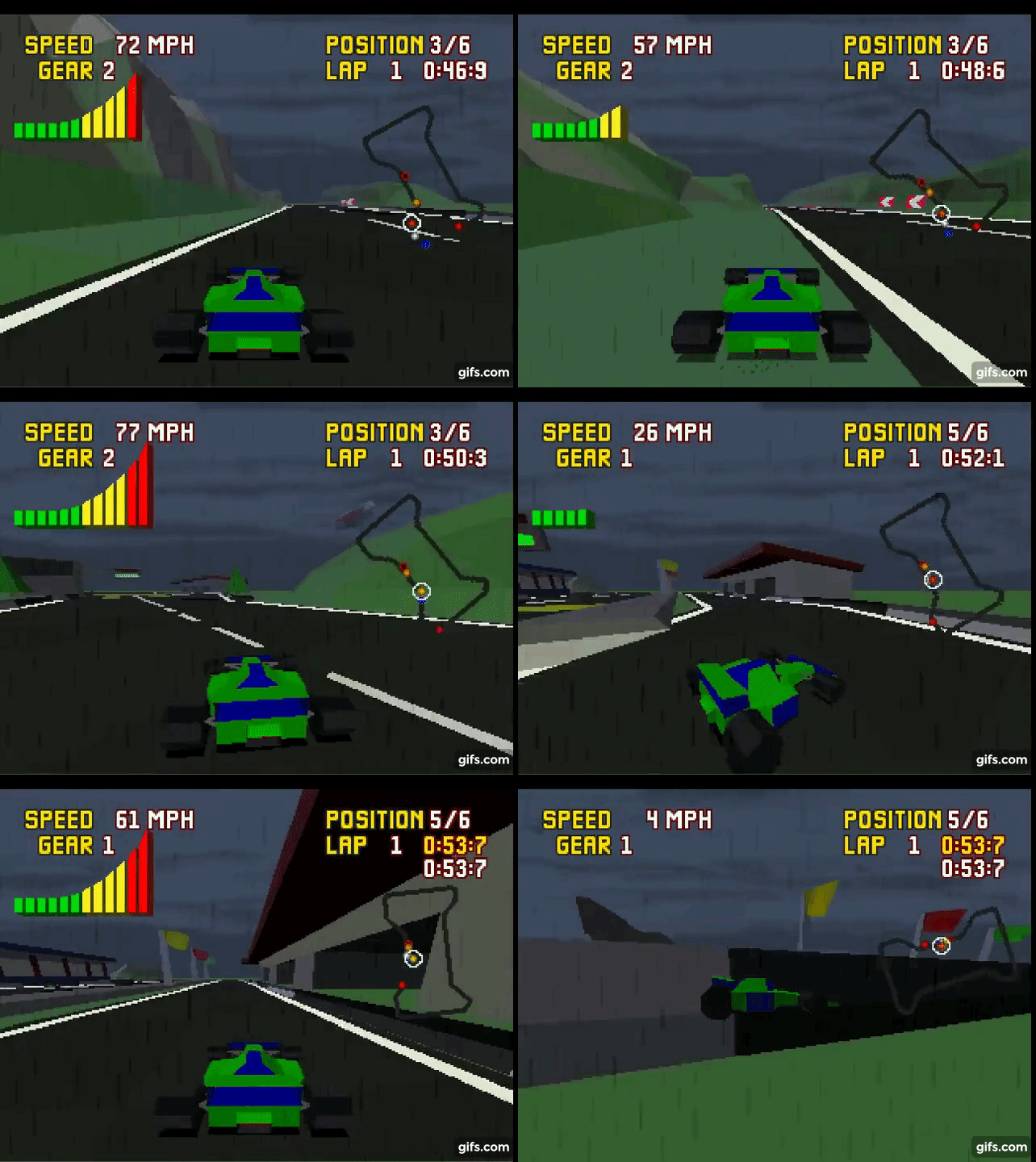
, aside from having textured mapped graphics. Did Fight for Life even run at 60fps? Checkered Flag on the Jaguar looked worse than Virtua Racing Deluxe on the 32X.
Though granted, developers on the Jaguar also had issues getting the most out of the hardware, and would have to resort to using the Motorola 68000.
As for 3D gaming on the Jaguar, Iron Soldier 1 and 2 are pretty nice examples of the system's abilities:
https://www.youtube.com/watch?v=nF-htAcD1l4
A lot of Jaguar games used flat shaded polygons, and I could imagine it was a limitation of the cartridge sizes.
When it comes to 2D performance, the Jaguar is still a better machine than the 32x. Rayman 1 shows a good example of how the system can handle high colour sprites at 60fps.