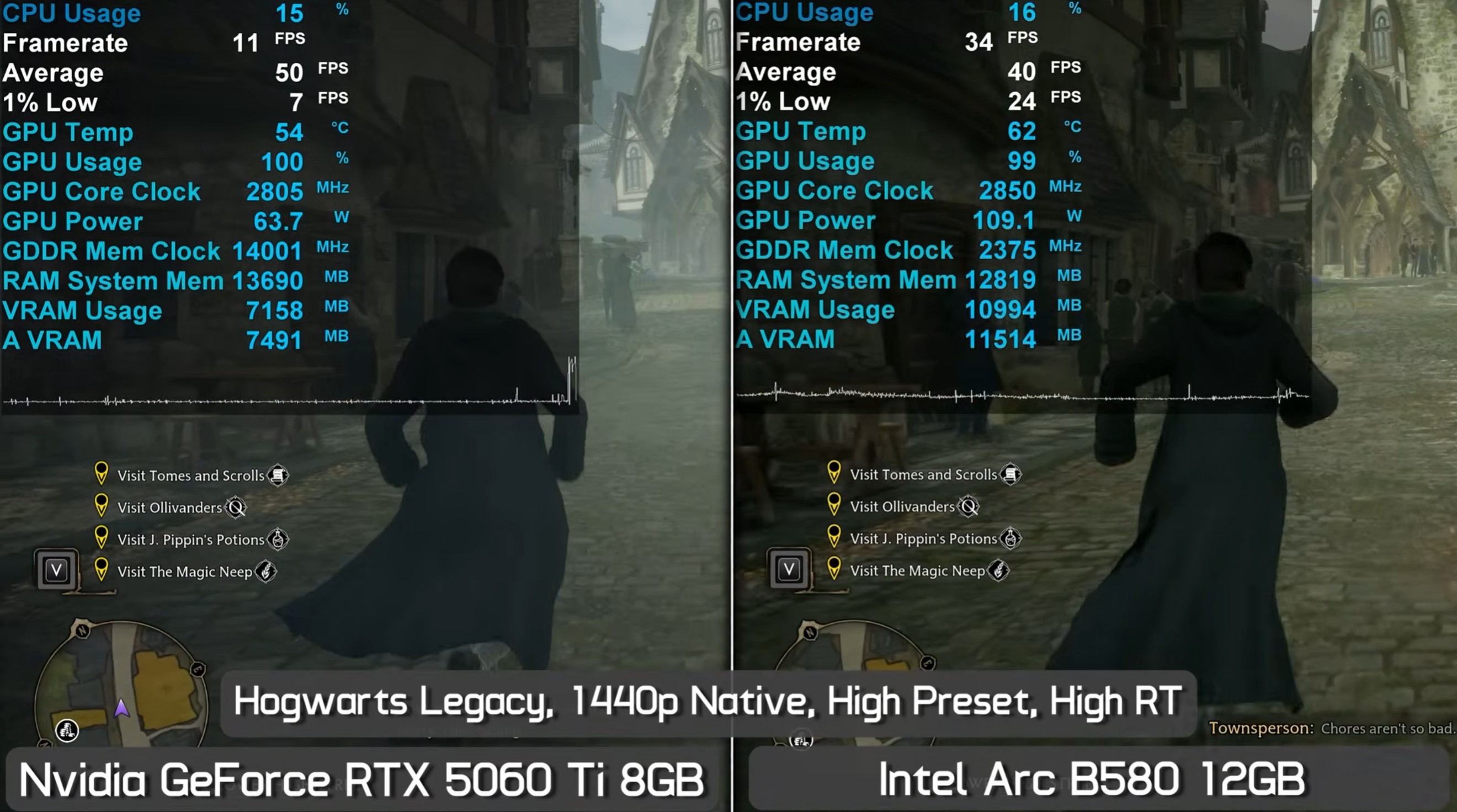
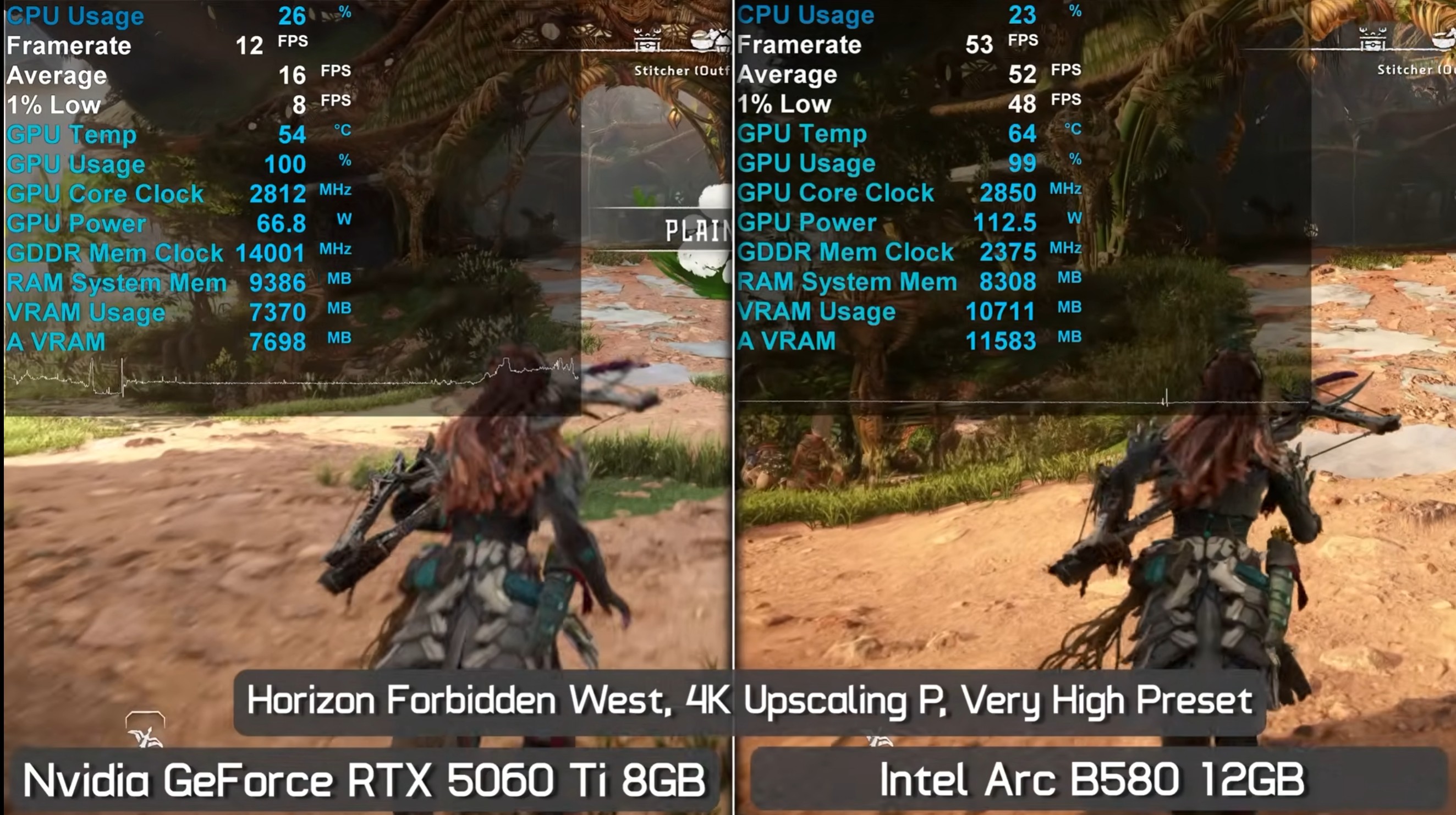
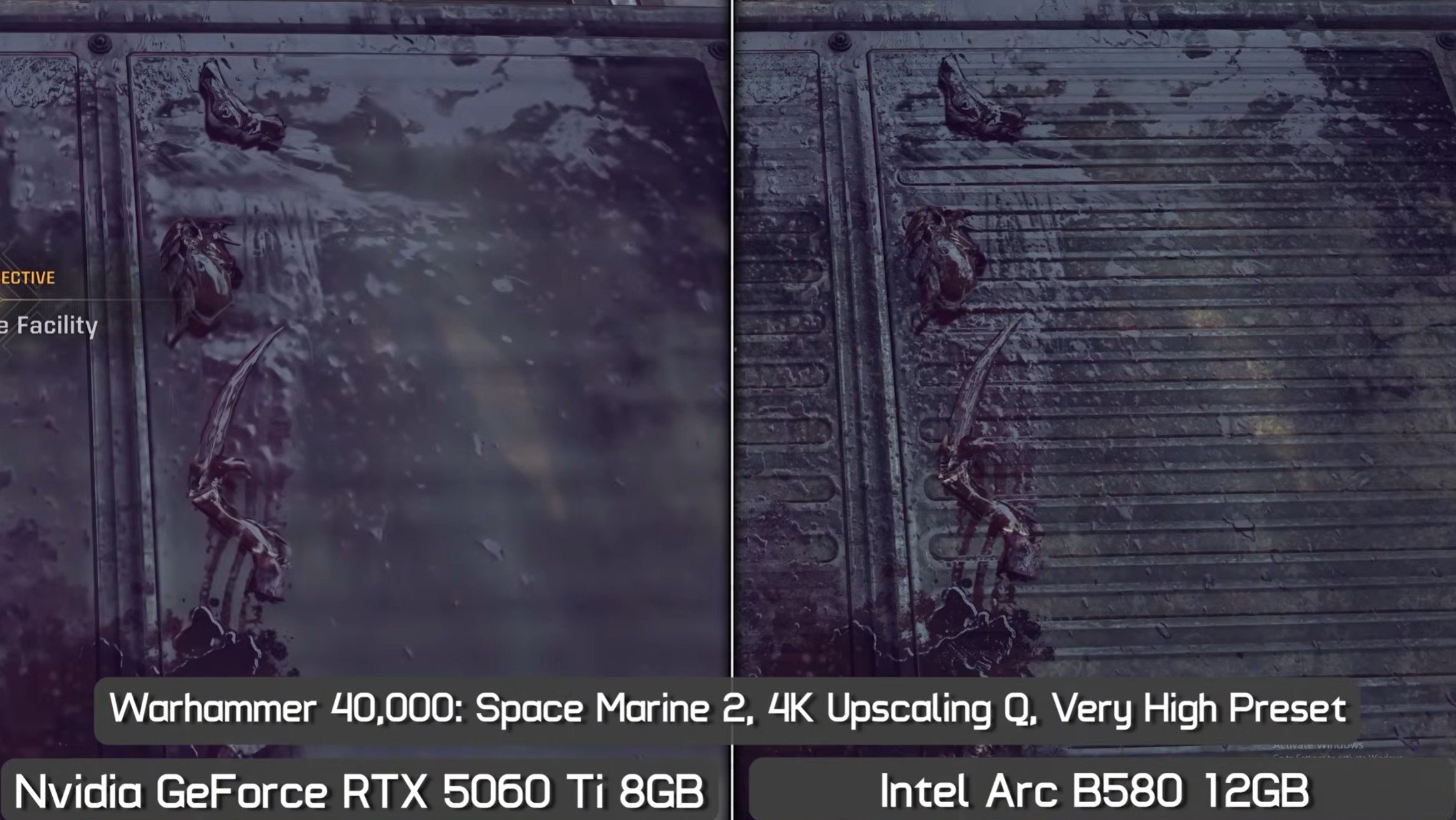
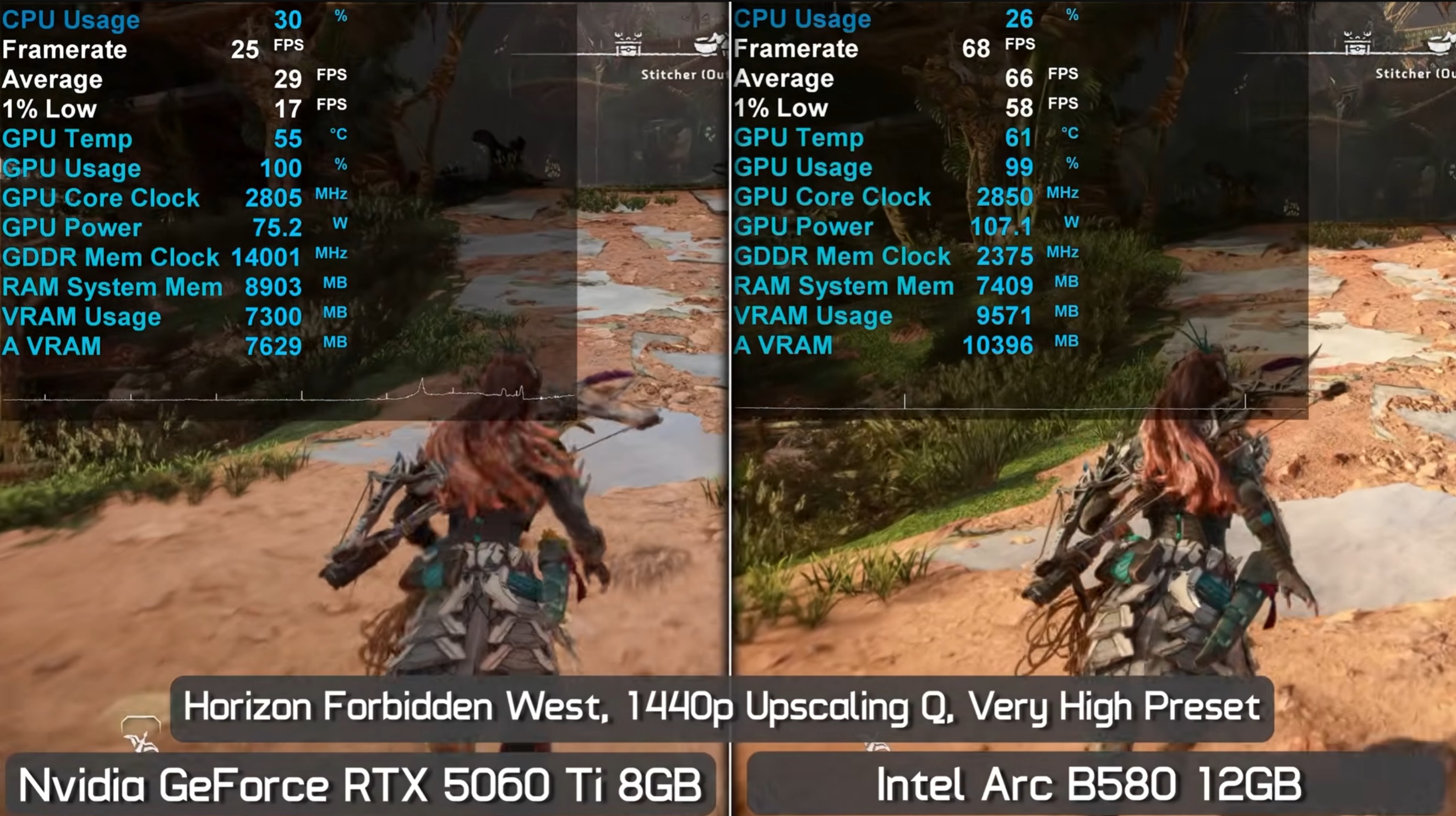
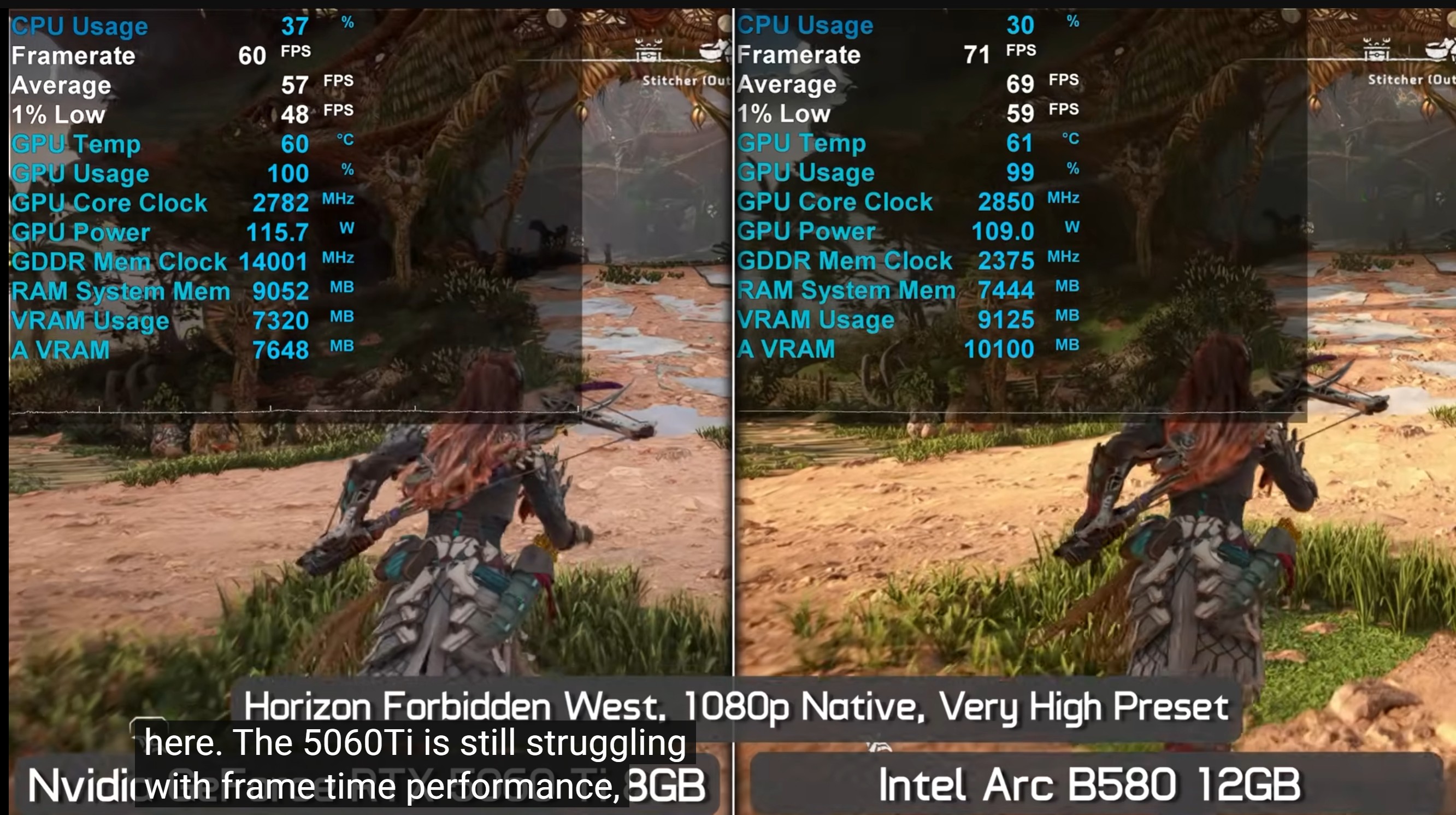
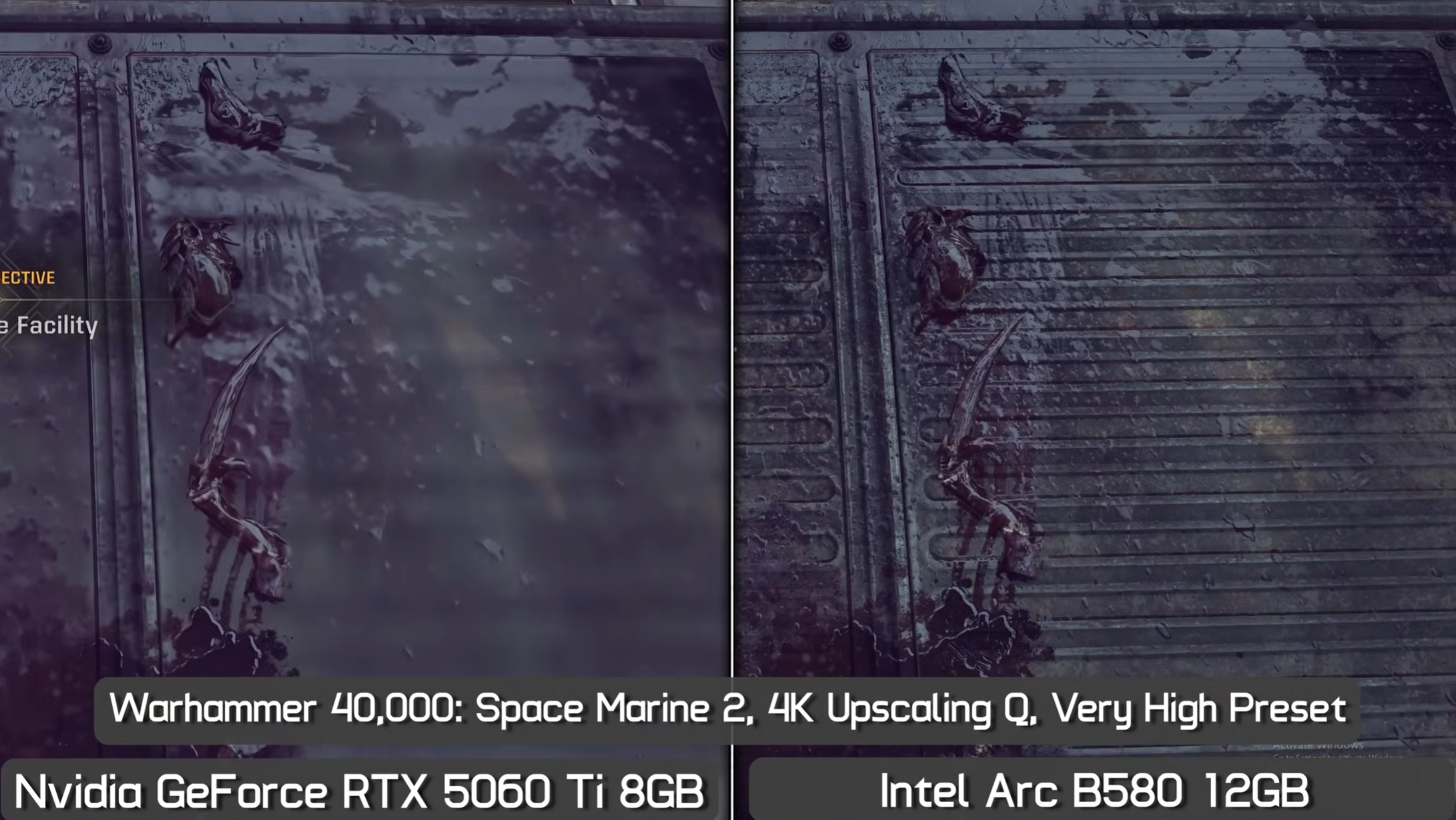
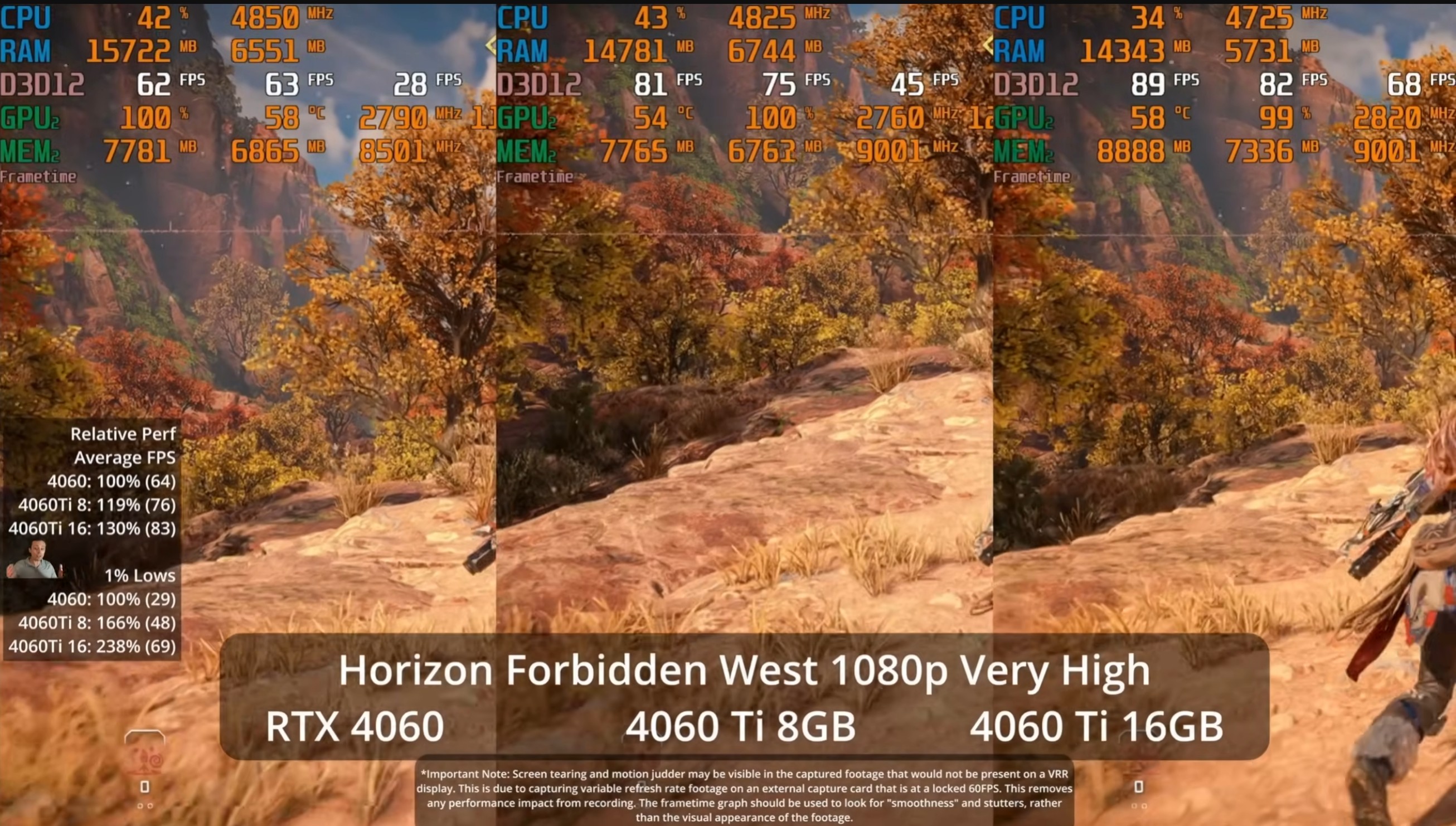
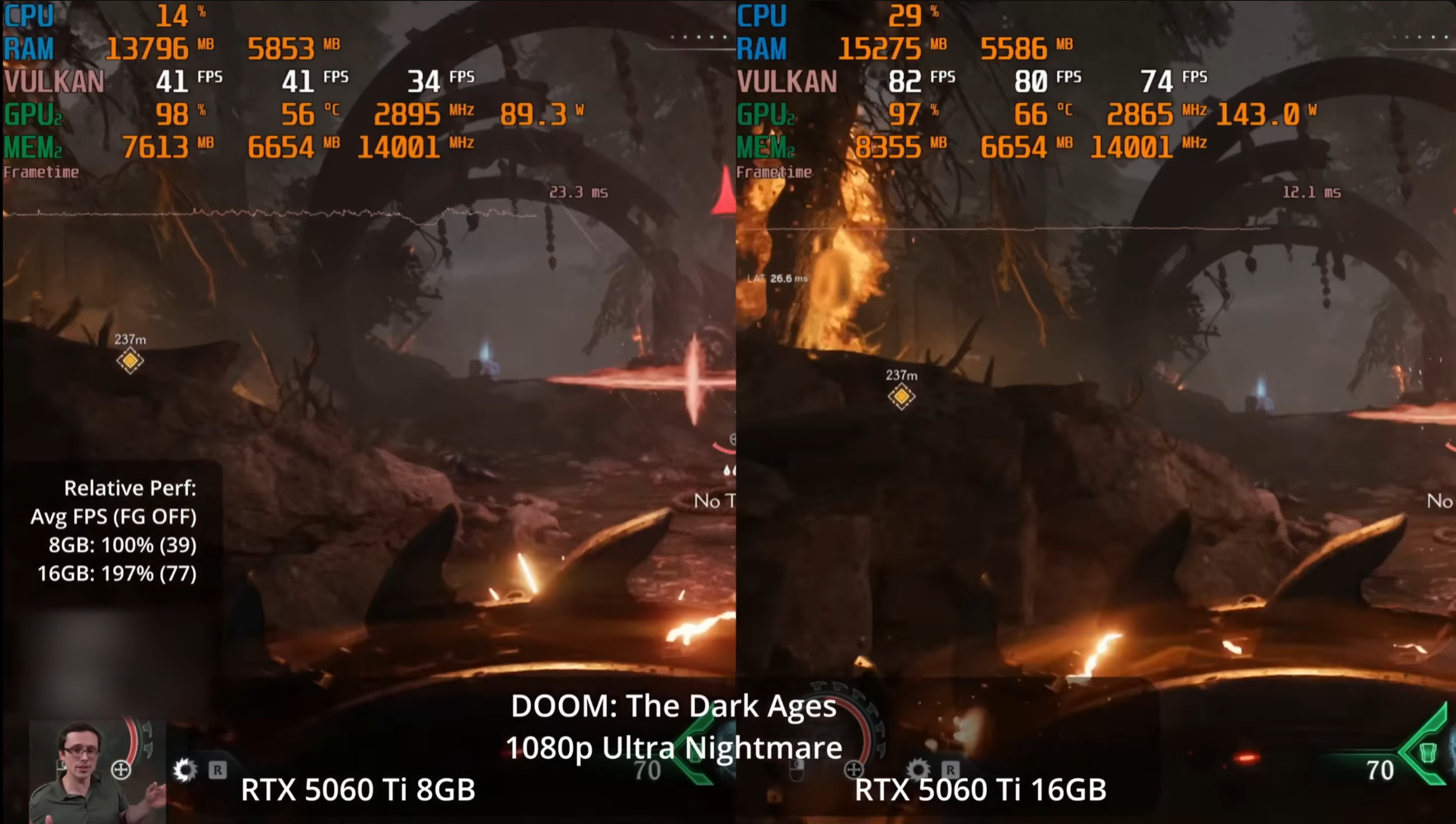
You can buy the high VRAM version or you can lower settings.
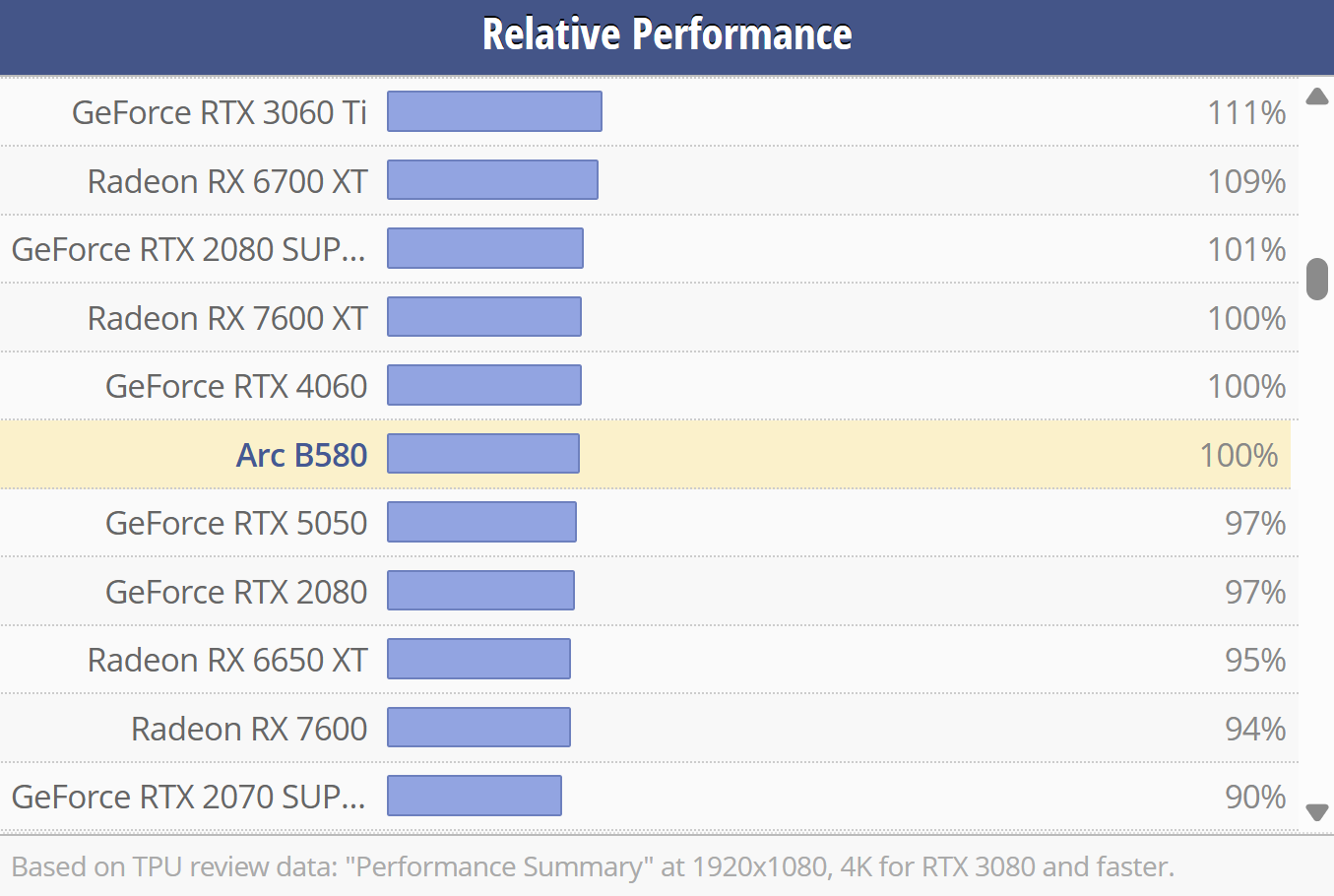
The 5060 Ti 8GB delivers a monstrous amount of performance at a relatively cheap price thanks to 8GB. Around 15-20% faster than the PS5 Pro, but with a PS6-level feature set. An absolute steal at $379.
If you must have 12GB, go buy the 12GB B580. But 95% of people don't want to do that. Do you want to know why?
Because it's not Nvidia.
The major misunderstanding people have about PC is not understanding that consumers don't want high VRAM GPUs. They want high VRAM
Nvidia GPUs.
AMD and their influencers (MLID, Kepler, AMDUB, etc.) have complained in the past about the phenomenon of buyers who view Radeon as a tool for getting cheaper Nvidia.
It's not a deflection. The major issues with 8GB games are concentrated in bad PS5 ports that eventually get patched. That doesn't mean that games can't take advantage of more than 8GB GPUs. But practically all games can be and are made to provide a great experience on 8GB GPUs.
Even this game runs absolutely great on 8GB. Having more than 8GB here costs you going from ultra to high on textures and geometry. Is that worth preferring a hypothetical 5050 12GB over the 5060 Ti 8GB? Absolutely not, in my opinion. 60% raster >> slightly higher texture quality.
The major contention here is that the PS5 has slightly more VRAM than 8GB in many titles. Thus, exact PS5 settings would push you over the VRAM buffer, which requires creating a system of memory management. If the system is implemented well, we can 8GB PC surpass PS5. But if not, it could create problems.
TLOU Part I had worse textures at launch on PC with 8GB than on the 256MB VRAM PS3. That's not an 8GB VRAM issue; it's an issue of a comically broken streaming system they tried to copy-paste from PS5 onto PC.
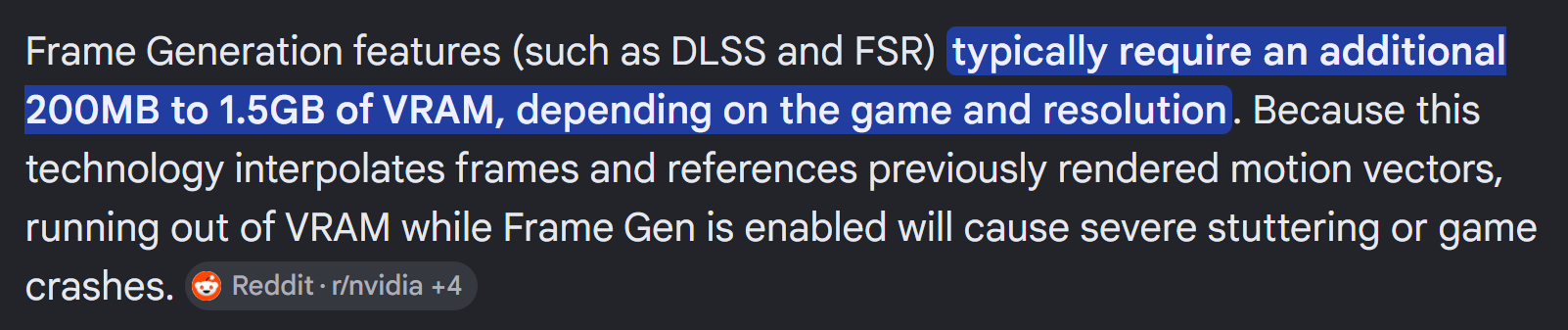
There is also the fact that Windows itself is terrible and uses hundreds of MBs of VRAM it doesn't need to use.
The actual solution here is 9GB 96-bit GPUs. Nvidia
wants to do this but knows they will get burned at the stake by AMDUB, GN, etc. So they can't do it.
Thus, the VRAM whining complex is just making things worse. Imagine someone who reviews every iPhone and whose entire argument is that the iPhone 18 Pro Max should be $499, citing some Chinese Pico phone as proof. Is that a serious reviewer?
VRAM now is $10/GB, and once you apply Nvidia's margin, that's $18/GB. Apply AIB/Distributor/Retailer margin, and we are at $20/GB on the MSRP.
5050 12GB? $289 + 4 * $20 = $369
5070 18GB? $629 + 6 * $20 = $749
Now would AMDUB sell a $369 RTX 5050 12GB? A $749 RTX 5070 18GB? Of course not. He'd burn it at the stake.
He complained the 4060 Ti 8GB should be $299. So Nvidia made the RTX 5060, which is exactly what he asked for at $299. Except now it needs to be $150 or less at 8GB, or have 12GB at $299. Does it matter that GDDR7 3GB was still sampling and not in mass production when the 5060 launched? Of course not.
All these takes are variations of either:
1. Nvidia has to have no margin. Why do they have margin?
2. Not understanding that memory's Moore's Law is facing similar challenges to the logic one.
AMD people always assume that the 93% of the market now buying Nvidia are behaving irrationally.
It can't possibly be because the RDNA2/3 Windows driver is 12% slower than the open-source Mesa Linux driver. It cannot possibly be because AMD has de facto put those cards in maintenance mode long ago. It cannot possibly be because Turing and Ampere buyers loved having the lifetime of their GPU extended by getting DLSS SR and multiple software updates that retroactively upgraded their cards (4.0, 4.5).
It cannot possibly be because Nvidia architectures are forward-looking, and thus AMD doesn't have an upscaler that can reach the image quality of Nvidia running 4.5 in performance mode.
And when they get FSR4 INT8 unofficially, they get stuck having to spend 12.2ms on N22 doing a 1080p to 2160p. Because AMD didn't think gamers needed tensor cores until Nvidia proved that they do.
No, it's because 93% of GPU buyers are dumbasses who don't know what's good for them.

The reality is that consumers are hyper-rational. They understand at this point that the high VRAM on AMD GPUs is bait. It's why they demand that an AMD GPU be 15-30% cheaper than the raster equivalent at Nvidia. It's also why they don't care when AMD offers lots of VRAM.