

-
Hey Guest. Check out your NeoGAF Wrapped 2025 results here!
You are using an out of date browser. It may not display this or other websites correctly.
You should upgrade or use an alternative browser.
You should upgrade or use an alternative browser.
When is localization taking one step too far in gaming?
- Thread starter Shizuka
- Start date
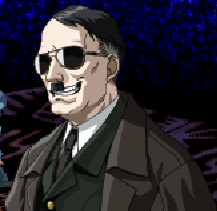
Oh yeah I'm also often skeptical of claims that localization "ruined the quality" of texts that I'm dubious of the "quality" of in their original form
Thats cool dude, but you only have to be able to read English in order to be able to tell if the English on your screen is poorly written. You can translate everything competently and still be a bad writer.
Its Super-dee-duper Dupity Bad Writing!
People put way too much emphasis on the "intent" of the text. The intent of the text is the text. It's "character made this joke" not "character made this joke that everyone playing the game will understand and laugh at."
Basically I think translations should be as literal as possible and any other aim is misguided. How good they can be comes down to the skill of the translator.
Very very very few games are literally translated today. In fact, if we don't count games where they use Japanese voice acting with subtitles (like Yakuza), then I'd dare say the number is pretty close to 0.
Every game nowadays basically has some degree of localization changes done to keep the intent/spirit of a scene intact while making it appeal to it's intended audience. A lot of them simply fly under the radar, because they're doing what a good localization should do.
To be fair, the original Japanese version of Persona 2 PSP was also censored. This wasn't really a localization change, but Atlus censoring it themselves.
Coffee Dog
Banned
If Persona could appeal to more people by pretending it was in america, would that be a change worth making?
I personally wouldn't like it, as I understand that other countries and cultures develop video games. But it's an interesting question as far as sales are concerned.
I personally wouldn't like it, as I understand that other countries and cultures develop video games. But it's an interesting question as far as sales are concerned.
LegendofLex
Member
That is bad writing. The person doing the translation is a poor writer, in English. Just because the source text may have been written competently, and translated competently, the resulting end English text can still be written poorly if the translator has a poor grasp of writing fundamentals.
The person doing the translation should basically never be the person "doing the writing in English." An actual English writer should be doing the English writing, based heavily on the translation and expertise offered by the translator (and from the original team who wrote the script in its native language).
What you say may be true, but I struggle to think of any language in which the machinations of the Umbrella Corp makes any goddamn sense.
What doesn't make sense exactly? Everything in the series has logic and reason to it... as long as it's not related to physics.
That is bad writing. The person doing the translation is a poor writer, in English. Just because the source text may have been written competently, and translated competently, the resulting end English text can still be written poorly if the translator has a poor grasp of writing fundamentals.
I should clarify, I mean that people attribute it to the original writers being bad. The translator deserves every bit of shit they get for it, but it's always misdirected toward the original Japanese writer.
Starfish Hero
Member
Hyperbole.
I think it would be pretty sad if every piece of exported media from a particular country had to be westernized for my obviously incompatible sensibilities.
No shit.
I don't think "understandable" and "faithful to the original" are mutually exclusive . You are railing on a extreme interpretation that not many, or any one is asking for.
Depends on what you mean by "faithful". Asking for 1-to-1 translations that make sense, especially from Japanese to English, is often very unrealistic.
Green Mamba
Member
Not localization as this change was made to the Japanese version as well.
And even if this was a result of localization, this is awesome. Removing the character or completely changing them to be unrecognizable would be lame, but this is just great and the way it should be done.
partyphone
Banned
does anyone else think it's weird that when they localized Sonic 3 that they made the game shitty and way worse than Sonic 2?
Maleko Saint
Banned
I just want to play the game as it was released in Japan, and that's about it. Is it really that much to ask for? Granted I should've learned Japanese in the first place to circumvent this, but isn't it a bit silly just to do so for the fact it's oddly tough to get the same experience from one version to another?

If Persona could appeal to more people by pretending it was in america, would that be a change worth making?
I personally wouldn't like it, as I understand that other countries and cultures develop video games. But it's an interesting question as far as sales are concerned.
I don't think a major cultural overhaul would make a JRPG by Atlus rated M somehow more appealing to westerners.
They could stand to ditch the damn honorifics, though.
An actual case of localisation that bugs me is the whole American Kirby is Hardcore thing, especially applied to Ristar. I can understand giving the enemies angry eyebrows to make them more menacing, but replacing Ristar's own animations with his angry face expression (that in Japan, he only pulled during boss fights because the game's cool like that) really does nothing more than undermine how expressive the character is, and how cool it is that he has unique reactions to different areas. It's a very minor thing (like most localisation changes), but it's still silly.
Oh yeah, I'm not saying it's a bad thing, it's hilarious how they just gave him a trench coat and sunglasses
And even if this was a result of localization, this is awesome. Removing the character or completely changing them to be unrecognizable would be lame, but this is just great and the way it should be done.
Oh yeah, I'm not saying it's a bad thing, it's hilarious how they just gave him a trench coat and sunglasses
Palculator
Unconfirmed Member
Removal of content and when it thinks people are too sensitive to handle whatever they changed. As in, toning down sex, violence, tragedy or arcs, religious references, etc. Both patronising and in the age of the internet fucking cheeky.
I hope this is a joke because this is arguably the best way to deal with restrictions on Nazi stuff.
LegendofLex
Member
I just want to play the game as it was released in Japan, and that's about it. Is it really that much to ask for? Granted I should've learned Japanese in the first place to circumvent this, but isn't it a bit silly just to do so for the fact it's oddly tough to get the same experience from one version to another?
1) This option actually exists.
2) No, see 1.
3) Yup, I'd say people who want to consume Japanese media without modification but aren't willing to learn Japanese are in a really poor rhetorical position.
4) It's a bit silly to expect a mostly global audience with localized cultural context, language, and tastes to also "want to play the game as it was released in Japan" or even care about how the game was released in Japan.
I'm sure we would have been better off with the Gyakuten Saiban series starring Naruhodo Ryuichi (TL Note: "Naruhodo" means "I see!").The localizations I hate the most are the ones that change games because they assume we as an audience are just too dumb to figure out what's going on. Most of these are difficulty changes like in early Final Fantasy games but there are some like Phoenix Wright, Persona 1 where it's assumed that Westerners just can't handle that a game is set in Japan. Brock's jelly donut style localizations are terrible and should be shunned.
I think the sad, tepid, dull answer is, when it starts cutting shit you wanted or changing the identity of the content from that which you were invested in. It is absolutely 100% subjective. Someone with no investment in a feature, or in the property itself, will be little impacted by what the game is not. The line lies exactly where each individual draws it.
Related to this and looking at your avatar, one could argue that certain fundamental elements of the Ace Attorney series were changed in localization by changing the region from Japan to America.
Though I believe one of the localization leads expressed a bit of regret at what they had done and stated that they probably wouldn't have changed the region if the game were localized today, I am for what they did with Ace Attorney. It's a big part of its charm, to me. Can't imagine knowing Phoenix Wright as "Naruhodo Ryouichi" and such.

chozen
Member
Are children really the ones getting Fire Emblem or Bravely Default ?
Or is it the long time Fire Emblem fans and old school FF fans getting BD, who are probably 18+ hell older than that.
Does Nintendo understand the demographic? I really think majority of the adults are getting these games not kids.
Or is it the long time Fire Emblem fans and old school FF fans getting BD, who are probably 18+ hell older than that.
Does Nintendo understand the demographic? I really think majority of the adults are getting these games not kids.
I hope this is a joke because this is arguably the best way to deal with restrictions on Nazi stuff.
Yeah, it's dumb as hell and I love it.
Didn't know this was also a thing in Japan, though
No shit.
Depends on what you mean by "faithful". Asking for 1-to-1 translations that make sense, especially from Japanese to English, is often very unrealistic.
Anyone who is asking for 1-to-1, word for word is crazy because it doesn't exist. Machine translations will make you want to punch people they are so bad.
But there is a lot of variation between that, and often what we get. Some just want it to be closer to one side than the other.
Does Nintendo understand the demographic? I really think majority of the adults are getting these games not kids.
Short story no, but I'm sure from a business standpoint they would rather introduce the series to millions who have never played it before (including children) and not get hate mail about the outfits of the characters they are playing.
TheBryanJZX90
Member
If Persona could appeal to more people by pretending it was in america, would that be a change worth making?
I personally wouldn't like it, as I understand that other countries and cultures develop video games. But it's an interesting question as far as sales are concerned.
Well, yeah this is exactly what happened with the first Persona, and that game didn't exactly light up the sales charts. But to me the changes to the first Persona were part of what I loved about the game. Atlus provided it with an often amusingly garbled translation, and a halfhearted attempt to portray the Japanese setting as America, including lightening everyone's jet-black hair and infamously making one of the characters African American. That created a huge disconnect, because even if all of the characters were named Mary and Mark instead of Maki and Masao, the school they went to didn't look anything like any school I had been to, and the city they lived in didn't look like any city I had seen on TV. Luckily GameFAQs was ready to tell me the reasons why there were rows of boxes for shoes in the school entryway, or why there was a large Shinto shrine on the outskirts of the city (I probably should have figured it out myself after that).
And then I found out how deep the rabbit hole went. Not only had all of the characters' appearances been changed, but I wasn't even playing the full game! An entire alternate storyline that branched off after just a few hours of gameplay had been clumsily locked out of the American version, although traces remained. And this wasn't just a one-off weird game! It was actually an offshoot of an entire RPG series rivaling Final Fantasy that had been around since the days of the NES, but never released in America. Given all of the holes in the game in front of me, and the knowledge that so much more existed out there somewhere in some ideal form, my imagination quickly filled in the gap of what I was missing. And my imagination was pretty damn good.
That gap between the localized game and the original was what drew me in and really jump started my descent into Japan nerddom.

SturokBGD
Member
Ever notice how there's billions of people in the world who play video games but only 167,292 NeoGAF users?Does Nintendo understand the demographic? I really think majority of the adults are getting these games not kids.
The Technomancer
card-carrying scientician
Thats cool dude, but you only have to be able to read English in order to be able to tell if the English on your screen is poorly written. You can translate everything competently and still be a bad writer.
Its Super-dee-duper Dupity Bad Writing!
Oh for sure! But is that badly written because the original text was also not very hot, or is it a case of some awesome text in its original Japanese that was "ruined"?
I think its easy for people, especially if they don't read the original Japanese, to assume the latter and pick examples that reinforce that
Green Mamba
Member
My personal feeling is better is better, and if that means changing the original then whatever.
PancakeAlmighty
Member
When it full on affects mechanics, looks or text wise, I really don't tend to feel all that bothered
For example Fire Emblem fates changing the petting minigame or Yakuza 3 removing hostess clubs and quizzes amoung others
For example Fire Emblem fates changing the petting minigame or Yakuza 3 removing hostess clubs and quizzes amoung others
That one and "Seal of Flames" instead of "Fire Emblem"
I mean... Is the name of the game ffs. How can you miss that.
I haven't played Revelations yet so I don't know if the reference remains but IIRC isn't that because the Japanese version was using a kanji "spelling" for Fire Emblem (literally Seal/Emblem of Flames/Fire) for the majority of the game before switching to the katakana spelling of Fire Emblem which is the usual way the series name is stylized.
Of course if they missed that actual reference in Revelations then your point remains.
I think they did this for one of the other games in the series (used 炎の紋章 instead of ファイアーエムブレム for the reference) but I can't remember which one.
Also did I miss something or was it recently confirmed that Nintendo was responsible for the changes in Bravely Second? Thought it was Square Enix.
It is Square-Enix, just like in the first game.Also did I miss something or was it recently confirmed that Nintendo was responsible for the changes in Bravely Second? Thought it was Square Enix.
chozen
Member
Ever notice how there's billions of people in the world who play video games but only 167,292 NeoGAF users?
Well according to google a 1.2 billion play games.
Apparently everyone outside of Gaf isn't an adult the way you posted that, only 167k adult gamers in the world right?
Terrible comparison you made there lmao.
I haven't played Revelations yet so I don't know if the reference remains but IIRC isn't that because the Japanese version was using a kanji "spelling" for Fire Emblem (literally Seal/Emblem of Flames/Fire) for the majority of the game before switching to the katakana spelling of Fire Emblem which is the usual way the series name is stylized.
Of course if they missed that actual reference in Revelations then your point remains.
I think they did this for one of the other games in the series (used 炎の紋章 instead of ファイアーエムブレム for the reference) but I can't remember which one.
Seisen no Keifu, Project X Zone 2, and the Robin/Lucina Smash Bros. trailer all play around with this. They use 炎の紋章 in place of saying Fire Emblem in katakana. It's very deliberate and not really a localization error, although Smash Bros. chose to localize it as Crest of Flame.
akidnamededdy
Banned
This is one step too far:
God forbid they add a smidgeon of personality to that super dry, dull literal translation.
I can only imagine the death threats Ted Woosley (sp?) would be receiving if FF6 were released today.
D
Deleted member 17706
Unconfirmed Member

If you care that much about a specific culture and all its specificities, you really should learn the language.
Exactly this. If you don't like the localized product, that's fine, but the only way to truly experience the original as it was intended is to experience the original. Learn the language of you care that much. Some degree of subjectivity will always be involved in localization and there is no right answer.
Seisen no Keifu, Project X Zone 2, and the Robin/Lucina Smash Bros. trailer all play around with this. They use 炎の紋章 in place of saying Fire Emblem in katakana. It's very deliberate and not really a localization error, although Smash Bros. chose to localize it as Crest of Flame.
If that's the case then I can understand why they localized it like that, what a strange thing to translate correctly when they take so much freedom with everything else. In the sacred stones iirc they say "fire emblem" that's why it confused me. My mistake if that's the case.
akidnamededdy said:God forbid they add a smidgeon of personality to that super dry, dull literal translation.
I can only imagine the death threats Ted Woosley (sp?) would be receiving if FF6 were released today.
It seems it is too much to ask not to localize characters as dumb and meme-ey. I don't want that "smidgeon of personality" if it implies super-dee-duping something.
SturokBGD
Member
I think you missed my point.Well according to google a 1.2 billion play games.
Apparently everyone outside of Gaf isn't an adult the way you posted that, only 167k adult gamers in the world right?
Terrible comparison you made there lmao.
Nintendo could make some big money out of Fire Emblem in the West, but not if they're only appealing to a niche demographic.

Whenever you infantilize your audience. While I prefer 99% of costume changes that had the internet all tizzy I would prefer the people localizing to give their customers the choice. Especially since the changes are weirdly biased to reducing sexual content while violence always remains untouched.
But that's exactly what localizing means! It means adjusting the content to fit the locale. It doesn't mean "slavishly doing a direct translation of text from one language to another". It completely entails making holistic changes to make a product fit for a new audience. And the audience for these giant releases is NOT the same as the audience for NIS games, which is why the localizations very obviously have different goals.
The only localization issues I have are when they change the names of things in a way that makes it really confusing to discuss those things with people from different countries.
Like in Street Fighter, the whole M. Bison/Vega/Balrog nonsense.
Or with Pokemon, how they have different names for all of them in every different language. I can't imagine how confusing it is for, say, a French Pokemon fan to try to discuss Pokemon here on GAF. Whenever someone mentions a Pokemon, they'd have to go look up which one they're talking about, and whenever they want to mention a Pokemon, they'd have to go look up the English name first.
Like in Street Fighter, the whole M. Bison/Vega/Balrog nonsense.
Or with Pokemon, how they have different names for all of them in every different language. I can't imagine how confusing it is for, say, a French Pokemon fan to try to discuss Pokemon here on GAF. Whenever someone mentions a Pokemon, they'd have to go look up which one they're talking about, and whenever they want to mention a Pokemon, they'd have to go look up the English name first.

OmegaDL50
Member
People put way too much emphasis on the "intent" of the text. The intent of the text is the text. It's "character made this joke" not "character made this joke that everyone playing the game will understand and laugh at."
Basically I think translations should be as literal as possible and any other aim is misguided. How good they can be comes down to the skill of the translator.
Borrowing a statement from Wyrdwad here to accompany my point
That's sort of the ironic part, though: a direct translation is LESS accurate, in most cases, than a quality localization.
Language isn't just about words, but emotions and nuances as well. And those are exactly the things that straight translations miss. In order to successfully convey the same meaning as the Japanese -- in full, including the emotional content and all nuances -- you absolutely NEED to localize it.
A straight translation will rarely ever convey the full meaning of what's being said, since Germanic languages and Asian languages are simply too different in structure for that to occur naturally.
-Tom
RPGOne and Sky Render's work on FF6 could have been great, unfortunately it's much more a transliteration rather than a translation.
They strive so hard to make text super literal to the original Japanese release without proper localization the text comes off as as very cut and dry and monotonic as if a robot was reading out the script. The result made it a rather bland experience.
There is nothing worse than a transliteration in my opinion. It takes all context, proper characterization, and nuance out of the writing.
If you are going to translate something to the point that sole characterizations and personality is completely sucked out of it. It's not worth the result when it ultimately becomes boring to read and the script just comes across as unpalatable.
A proper localization shouldn't need to fall into the pitfall of being a super literal translation.
Coffee Dog
Banned
I wonder if people in other countries are told to just learn English when they ask for blood and gore. 

The Lamonster
Member
Removing a breast slider for western audiences is by far the best example of localization going too far. So ridiculous and insulting to female gamers with large breasts.
The n00b Avenger
Member
People put way too much emphasis on the "intent" of the text. The intent of the text is the text. It's "character made this joke" not "character made this joke that everyone playing the game will understand and laugh at."
Basically I think translations should be as literal as possible and any other aim is misguided. How good they can be comes down to the skill of the translator.
I don't think I can disagree with an idea any more than I do to this. Text being more important than intent? Yikes.
The important thing isn't the exact words used, it's what you try to portray with those words. Even in a literal translation, you're completely changing it by translating it, so the idea that you're preserving some sort of integrity by translating literally is bollocks. The only thing you're doing is making a dry product that oftentimes won't even make sense(and not even just on a 'not understanding a reference' level, I mean on a fundamental level) and isn't going to portray the message the writer wanted to portray.
If you're that obsessed with the original Japanese then just read it in Japanese.
As for the topic at hand, I think localizations go too far when they decide to just throw away the atmosphere or original intent to do their own things. Like making jokes at serious scenes or vice-versa, or changing the setting in a half-hearted way that makes some things in a story feel disconnected(like going to an obviously Japanese temple in Los Angeles). The former is a slap in the face to the intent and the latter just takes you out of the experience.
SturokBGD
Member
My favourite Pokemon is Aeris.The only localization issues I have are when they change the names of things in a way that makes it really confusing to discuss those things with people from different countries.
Like in Street Fighter, the whole M. Bison/Vega/Balrog nonsense.
Or with Pokemon, how they have different names for all of them in every different language. I can't imagine how confusing it is for, say, a French Pokemon fan to try to discuss Pokemon here on GAF. Whenever someone mentions a Pokemon, they'd have to go look up which one they're talking about, and whenever they want to mention a Pokemon, they'd have to go look up the English name first.
Exactly this. If you don't like the localized product, that's fine, but the only way to truly experience the original as it was intended is to experience the original. Learn the language of you care that much. Some degree of subjectivity will always be involved in localization and there is no right answer.
This is such an insane notion that I cannot believe so many people are parroting it.
It Is possible to translate something without losing anything, even if you have to get a little creative with it.
Like, are you under the assumption that nobody in the Western world can ever conceive of a relationship that does not exist in their culture, like senpai/kohai?
The only localization issues I have are when they change the names of things in a way that makes it really confusing to discuss those things with people from different countries.
Like in Street Fighter, the whole M. Bison/Vega/Balrog nonsense.
Or with Pokemon, how they have different names for all of them in every different language. I can't imagine how confusing it is for, say, a French Pokemon fan to try to discuss Pokemon here on GAF. Whenever someone mentions a Pokemon, they'd have to go look up which one they're talking about, and whenever they want to mention a Pokemon, they'd have to go look up the English name first.
At least the legendary and mythical pokemon names are the same (as much as possible anyway, aside from spelling and pronunciation).
--------------------
I prefer the "localization" as close to the original as possible but that is not always the easiest thing to do since there are jokes and cultural reference that might not translate well. There are also cultural, moral, and socially unacceptable things/behaviour/visual/jokes/etc... that the translator/publisher feels that might get them in trouble (from review board to "internet protests" and stuff).
Of course there are really annoying changes that I wish they didn't do (but understandable since they are releasing it for their target audience) like Phoenix Wright.
You gotta admit, the translator are becoming more and more faithful to the original compared to before. We are just getting the whole localization vs translation thing since the ones we are discussing about video games is not the neighbourhood friends that you hangout with and the only exposure that we get is from magazines that was published monthly that rarely focus on the international version of a specific games. There's also the internet and the access to the original material.
I agree with the other posters, the best way to truly experience the game in its original intent/content is to learn the language and culture.
localisation has also have to do with culture, language and social things. its hard to make one rule. i dont know the context of fire emblem but i know that nintendo has always translated their games in the best way possible. you should differ between censorship and localisation. putting "..." might be the most appropriate translation to what the japanese context could have been. there is the infamous i love you/thank you scene from ffx. if you cant speak japanese, it sounds ridiculous, but the japanese "thank you" was seen as a "i love you" in this context. i face these kind of questions all the time since i have studied east asian studies and i have to facepalm myself so many times when i read those wrongdoings. it takes a lot of consideration to translate it as original as possible.
one of the best translations ever happened were ni no kuni and final fantasy 9. thise games have pretty much nailed it.
one of the best translations ever happened were ni no kuni and final fantasy 9. thise games have pretty much nailed it.
Bumbletron
Member
It seems it is too much to ask not to localize characters as dumb and meme-ey. I don't want that "smidgeon of personality" if it implies super-dee-duping something.
What you call dumb and meme-ey is wholly subjective though. While you may not like the characterization, at least there is characterization there. Many people dislike fire emblem's characters as being too one dimensional (usually along the lines of 'Chie likes meat' characterization and focusing on only one aspect). By adding in small, silly things like that, it helps in some small extent to flesh them out a bit more. The entirety of the character isn't the super-dupity line.
AcademicSaucer
Member
Dumbing down the game is too far.
If that's the case then I can understand why they localized it like that, what a strange thing to translate correctly when they take so much freedom with everything else. In the sacred stones iirc they say "fire emblem" that's why it confused me. My mistake if that's the case.
I think it's explained in Revelations. Supposedly.